
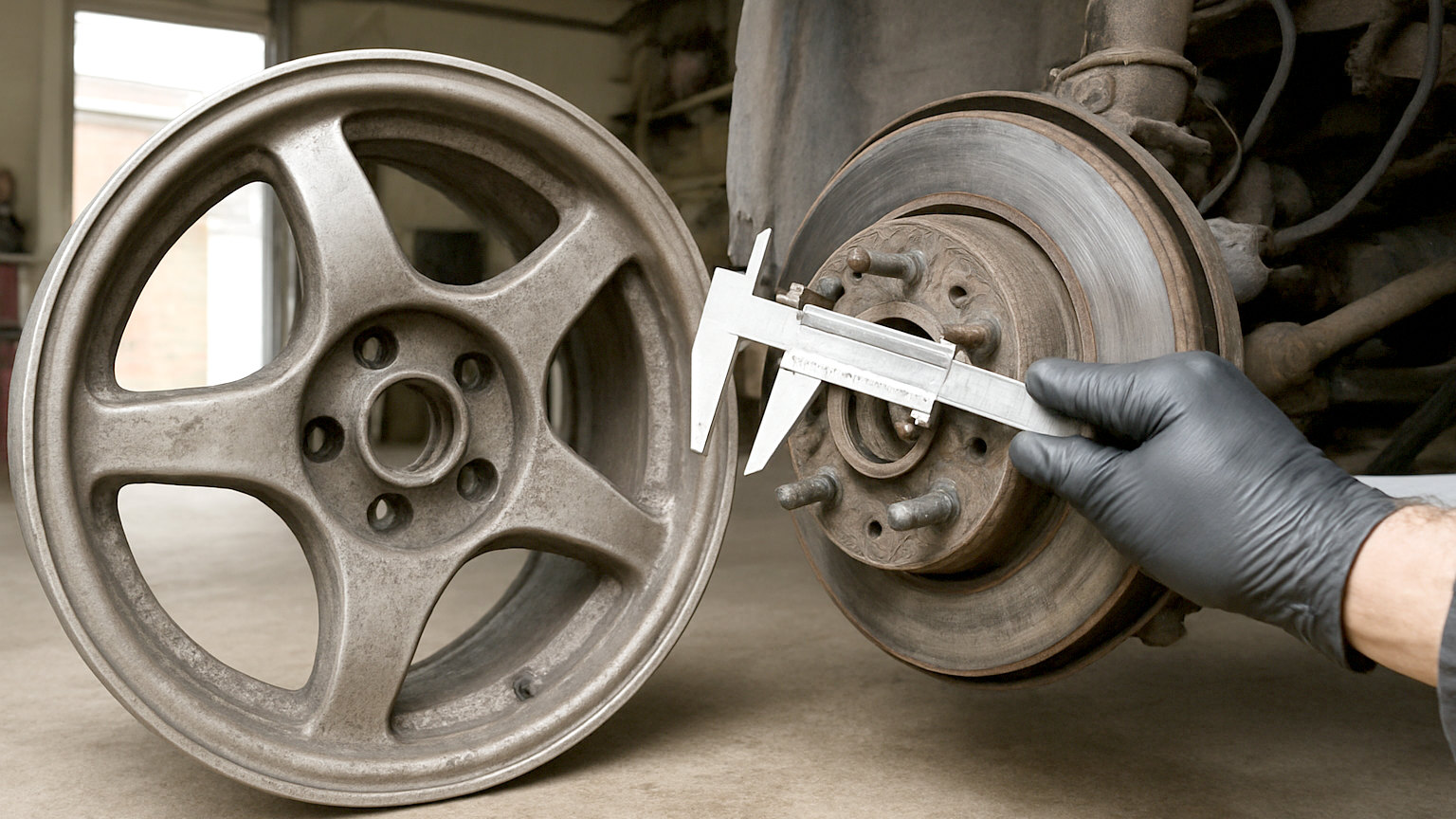
A wheel is described by five separate measurements, and all of them have to be right for it to fit and work properly. Buying wheels online without understanding them is how people end up with a set that either will not bolt on at all or, more troublingly, bolts on while sitting incorrectly and causing vibration or fouling.
What do diameter and width mean?
A marking such as 7J x 17 means a rim diameter of 17 inches and a width of 7 inches, with the J indicating the flange profile. Width matters because the tyre must be suitable for it: too narrow a rim for a wide tyre distorts the sidewall profile and affects handling, and tyre manufacturers publish permitted rim width ranges for each size.
What is PCD?
The pitch circle diameter, meaning the number of bolts and the diameter of the circle they sit on. A marking of 5x112 means five bolts on a 112 millimetre circle. It must match the hub exactly. Patterns that are close but not identical, such as 5x112 and 5x114.3, will sometimes appear to fit while loading the fixings incorrectly, which is genuinely dangerous.
What is offset?
The distance between the wheel mounting face and its centreline, usually marked as ET followed by a number in millimetres. A higher number pulls the wheel further in towards the suspension, a lower number pushes it out. It affects steering feel, bearing loads and whether the wheel clears the brake caliper and the suspension components, so it is not a matter of appearance alone.
What happens if offset is wrong?
Too much and the wheel fouls the suspension strut or the brake caliper. Too little and the tyre rubs the arch on full lock or over bumps, and the bearing carries more load than intended. Small deviations from the original figure are usually tolerable; large ones change how the car steers and how quickly its bearings wear.
What is the centre bore?
The hole in the middle of the wheel, which on a hubcentric fitment sits precisely over the spigot on the hub so the wheel is centred by that rather than by the bolts. Aftermarket wheels are frequently made with a larger bore to suit multiple vehicles, and they then need spigot rings to fill the gap. Omitting those is a common cause of vibration on new wheels.
What is the load rating?
Many wheels carry a maximum load marking, and it must meet or exceed what the vehicle requires. It matters most on heavier vehicles, vans and anything used for towing. A wheel rated below the axle load is being asked to carry more than it was designed for, which is a genuine risk rather than a theoretical one.
Do the fixings need to change?
Often. Wheel bolts and nuts have tapered, spherical or flat seats, and the seat must match the wheel or the fixing will loosen no matter how tightly it is set. Aftermarket wheels frequently have different thicknesses too, requiring longer or shorter bolts to achieve correct thread engagement. Both are easily overlooked and both matter.
How do you check compatibility?
Read the markings on your existing wheels, usually cast into the inner face, and match diameter, width, PCD, offset and centre bore. A reputable supplier will confirm fitment for your specific model rather than just the make. If in doubt, ask what fixings and spigot rings are supplied, since a wheel that fits the hub but is not properly centred will vibrate.
Where are the markings found?
Usually cast or stamped into the inner face of the wheel, behind the spokes, so you may need to look through the openings with a torch or remove the wheel to read them clearly. Original equipment wheels also carry a manufacturer part number, which is the most reliable way of ordering a matching replacement if one is damaged beyond repair.
Photographing those markings while a wheel is off is worth doing, since reading them again means jacking the car up.


