
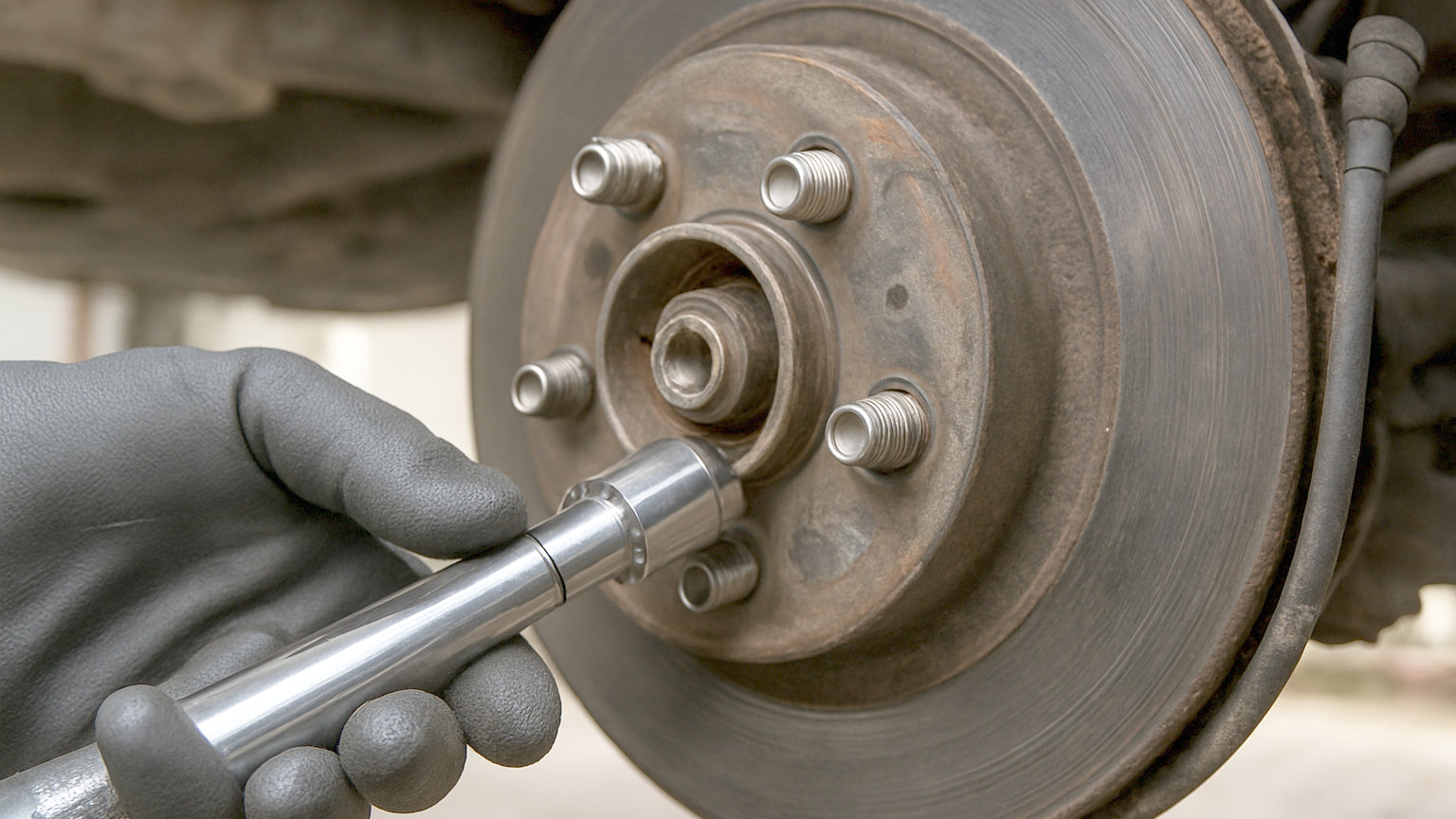
Wheel fixings have a specified torque figure for every vehicle, and it exists because both extremes cause genuine problems. Too loose and the wheel works its way off, elongating the bolt holes as it goes. Too tight and the studs stretch, the threads damage and the brake disc can distort. Getting it right requires a torque wrench and a minute of care rather than judgement or an impact gun.
What are typical figures?
Most cars specify somewhere between about 90 and 140 newton metres, though it varies considerably by manufacturer and wheel type. The correct figure appears in the handbook and is worth looking up rather than assuming, since fitting a value from another car can be substantially wrong. Vehicles with alloy and steel wheel options sometimes specify different figures for each.
Why does the sequence matter?
Because tightening in a circle pulls the wheel against the hub unevenly, which can leave it sitting fractionally out of true and can distort the brake disc. The correct method is a diagonal or star pattern, working across the wheel rather than around it, and doing so progressively over two or three passes rather than fully tightening each fixing in turn.
What damage does overtightening do?
It stretches the studs or bolts beyond their elastic range, so they no longer clamp properly and may eventually snap. It damages the threads in the hub, which is an expensive repair. And it can distort the brake disc, producing judder that appears within a few thousand miles and is usually blamed on the disc rather than on how the wheels were fitted.
Why are impact guns a problem?
Because they deliver whatever torque they are set to, and in busy tyre bays they are frequently set high to guarantee the wheel does not come loose. Torque sticks help by limiting the transmitted force, and they are not as accurate as a torque wrench. The correct practice is to run the fixings down with a gun if desired and then complete the final tightening with a wrench.
Should bolts be greased?
Generally not on the threads. Torque figures assume dry threads, and lubrication reduces friction so the same torque produces far greater clamping force, effectively overtightening the fixing. A trace of copper grease on the seat where the wheel meets the hub is different and helps prevent seizing, though even that should be used sparingly and never on the tapered seat itself.
Should they be retightened after fitting?
Yes, and it is widely recommended and rarely done. Checking the torque after roughly fifty miles catches any fixing that has settled, particularly on alloy wheels where the mating surfaces bed in slightly. Many tyre depots advise it on the invoice. It takes a couple of minutes with a torque wrench and it addresses the small but real risk of a wheel working loose.
Do the seats need to match?
Very much so. Wheel bolts and nuts come with tapered, spherical or flat seats, and the shape must match the wheel. Using a tapered nut on a wheel designed for a spherical seat gives a tiny contact area and the fixing will loosen no matter how tight it is set. It is a common error when aftermarket wheels are fitted with the original fixings.
Is the bolt length important?
Critically. Bolts must engage enough thread to clamp securely, and different wheels have different thicknesses, so aftermarket wheels frequently need longer or shorter bolts. Too short and there is insufficient thread engagement. Too long and the bolt can bottom out in the hub before clamping the wheel, which feels tight while actually holding nothing.
Is a torque wrench worth buying?
For anyone who changes their own wheels, yes, and a basic one costs very little. It removes the guesswork entirely and it lets you check the work of a tyre depot that may have used an impact gun. Storing it wound back to its lowest setting keeps it accurate, which is the one maintenance point these tools require.


