
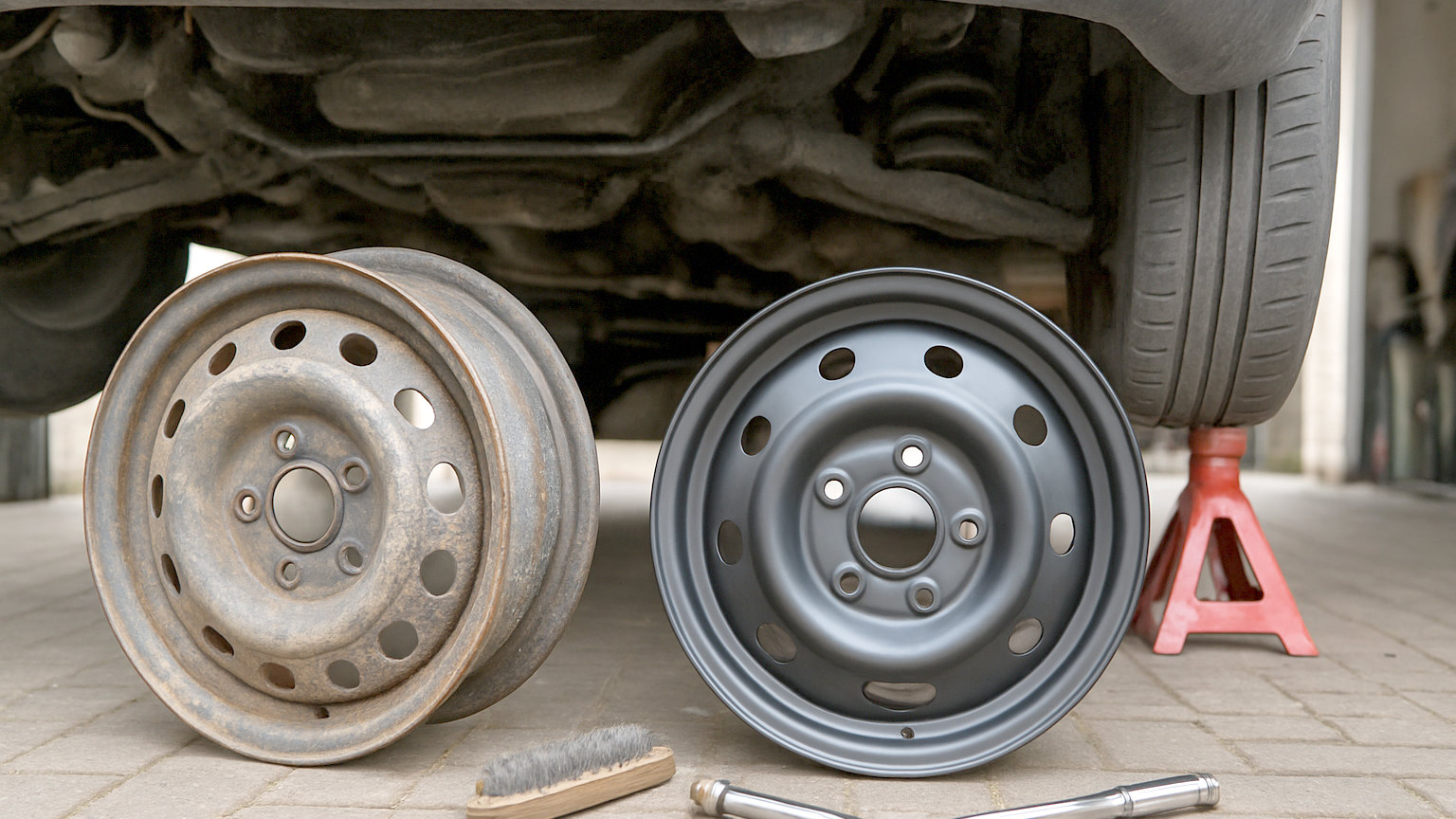
Steel wheels have an unglamorous reputation and a set of genuine practical advantages that make them the preferred choice for a winter set among people who run two sets of wheels. The differences between steel and aluminium are not simply cost and appearance, and understanding them explains why the choice is less obvious than it looks.
How do they differ in weight?
Alloy wheels are usually lighter for the same size, which reduces unsprung mass and helps the suspension follow the road surface. That is a real benefit to ride and handling. The gap is smaller than people assume, though, since a large diameter alloy can weigh more than a small steel wheel, and much of the perceived benefit of alloys is appearance rather than physics.
What happens in an impact?
This is the important difference. Steel is ductile, so a hard pothole strike tends to bend the rim, which is often straightenable and rarely leads to sudden failure. Aluminium alloy is more brittle, so the same impact is more likely to crack it. On potholed winter roads that distinction has practical value, and it is the main argument for steel in the cold months.
How do they compare for corrosion?
Steel wheels rust, and they look shabby doing it, while remaining perfectly serviceable. Alloys corrode differently, with the lacquer lifting and the aluminium beneath developing white deposits, and crucially they suffer bead corrosion that causes slow punctures. A rusty steel wheel is usually cosmetic; a corroded alloy bead seat is a recurring air leak.
Why fit them for winter specifically?
Because winter combines the worst road surfaces with the heaviest salt exposure. Putting a set of cheap steel wheels on with winter tyres protects the alloys from both, makes the seasonal changeover a simple wheel swap rather than a tyre change, and means any pothole damage is to a wheel worth very little. The economics work out well over a few seasons.
Are they cheaper to buy?
Considerably, both new and used, and used steel wheels in common sizes are widely available for very little. That is what makes a second set viable. Fitting winter tyres to a spare set of steels means you pay for mounting once rather than paying for two tyre changes every year, which recovers the wheel cost quickly.
Do they affect brake cooling?
Steel wheels generally have smaller ventilation openings, so they let less air reach the brakes. On an ordinary car in winter conditions that is of no practical consequence. It matters more on a performance vehicle used hard, which is one reason steel wheels are not simply the better choice in every circumstance.
Will they fit any car?
Not always, and it is worth checking before buying. Large brake calipers on some vehicles will not clear the inner face of a steel wheel, and some cars are only offered with alloys from the factory for exactly that reason. Diameter, width, offset, bolt pattern and centre bore all need to match, and a specialist supplier will confirm compatibility.
What about the pressure monitoring sensors?
On a car with a direct system, a second set of wheels needs a second set of sensors, or the sensors must be swapped over each time. That is an additional cost worth factoring in. Cars with indirect systems, which use the ABS sensors, avoid this entirely and simply need the system resetting after the changeover.
Are they worth it for appearance alone?
That is entirely personal, and plenty of people find steel wheels with neat trims perfectly acceptable for a few winter months. The practical case is strong regardless: protecting a set of expensive alloys from salt and potholes for a third of the year usually pays for the steel wheels within a couple of seasons, and the alloys look considerably better for it when they go back on in spring. Many owners find the seasonal swap becomes a routine they would not now give up.


