
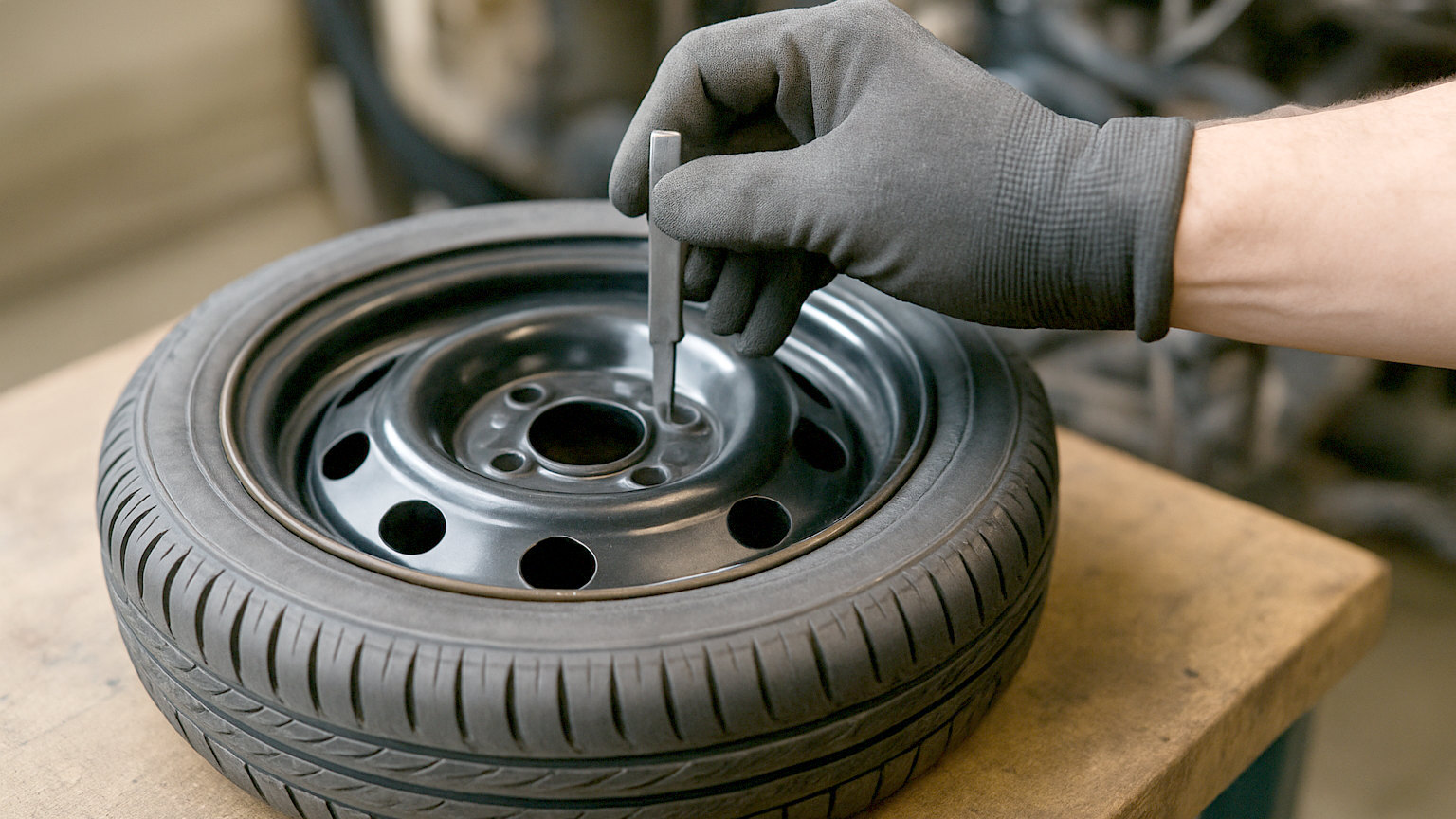
A space saver is a narrow temporary wheel supplied instead of a full size spare to save weight and boot space. It is designed to get you to a tyre depot rather than to continue a journey, and the restrictions printed on it are mechanical necessities rather than cautious advice. They are also routinely ignored by people who do not know they exist.
What are the limits?
Typically a maximum of fifty miles per hour and a limited distance, often around fifty miles, though the figures vary and are marked on the wheel or the tyre itself. They exist because the tyre is narrow, has a different construction and is not designed for sustained load or speed. Exceeding them risks the tyre overheating and failing.
Why does it change how the car behaves?
Because the space saver has far less grip than a full size tyre, so the car brakes and corners differently on that corner. Stability control and ABS systems are working with an unequal set of tyres, which reduces their effectiveness. Anything approaching an emergency manoeuvre is compromised, which is the real reason for the speed restriction.
Which axle should it go on?
Ideally the rear, and many handbooks specify this. If the puncture is on the front, the recommended approach is to move a full size wheel from the rear to the front and fit the space saver to the rear. That keeps the better tyres on the steering axle and avoids putting a narrow temporary wheel on a driven front wheel, which affects traction and stability.
What pressure should it run at?
Considerably higher than a normal tyre, frequently around sixty pounds per square inch, and the figure is marked on the wheel. That surprises people who inflate it to the same pressure as the others. It also means the spare needs checking periodically, since one sitting at half its required pressure for three years is close to useless when needed.
Is it an MOT issue?
The spare in the boot is not tested. If a space saver is fitted to the car at the time of the test, it must comply with the requirements for that position, and one fitted to the front is likely to cause problems. The practical point is that a space saver is not intended to remain fitted, and driving on one for months is neither safe nor sensible.
What if the car has no spare at all?
Many now come with a sealant and compressor kit instead. Those work on small tread punctures and not at all on sidewall damage, blowouts or larger holes. Knowing which you have, and checking that the sealant canister is within its expiry date, is worth doing before you need it. Sealant has a shelf life and an out of date canister may not work.
Can you buy a proper spare?
Frequently yes, and many owners do. A used steel wheel and a serviceable tyre in the correct size is inexpensive, and on cars with a boot well it simply drops in. Where there is no well, a spare has to be carried in the boot space, which some people accept as a trade for the reassurance, particularly if they travel in remote areas or at night.
What should you check now?
That the spare exists, that its pressure is correct against the figure on the wheel, that the tyre is not perished, and that the jack, brace and locking wheel nut key are all present and functional. Doing that in daylight on a driveway is considerably more pleasant than discovering a problem on a verge in the rain.
Should you fit it yourself?
Only somewhere safe, flat and well away from traffic. On a motorway the answer is no under any circumstances, and the correct response is to leave the vehicle and call for assistance. A puncture is inconvenient; changing a wheel beside a live carriageway is genuinely dangerous and no journey justifies it. Leave the vehicle, get behind the barrier and call for help, and do not stand between the car and oncoming traffic while you wait.


