
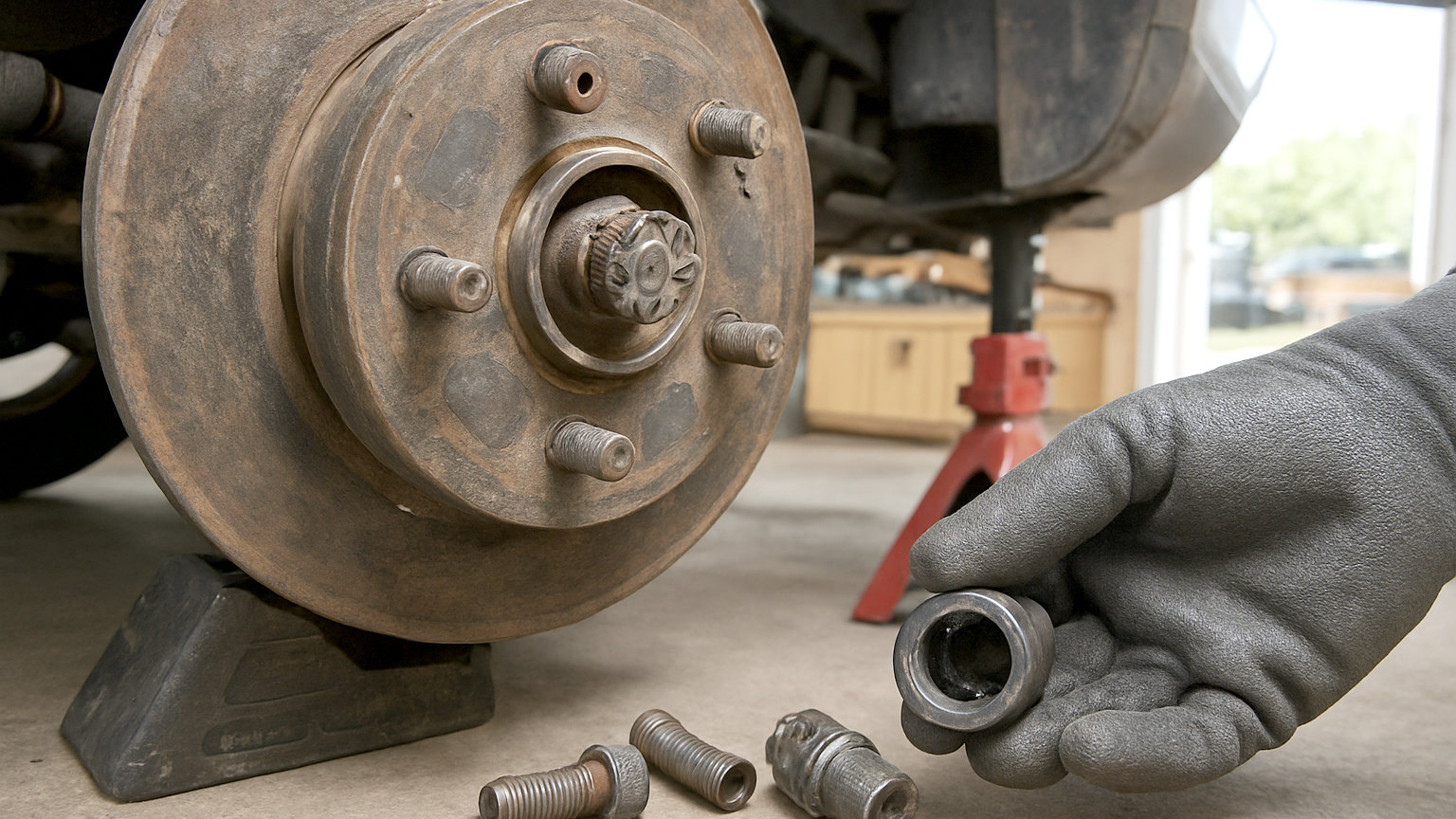
A locking wheel nut key is a small item that lives in a glovebox or a boot well and is entirely forgettable until the moment a tyre goes flat. Without it the wheel cannot be removed, which turns a straightforward puncture into a recovery call. It is worth knowing what the options are before you need them, and worth checking now that yours is actually in the car.
Why are locking nuts fitted at all?
To deter wheel theft, which was a genuine problem when alloy wheels were expensive and easily sold. One nut or bolt per wheel has a patterned head that only its matching key fits, so a thief with an ordinary socket cannot remove the wheel. They are less common on new cars than they once were, and they remain fitted to a great many vehicles on the road.
Can a replacement key be ordered?
Frequently, yes, and it is the cheapest route. Most patterns carry a code, often stamped on the key itself or supplied on a card in the handbook pack when the car was new. With that code, the manufacturer or the lock maker can supply a matching key. It is worth photographing the code now and storing it somewhere other than the car.
What if there is no code?
A main dealer can sometimes identify the pattern from the vehicle identification number if the wheels are original. Failing that, some specialists can take an impression of the nut and match it against a library of patterns. Both take time, which is fine when planning a service and unhelpful when standing beside a flat tyre on a wet evening.
How do specialists remove them without a key?
Usually with a hardened extraction socket that is hammered onto the nut, biting into the pattern so it can be turned off. On more stubborn examples the nut is drilled or split. Mobile specialists exist who do nothing else, and they are generally faster and cheaper than a dealer. The nut is destroyed in the process and must be replaced.
Does removal damage the wheel?
It can if done carelessly, since the tool is hammered on close to the wheel face. A specialist will protect the surrounding area. This is a reasonable argument against attempting it yourself on expensive wheels with a cheap extraction socket, since the saving is small against the cost of refurbishing a damaged wheel face.
What are the common failures besides losing the key?
The key itself wearing or splitting, particularly the thin walled types, and the nut pattern rounding off through use with an impact gun. Corrosion also swells the nut so the key will no longer seat fully. Any of these produces the same outcome as a lost key, and they tend to reveal themselves at exactly the wrong moment.
Should you keep them at all?
Many owners replace them with ordinary nuts once they have been through this once, accepting a small theft risk for the convenience. Others keep them but store a spare key at home and photograph the code. Either is reasonable. What is not sensible is having locking nuts with a single worn key that lives loose in a boot well.
What should you check today?
That the key is actually in the car, that it fits and turns freely on each wheel, and that its code is recorded somewhere else. Also check that a tyre fitter has not left it in a workshop after a recent visit, which is a common way for them to disappear. Five minutes now avoids a considerably longer wait later.
Where should the key live?
Somewhere fixed in the car rather than loose in a boot well where it can migrate or be removed. Keeping it with the jack and brace makes sense, since all three are needed together. Photographing the code and storing it on your phone costs nothing and means a replacement can be ordered even if the key itself disappears entirely.


