
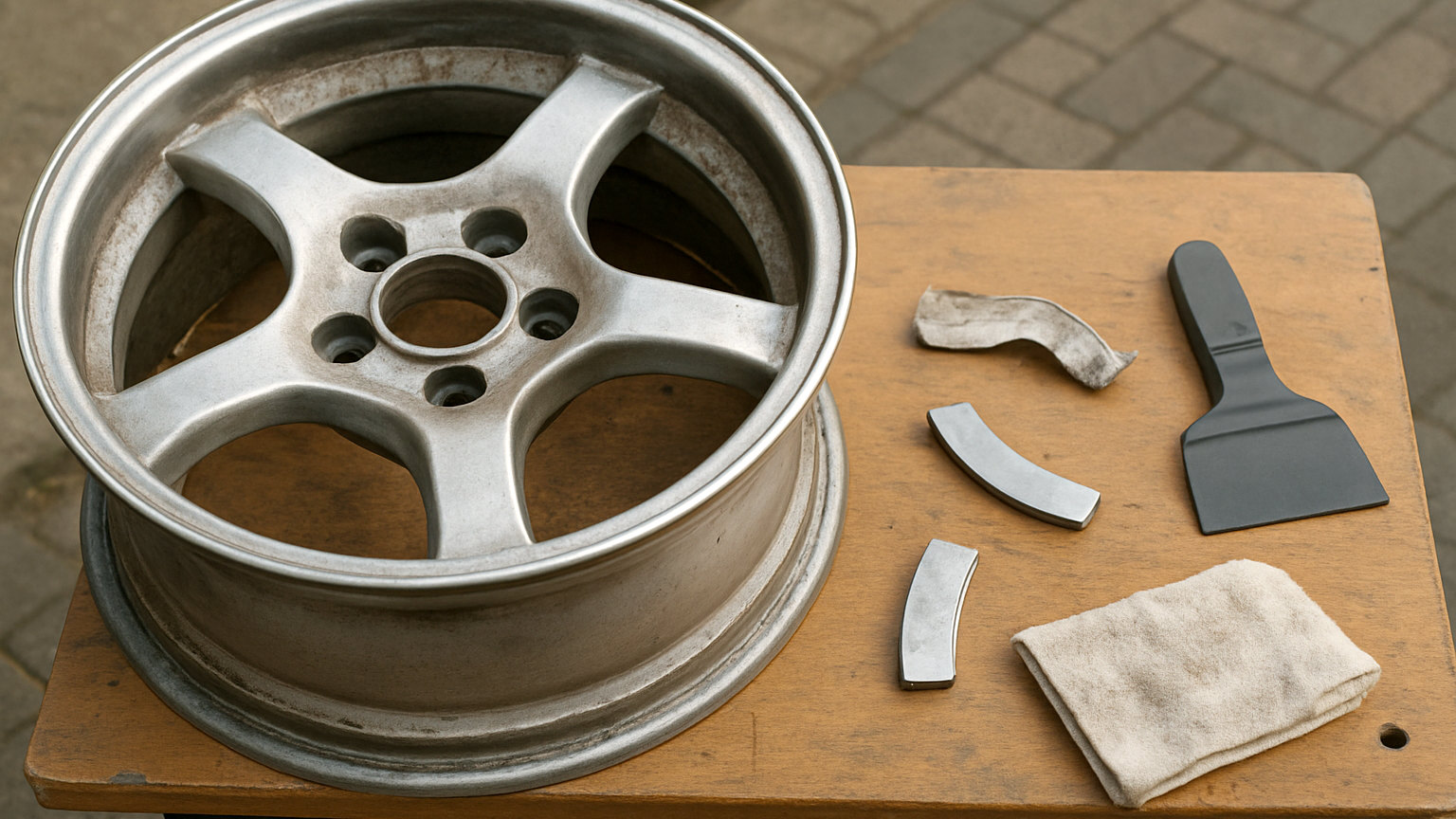
A vibration that appears suddenly, along with a clean unweathered patch on the inner rim where something used to be, tells a clear story: a balance weight has departed. It is a common enough occurrence to be worth understanding, because the reasons weights fall off are largely preventable and repeatedly losing them suggests something is being done wrong.
What are the two types?
Clip on weights, which hook over the rim flange, and adhesive weights, which stick to the inside of the rim barrel. Clip on types are used on steel wheels and on alloys with a suitable flange, and they are mechanically secure. Adhesive weights are used where a clip would be visible or would not fit, and they depend entirely on the bond holding.
Why do adhesive weights fall off?
Most often because the surface was not properly prepared. The rim must be clean, dry and free of old adhesive, brake dust and any wheel dressing before the weight is applied, and it must be pressed firmly and given time to bond. Applying one to a cold, damp or dirty rim in a busy tyre bay is how a weight ends up on the road a month later.
Does wheel cleaner attack them?
Strong acidic cleaners certainly can, and this is an underappreciated cause. The adhesive is exposed on the inside of the rim, exactly where cleaner is sprayed and left to work. Repeated use of aggressive products softens the bond over time. Switching to a pH neutral cleaner protects both the weights and the wheel lacquer.
Can temperature be a factor?
It contributes. Wheels get hot from the brakes and cold overnight, and that constant cycling stresses any adhesive bond. Winter is harder than summer, since a cold wet rim is the worst possible surface for a fresh application. Weights fitted properly to a clean warm rim survive this without difficulty; marginal ones do not.
Does it matter beyond the vibration?
The vibration itself is the main issue, and it is not trivial, since an unbalanced wheel repeatedly loads its bearing, suspension joints and tyre thousands of times a minute. It also produces uneven tyre wear that then makes the imbalance worse. So a lost weight is worth replacing promptly rather than living with until the next service.
Can clip on weights be used instead?
On many alloy wheels yes, provided the flange profile suits them and they will not be visible or foul anything. They are mechanically retained rather than glued, so they do not depend on a bond at all. Some fitters default to adhesive types for appearance, and asking for clip on weights where practical is a reasonable request if you have lost several.
What about the weight left behind?
When a weight departs, the wheel is not simply back to where it started. It is now out of balance by exactly the amount that weight was correcting, which is why the vibration appears suddenly and clearly. Rebalancing that wheel is the fix, and it is worth having all four checked at the same time since one lost weight suggests the others may be marginal.
What should you ask a fitter?
Whether the rim is cleaned and degreased before adhesive weights are applied, and whether clip on weights are an option for your wheels. Both are reasonable questions, and a fitter who takes surface preparation seriously is unlikely to be the one whose weights keep failing. It is a small detail that determines whether you are back a month later.
Could something else be causing the vibration?
Worth checking before assuming a weight has gone. Mud or snow packed inside the rim produces exactly the same effect and clears on its own. A buckled rim cannot be balanced out at all. And a tyre that is out of round will vibrate however many weights are applied, which is when a road force measurement becomes worthwhile.


