
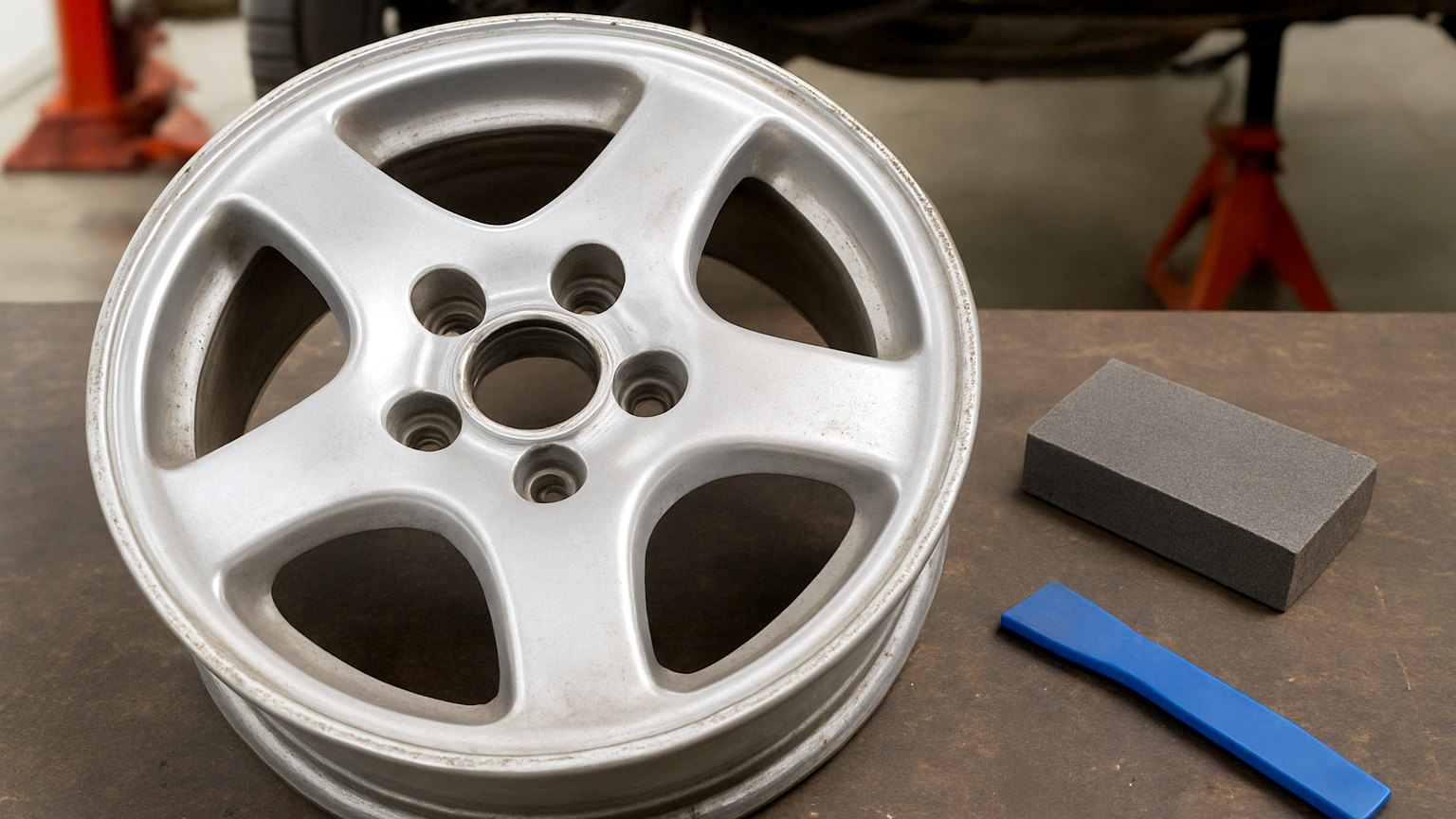
Kerb damage is the most common form of wheel damage and, in the great majority of cases, entirely cosmetic. The rim edge and the outer face take the scrape while the structure underneath is unaffected. That makes it repairable, and the question becomes which method suits the wheel, what it costs, and whether the finish can be matched convincingly.
When is kerb damage more than cosmetic?
When the impact was hard enough to buckle the rim, crack the alloy or damage the tyre. Any deep gouge that has removed a significant amount of material from the rim flange is worth inspecting properly, as is any damage accompanied by a subsequent vibration or a slow puncture. A light scrape across the outer face is almost always purely a matter of appearance.
What is mobile refurbishment?
A technician working at your home or workplace repairs the damaged area only, filling and sanding the gouge, then colour matching and blending the paint and lacquer into the surrounding finish. It is quick, usually done in a couple of hours with the wheel on the car, and considerably cheaper than a full refurbishment. On a solid painted wheel the results can be very good.
What is a full refurbishment?
The wheel is removed from the car and the tyre removed from the wheel, the old finish stripped, damage repaired, and the whole wheel refinished and lacquered as a complete unit. It costs more and takes days rather than hours, and it produces a uniform finish with no blending. It is the right choice where corrosion is present or where multiple wheels need doing.
What is different about diamond cut wheels?
They have a machined face where a lathe has cut fine concentric grooves into the bare alloy, protected only by lacquer. Repairing them requires the wheel to be recut on a lathe, which removes a layer of material each time. That limits how many times a wheel can be diamond cut, typically two or three, after which it must be painted a solid colour instead.
Is powder coating better than paint?
It is generally more durable, since the coating is applied as a powder and cured in an oven to form a thicker, tougher layer. It is well suited to solid colour finishes and to wheels that see hard use. The trade off is that it cannot reproduce a diamond cut face, and the range of finishes is different from what the manufacturer originally applied.
Does refurbishment affect wheel strength?
Properly done cosmetic repair does not. What is worth avoiding is aggressive shot blasting or acid stripping on an older wheel, and any process involving temperatures beyond what the alloy tolerates. A reputable refurbisher manages this correctly. The cheapest quote is not always the one to take on a component that carries the car.
Is it worth doing before selling?
Frequently yes, since scuffed wheels are one of the first things a buyer notices and they suggest a car that has been treated carelessly. The cost of refurbishing a set is usually modest against the difference it makes to the impression the car creates. It matters even more on a lease return, where charges for wheel damage are typically well above the cost of having it repaired independently.
How do you choose a refurbisher?
Look at examples of their work on wheels with the same finish as yours, particularly if diamond cut. Ask whether the tyres are removed, since a proper full refurbishment requires it and masking a fitted tyre is a compromise. And ask what guarantee is offered against the lacquer lifting, since that is the failure mode that shows up six months later.
Can you repair light scuffs yourself?
Touch up kits exist and they can improve the appearance of a small scrape on a solid colour wheel, provided the area is cleaned, keyed and built up in thin layers. What they cannot match convincingly is a diamond cut or polished finish. For anything visible from a few feet away, a professional repair usually looks considerably better for a modest cost.


