
Changing a wheel is a straightforward mechanical task, and almost everything that goes wrong involves where it is attempted rather than how. The single most important decision is made before any tool comes out of the boot: whether this is a safe place to do it at all. On a motorway hard shoulder, the answer is usually no.
Where should you stop?
Somewhere flat, firm and well away from moving traffic. A lay-by, a side road or a car park is worth reaching at low speed on a flat tyre rather than stopping in a hazardous position. A damaged wheel rim is a modest cost compared with the alternative. Soft ground and slopes are both reasons to keep looking, since a jack needs a firm level base.
What about on a motorway?
Do not attempt it. Pull as far left as possible, switch on the hazard lights, leave the vehicle by the passenger side and stand behind the barrier well back from the car, then call for assistance. Hard shoulders and refuge areas are among the most dangerous places on the road network, and no puncture justifies kneeling beside a live carriageway.
What is the correct order?
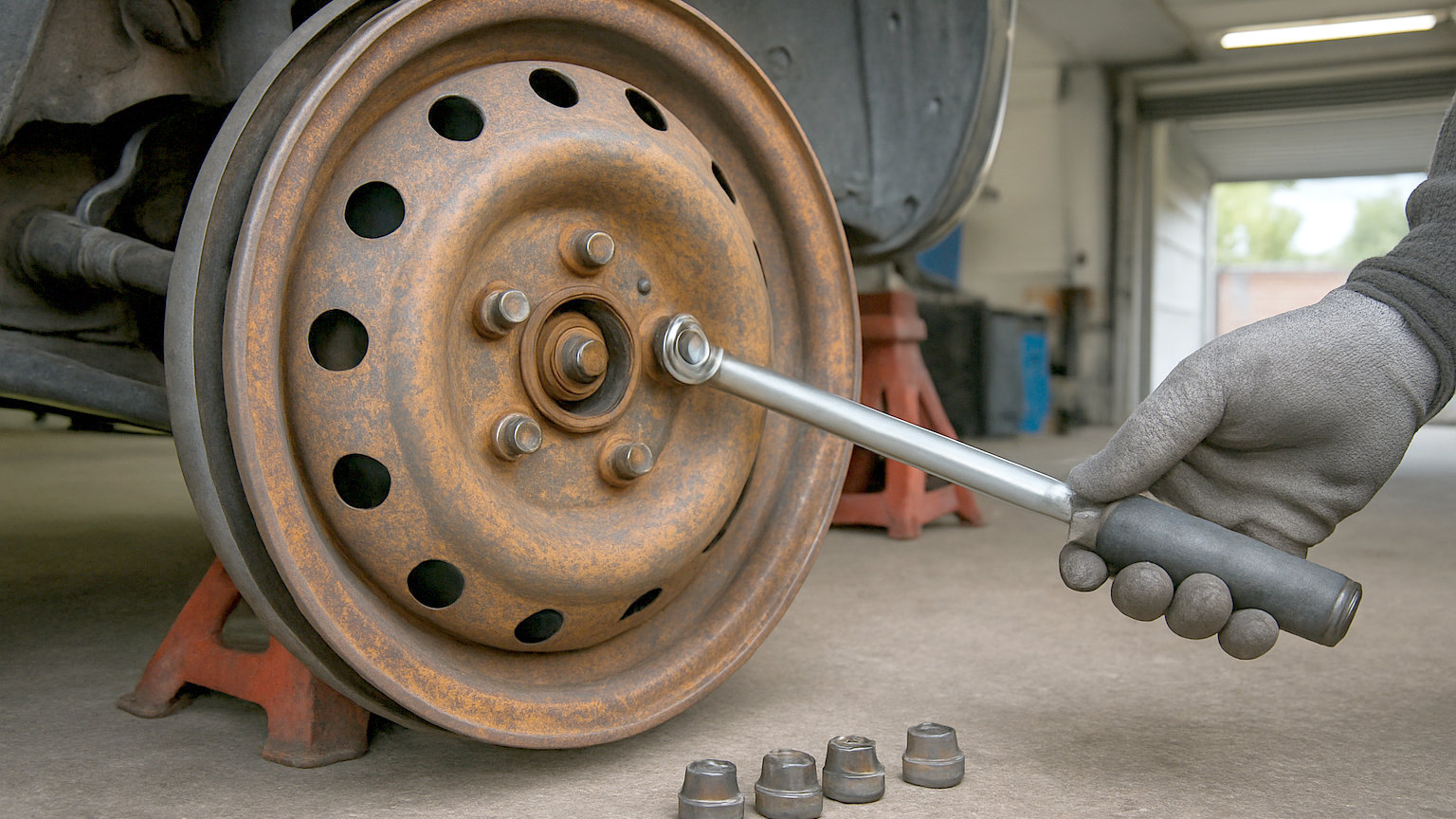
Apply the handbrake, put the car in gear or park, and chock a wheel diagonally opposite if you can. Loosen the bolts a quarter turn each while the wheel is still on the ground, since trying to break them free once the wheel is in the air simply spins it. Then jack the car, remove the bolts, change the wheel, and tighten by hand before lowering.
Where does the jack go?
On the designated jacking point, which is marked on the sill and shown in the handbook. Those points are reinforced; the sill elsewhere is not, and a jack placed wrongly will crush it. On a car with plastic sill covers the points are usually indicated by notches or arrows, and using the wrong spot is an expensive and entirely avoidable mistake.
Should you get under the car?
Never, with only a jack supporting it. A scissor or bottle jack is a lifting device rather than a support, and they fail without warning, particularly on uneven ground. Nothing about changing a wheel requires any part of you to be beneath the vehicle, and the moment you find yourself reaching under, stop and reconsider.
How should the bolts be tightened?
Finger tight with the wheel raised, then lower the car until the tyre touches, and tighten properly in a diagonal star pattern rather than around the circle. Progressive tightening across two or three passes pulls the wheel squarely onto the hub. Full tightening should be done with the weight on the wheel so it cannot spin.
What should you do afterwards?
Check the pressure of the wheel you have just fitted, since spares are frequently low and space savers need a much higher pressure than normal tyres. Observe any speed and distance limits marked on a space saver. And have the fixings torqued properly with a wrench at the earliest opportunity, since a brace tightened by feel is a guess.
What if you cannot manage it?
There is no obligation to attempt it. Breakdown cover exists for exactly this, and seized bolts, a stuck wheel or simply an unsafe location are all perfectly good reasons to call rather than persist. Knowing in advance whether your policy covers roadside tyre assistance is worth checking before you need it, rather than discovering the gap on a wet evening at the side of a road.
What should be in the car?
The jack, the brace, the locking wheel nut key if fitted, a warning triangle, a torch and gloves. Check periodically that all of them are present and that the key still fits, since these items go missing after garage visits. A high visibility jacket is worth adding, and it is required by law in several European countries if you travel abroad.


