
Wheel bearings are inspected at every MOT, and the outcome depends on whether the bearing has developed play, is excessively rough, or is simply making a noise. The distinction matters, because a bearing can be audibly failing and still pass, which surprises owners who assume a noise the tester can hear must be a failure.
How are they tested?
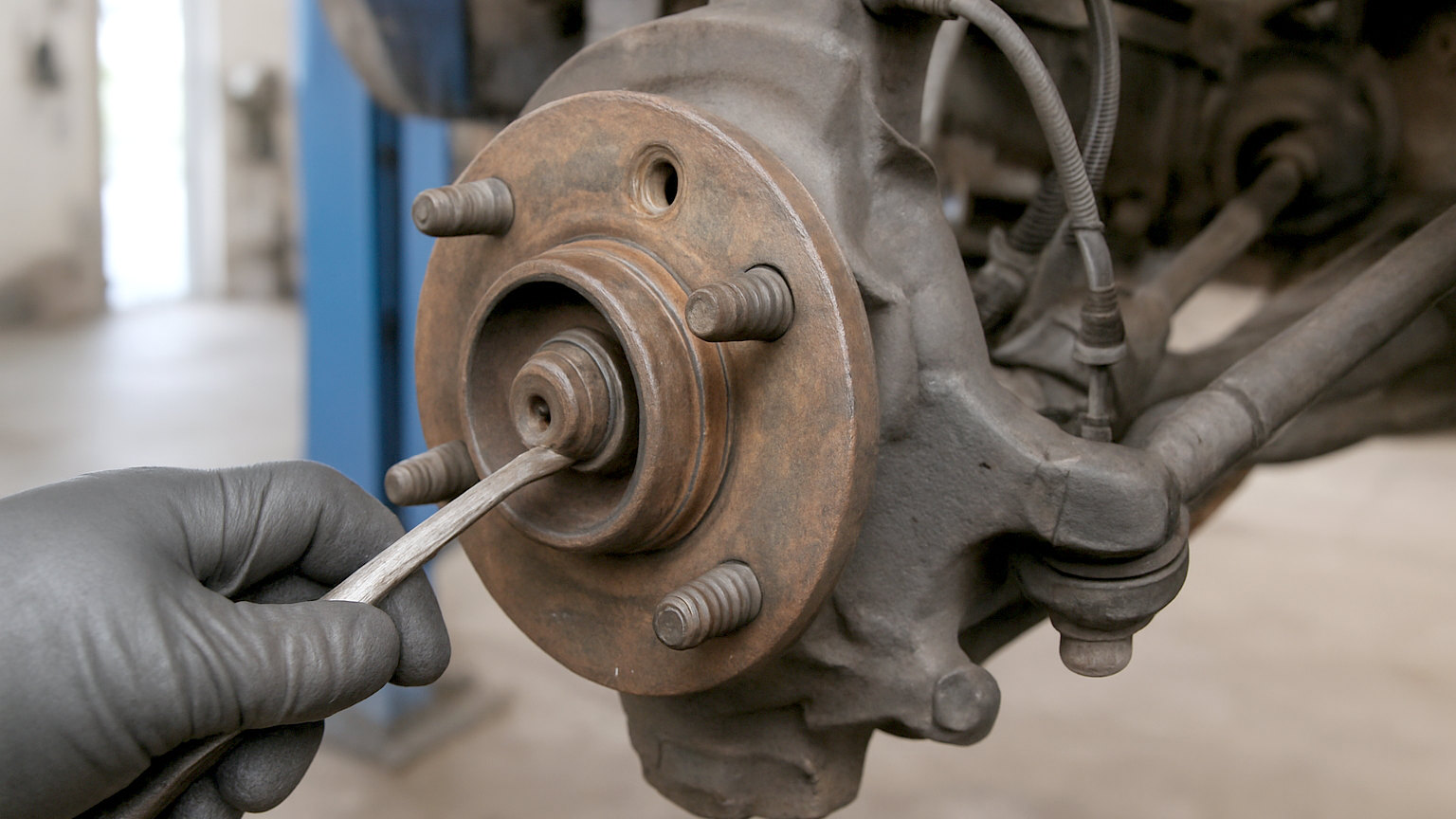
The car is raised and each wheel is rocked at the twelve and six o clock positions while the tester watches for movement between the hub and the carrier. The wheel is also spun to check for roughness. It is exactly the same test an owner can perform, carried out by someone who does it several times a day and knows what normal feels like.
What counts as a failure?
Excessive play in the bearing, or a bearing that is excessively rough or tight when the wheel is spun. Both are defects that affect how the wheel is located and therefore how the car steers and brakes. The standards are stricter than most drivers assume, and movement too small to notice while driving can still be enough to be recorded.
Can a noisy bearing pass?
Frequently, if it has no detectable play and does not feel rough when spun. The test assesses condition rather than noise, and a bearing in the early stages of failure may be humming clearly on the road while passing the physical checks. That is why an MOT pass should not be taken as confirmation that a bearing you can hear is healthy.
What about the ABS light?
An illuminated ABS warning lamp is a failure in its own right, and since many modern bearings contain the ABS encoder ring, a failing bearing can produce one. That means a bearing which passes the play test can still cause a failure through the warning light. Resolving it before the test is worth doing since the cause is likely to need attention anyway.
How do you tell it from a ball joint?
Testers use the same method anyone can: repeat the rocking test with the brake pedal held down, which removes bearing play from the result. Movement that disappears with the brake applied was the bearing; movement that remains is a suspension joint. It matters because the two produce very similar symptoms and quite different repairs.
Should an advisory be acted on?
Yes, and promptly. An advisory means the tester found movement or roughness that has not quite reached the failure threshold, and bearings deteriorate progressively rather than stabilising. It will be a failure well before the next test, and in the meantime it is likely to be damaging the brake disc on that corner through runout.
How can you check beforehand?
Raise each wheel safely on axle stands, rock it firmly at twelve and six o clock, repeat with someone pressing the brake, and spin it by hand listening and feeling for roughness. That is essentially the whole test and it takes half an hour for all four. Any corner that hums on the road is worth particular attention.
What else gets checked at the same corner?
Suspension ball joints, track rod ends, the brake disc and pads, and the ABS sensor and wiring. Since the tester is already rocking the wheel and looking at the hub, a bearing advisory frequently arrives alongside notes about adjacent components. Dealing with them together while the hub is apart usually saves labour.
Should you mention a noise when booking?
Yes, since a tester assessing a bearing that has been described as noisy will pay closer attention than one working through a routine inspection. It also means anything found can be discussed as part of the same visit rather than producing a separate diagnosis afterwards.
Can it be repaired rather than replaced?
Sealed bearings cannot be repaired, adjusted or regreased, so replacement is the only option. Older adjustable tapered roller types can sometimes be cleaned, repacked and readjusted if the surfaces are undamaged, which is why they are still found on trailers where servicing is expected.


