
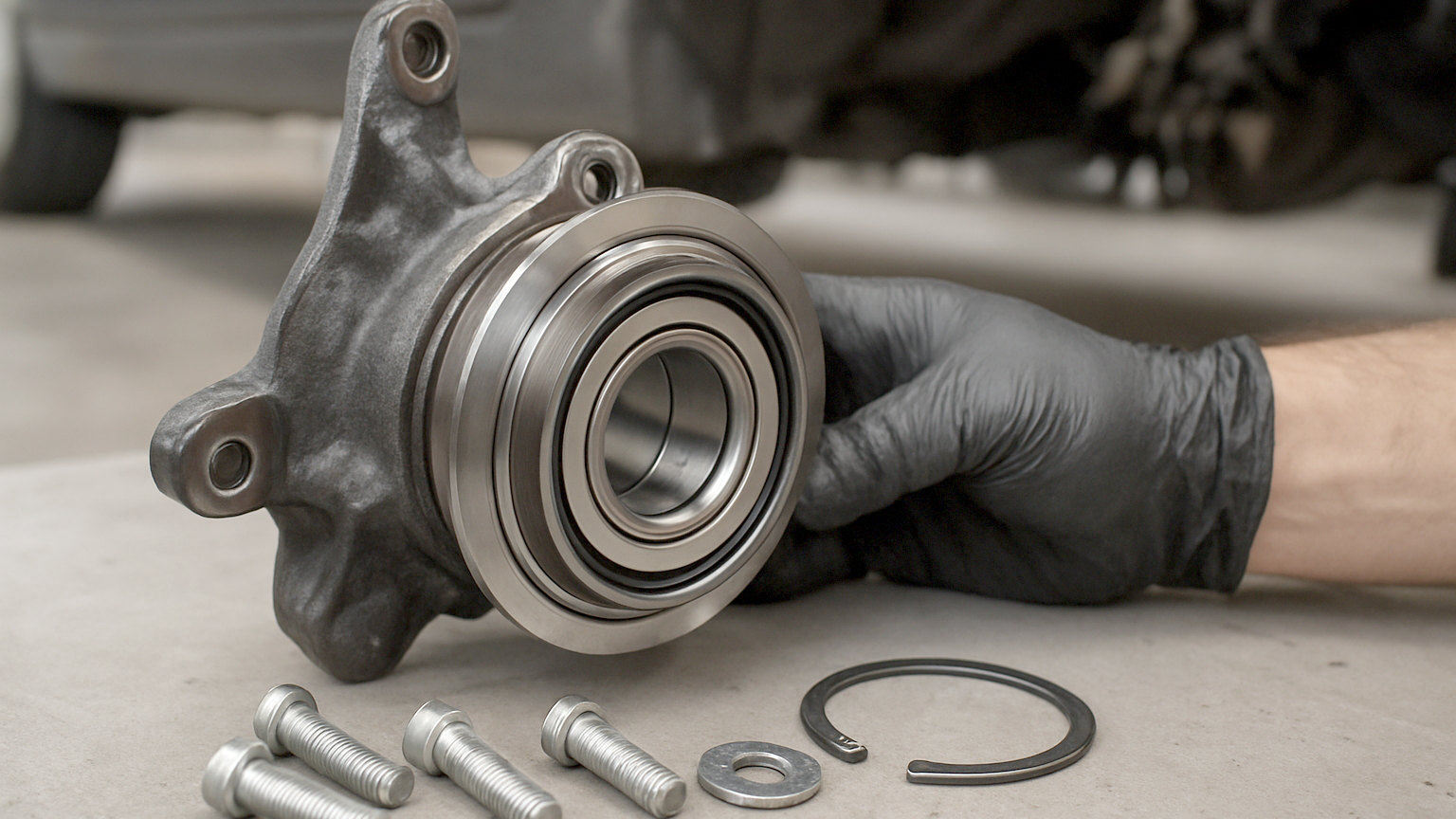
Not all wheel bearings are the same, and which type your car uses has a large influence on what replacement costs and how difficult the job is. The differences range from an adjustable set of tapered rollers that can be repacked with grease to a sealed hub assembly that bolts on complete with studs and sensor ring, and the price difference between them is considerable.
What are tapered roller bearings?
The traditional arrangement, using two separate tapered bearings, an inner and an outer, held in place by a castellated nut that sets the preload. They are serviceable, can be dismantled, cleaned and repacked with grease, and are adjusted rather than simply tightened. They are still found on trailers, older vehicles and some rear hubs, and they require periodic attention rather than none.
What is a pressed in bearing?
A sealed double row unit pressed into the hub carrier, with the hub itself pressed through the middle. It requires a hydraulic press or a substantial puller kit to remove and refit, and it must be pressed on the correct race or the bearing is destroyed during fitting. It is the cheapest type to buy and among the most labour intensive to fit.
What is a bolt on hub assembly?
A complete unit containing the bearing, the hub, the wheel studs and often the ABS encoder ring, which simply bolts to the suspension upright. Replacement is far quicker and requires no press, which reduces labour substantially. The part costs more, and on many modern cars it is the only option the manufacturer supplies.
What do the generation numbers mean?
The industry describes designs by generation. First generation is a simple double row cartridge pressed into the carrier. Second generation includes a flange for either the hub or the carrier. Third generation integrates the hub, the flange and mounting bolts into one bolt on unit. Higher generations are more expensive as parts and considerably cheaper in labour.
Which type does your car have?
Most vehicles from the last twenty years use sealed units, with bolt on assemblies common at the front of many models and pressed in cartridges elsewhere. A parts supplier will identify it from the registration. It is worth knowing before getting quotes, because a quote for a bolt on assembly and one for a pressed in bearing are not comparable jobs.
Are any of them serviceable?
Only the traditional tapered roller type, which can be cleaned, inspected and repacked. Sealed units cannot be opened, regreased or adjusted, and any attempt to prise a seal off simply ruins the bearing. That is why modern bearings appear in no service schedule and are inspected rather than maintained.
Does the ABS ring change things?
Considerably. Many sealed bearings have a magnetic encoder ring built into one seal, and it is fragile, invisible and directional. Fitting one the wrong way round leaves the ABS inoperative, and handling it near a magnet or dropping it can demagnetise it. That is a genuine reason to have this work done by someone who knows the specific bearing.
How does the type affect the cost?
A pressed in bearing is inexpensive as a part and takes substantial labour, sometimes requiring the hub carrier to be removed from the car. A bolt on assembly costs several times as much and may take under an hour. The totals often end up similar, which is why comparing quotes means comparing what is actually being done rather than the headline figure.
Can you fit a different type?
Only what the vehicle was designed for, since the carrier, hub and driveshaft are all machined to suit. Where a manufacturer offers only a complete hub assembly, aftermarket suppliers sometimes offer a bare bearing that fits the same application, which can reduce the part cost at the expense of more labour.
Does the type affect reliability?
Sealed units of every generation are broadly comparable when correctly fitted, and the more integrated designs remove the pressing step where most fitting damage occurs. That is a genuine reliability advantage in practice, even though the bearing itself is no better, simply because there are fewer opportunities to get the installation wrong.


