
Caster is the least familiar of the three main alignment angles and the one that most affects how the steering feels. Viewed from the side of the car, it is the backward tilt of the steering axis, meaning the imaginary line about which the wheel pivots when you turn. That tilt is what makes the steering want to return to straight ahead on its own.
How does it produce self centring?
By placing the tyre contact patch behind the point about which the wheel pivots, so the wheel trails rather than leads. A shopping trolley castor works on exactly the same principle, which is where the name comes from. Any deviation from straight ahead creates a force that pulls the wheel back into line, and the further behind the pivot the contact patch sits, the stronger that effect.
What does more caster feel like?
Heavier steering at low speed, stronger self centring, and better stability at motorway speed. Cars designed for high speed stability generally run generous caster. The cost is greater effort at parking speeds, which mattered more before power steering was universal and matters little now, which is why modern cars tend to use more caster than older ones did.
What happens with too little?
The steering feels vague and does not want to return to centre after a corner, so the driver has to wind it back manually. The car wanders at speed and needs constant small corrections. It is a distinctive sensation quite different from a pull, since the car does not go one way consistently, it simply fails to hold a line without input.
How does unequal caster cause a pull?
The car drifts towards the side with less caster, and this is one of the most common causes of a pull that survives repeated toe adjustments. Because tracking only measures toe, a caster difference between the two front wheels is invisible to a basic check. That is a strong argument for having a full alignment measured rather than a simple tracking adjustment.
Can caster be adjusted?
On many cars, no. It is often designed as a fixed angle determined by the position of the suspension mounting points, on the basis that it should never change unless something has been bent. Where adjustment does exist it is usually through eccentric bolts or shims at the suspension arm mountings, and some vehicles allow it only within a narrow range.
What makes caster change?
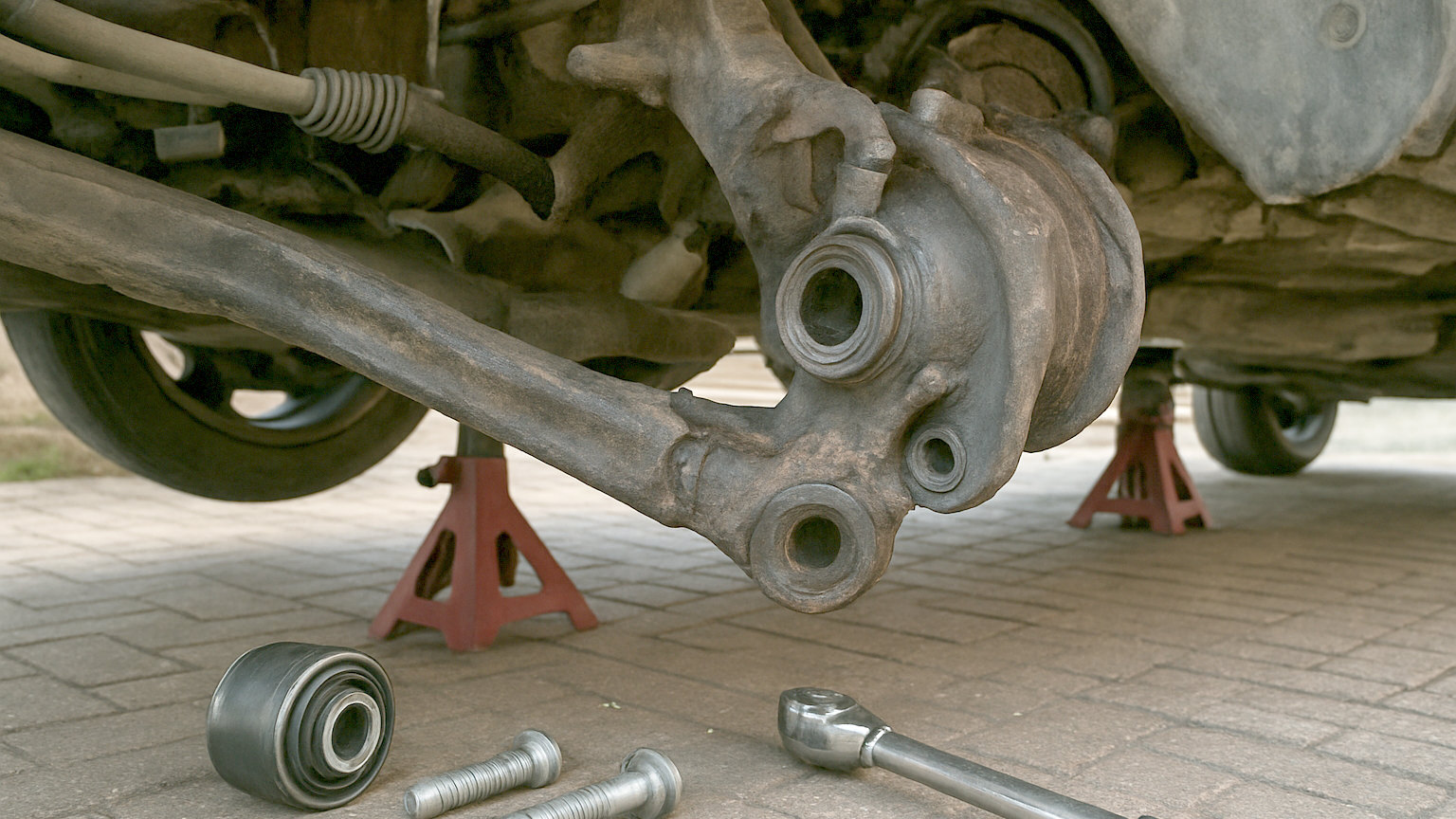
Impact damage, most often, from a heavy pothole or a kerb strike that has shifted a suspension arm or its mounting. Worn bushes, particularly the rear bush of a front lower arm, which allows the arm to move backwards under braking and effectively changes the angle. And accident damage to the subframe or body, which is why an unequal caster reading is worth investigating rather than simply adjusting out.
Why is it a useful diagnostic?
Because it changes only when something has moved, a caster reading well outside specification on one side is strong evidence of a bent component or a damaged mounting. Alignment technicians use it as an indicator of accident damage, and it is one of the reasons a full printout is worth more than a simple tracking adjustment, even where caster itself cannot be corrected.
What should you do about it?
Have the figures measured and compared side to side rather than only against the specification, since the difference between the two wheels matters as much as the absolute values. If one side is significantly out, look for a bent arm, a collapsed bush or a shifted subframe before considering adjustment. Correcting the cause is what produces a car that drives straight afterwards.
Does caster affect tyre wear?
Very little directly, which distinguishes it from toe and camber. Caster affects how the steering feels and how the car tracks rather than how the tyre sits on the road when driving straight. That is why a caster problem announces itself through handling and pulling rather than through a wear pattern, and why it is so often missed.


