
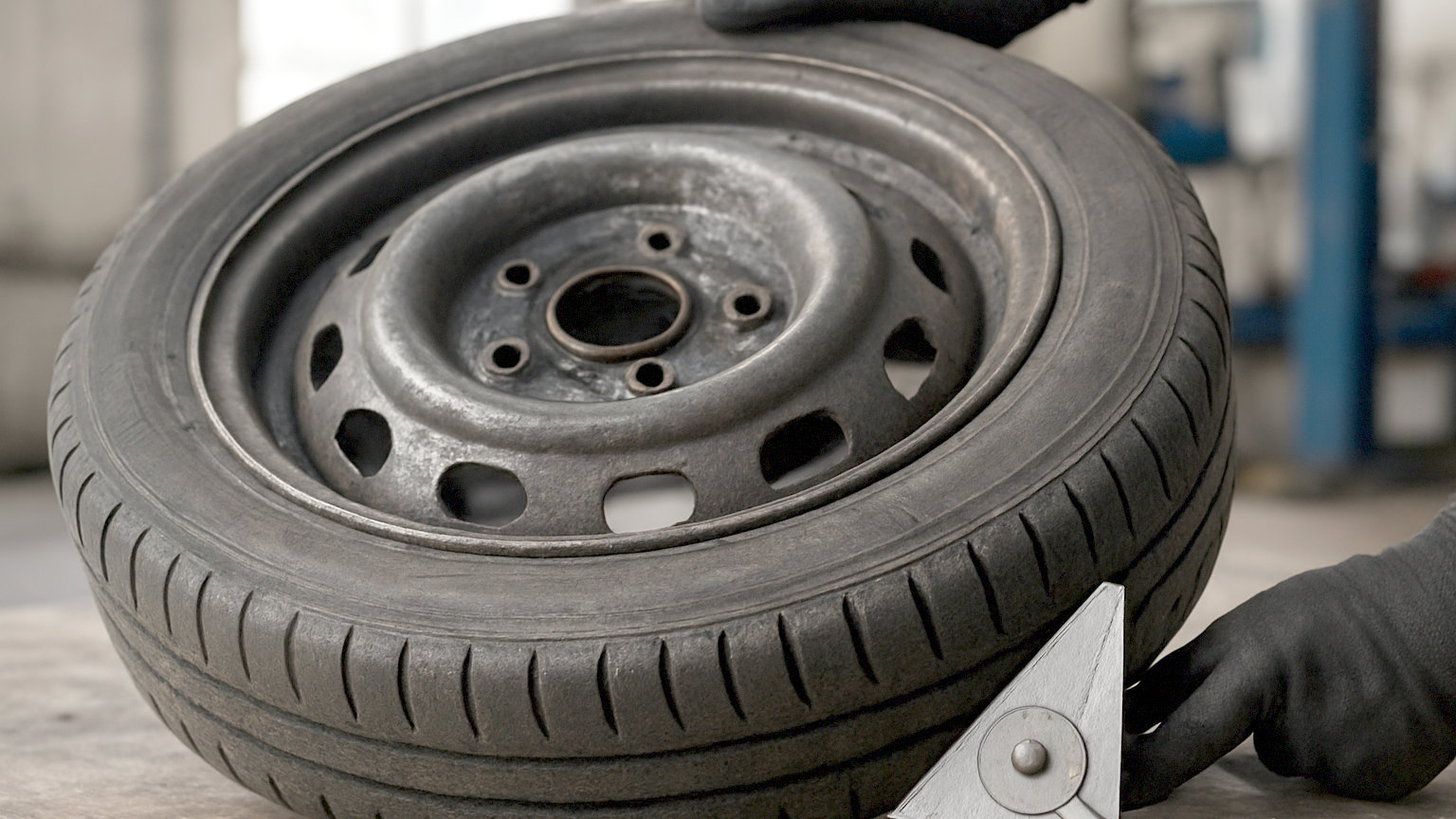
Camber is the angle at which a wheel leans when viewed from directly in front of the car. Negative camber means the top of the wheel tilts inwards towards the vehicle, positive means it leans outwards. Most modern cars run a small amount of negative camber at the front, and the figure is chosen to balance cornering grip against straight line tyre wear.
Why is negative camber used?
Because a car leans in a corner, and as the body rolls the outside wheel is pushed towards positive camber. Starting with the wheel leaning inwards means it arrives at roughly upright when it is most heavily loaded, which puts the maximum amount of tread on the road at the moment grip matters most. It is a compromise designed around cornering rather than straight line running.
What is the trade off?
Straight line tyre wear. A wheel leaning inwards puts more load on the inner shoulder of the tread while driving straight, which is most of the time, so that edge wears faster. Manufacturers keep the figure modest for exactly this reason. Excessive negative camber, whether from lowering or from a fault, produces the classic inner edge wear that catches people out at MOT time.
What does the wear pattern look like?
Smooth accelerated wear confined to one shoulder, with the rest of the tread in reasonable condition. Inner edge wear means excessive negative camber; outer edge wear means positive. The key distinction from toe wear is that camber wear is smooth rather than feathered, since the tyre is rolling normally but leaning rather than being dragged sideways.
How does unequal camber cause a pull?
A wheel with camber tends to pull towards the direction it leans, in the same way a bicycle turns when leant. If one front wheel has more positive camber than the other, the car drifts towards that side. It is a common cause of a persistent pull that survives a toe adjustment, and it is why a proper alignment measures camber rather than only tracking the toe.
Can camber be adjusted?
It depends on the car. Some vehicles have slotted strut mountings or eccentric bolts that allow a range of adjustment. Many have no provision at all, on the basis that camber should never change unless something is bent or worn. On those cars, correcting an out of specification reading means aftermarket camber bolts or plates, or replacing whatever has deformed.
What makes camber change?
An impact heavy enough to bend a suspension arm or a strut. Worn bushes and ball joints that allow the geometry to move. Sagging or broken springs, which reduce ride height and increase negative camber on most designs. And lowering the car deliberately, which does the same thing for the same reason and is why lowered cars so often wear their inner edges.
Does rear camber matter?
Considerably. Many cars run more negative camber at the rear than the front by design, so a degree of inner edge wear on rear tyres is normal. What matters is whether the two sides match and whether the figure is within specification. A rear wheel with camber well outside tolerance usually indicates a bent component or a collapsed bush rather than a setting that has drifted.
What should you do about inner edge wear?
Have a four wheel alignment carried out to establish the actual figures rather than guessing. If camber is out of specification, find out why before adjusting anything, since the usual causes are worn or damaged components rather than settings drifting. Correcting the cause and then setting the geometry is the sequence that produces a lasting result.
Is more negative camber ever desirable?
On a car used for track work, yes, since the additional cornering grip outweighs the straight line tyre wear. On a road car it is a poor trade, because the vast majority of miles are driven in a straight line and the inner edge pays for a benefit that is rarely used. Manufacturers pick a modest figure for exactly that reason.


