
Paying for an alignment and finding the car still pulls is a frustrating and fairly common outcome. It usually means one of three things: the pull was never a geometry problem, an angle that causes pulling could not be adjusted on your vehicle, or the work was carried out but not to the standard it should have been. Each is worth checking in turn.
What should you look at first?
The printout. It shows every measured angle before and after against the specification, and it tells you immediately whether the camber and caster were within tolerance and whether they differ side to side. If those figures were out and remain out after the work, the pull has an explanation that toe adjustment was never going to address.
Could an angle be unadjustable?
Frequently. Many cars have no factory adjustment for front camber or caster, so a reading outside specification stays outside it. Unequal camber or caster between the two sides causes a pull that no amount of toe setting removes. In that case the underlying cause is a bent or worn component, and correcting it means parts rather than adjustment.
Is it a tyre?
This is the most common answer and the easiest to test. Swap the two front tyres side to side and drive the same road. If the pull reverses direction, a tyre is responsible, most likely through an internal construction fault sometimes described as conicity. No alignment will ever cure that, and the answer is to replace or exchange the tyre.
Could a brake be dragging?
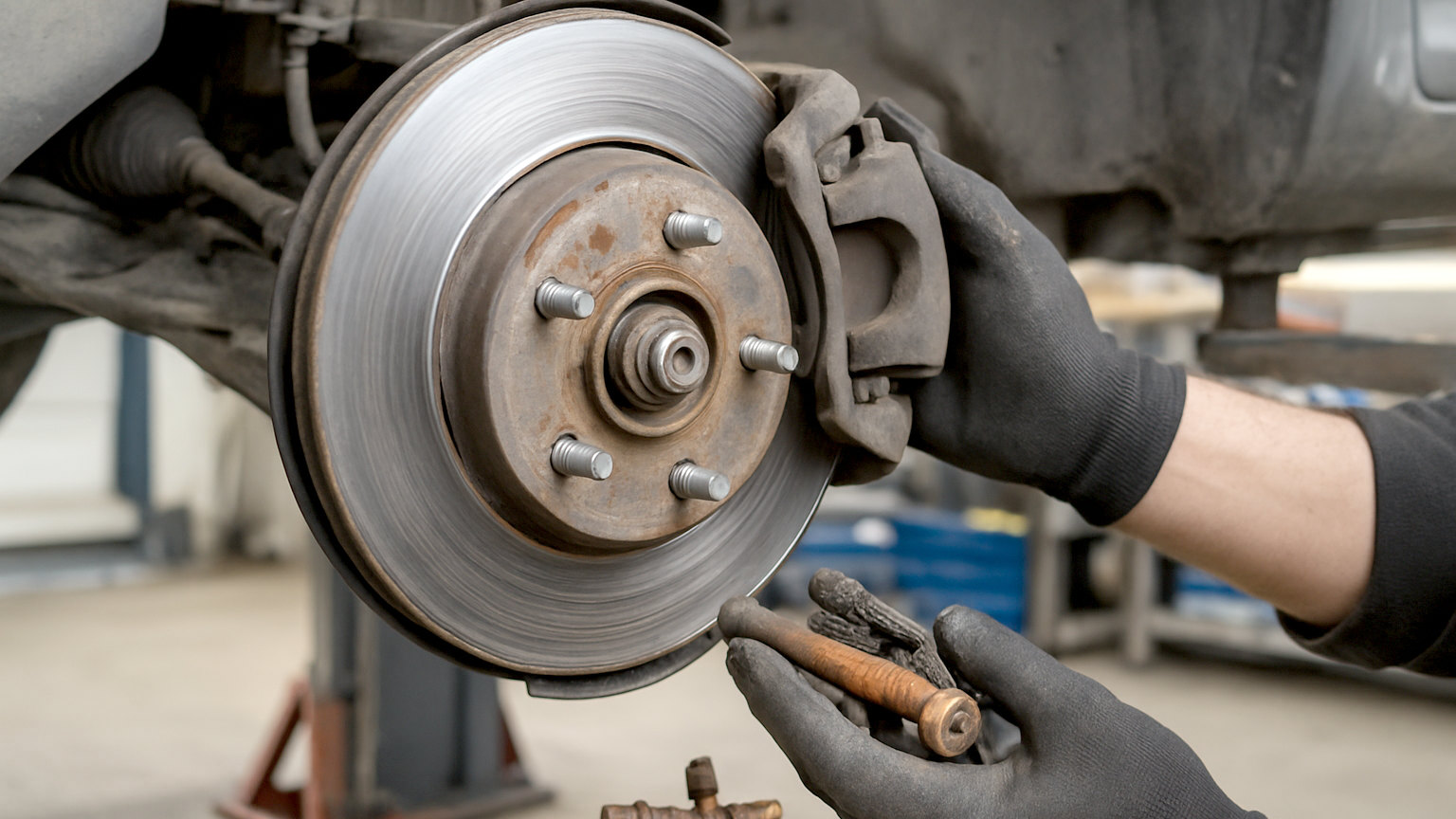
Yes, and it produces a pull that is often worse under braking or after a period of driving. A seized caliper or sticking slide pin holds one pad in contact continuously, and that wheel runs noticeably hotter than its opposite number. Comparing wheel temperatures carefully after a drive is a quick check that alignment equipment cannot perform.
What about the rear axle?
If only a two wheel tracking adjustment was carried out, the rear was never measured. A rear thrust angle out of square makes the car crab and produces a persistent pull that front adjustment cannot correct. Upgrading to a four wheel alignment is the next logical step, and the printout will show the thrust angle explicitly.
Was the steering wheel clamped?
It should be. Alignment must be set with the steering wheel held in its centred position, or the total toe can be correct while the individual sides are unequal. That produces a car that tracks straight with a crooked wheel, or one that feels as though it pulls. It is a procedural point worth asking about if the result is unsatisfactory.
Could it be the road?
Worth eliminating before going further. Road camber produces a gentle consistent drift towards the kerb on most surfaces. Testing in an empty car park or comparing the pull in both directions along the same straight road separates a genuine fault from a car simply responding to the surface it is on.
What should you do next?
Take the printout back and ask which angles were out and which could not be adjusted, since that conversation usually identifies the answer quickly. Then work through the tyre swap and the wheel temperature check. Between the printout and those two tests, the cause is usually clear without paying for anything further.
Should you go back to the same workshop?
Once, certainly, since they have the measurements and should be given the chance to explain them. If the printout shows everything green and the car still pulls, the cause lies outside the geometry and a different kind of inspection is needed. That is not a failure on their part, and saying so usually gets a more useful conversation than arriving convinced the work was done badly. The printout is the starting point for that discussion and it is worth bringing with you rather than describing it from memory.


