
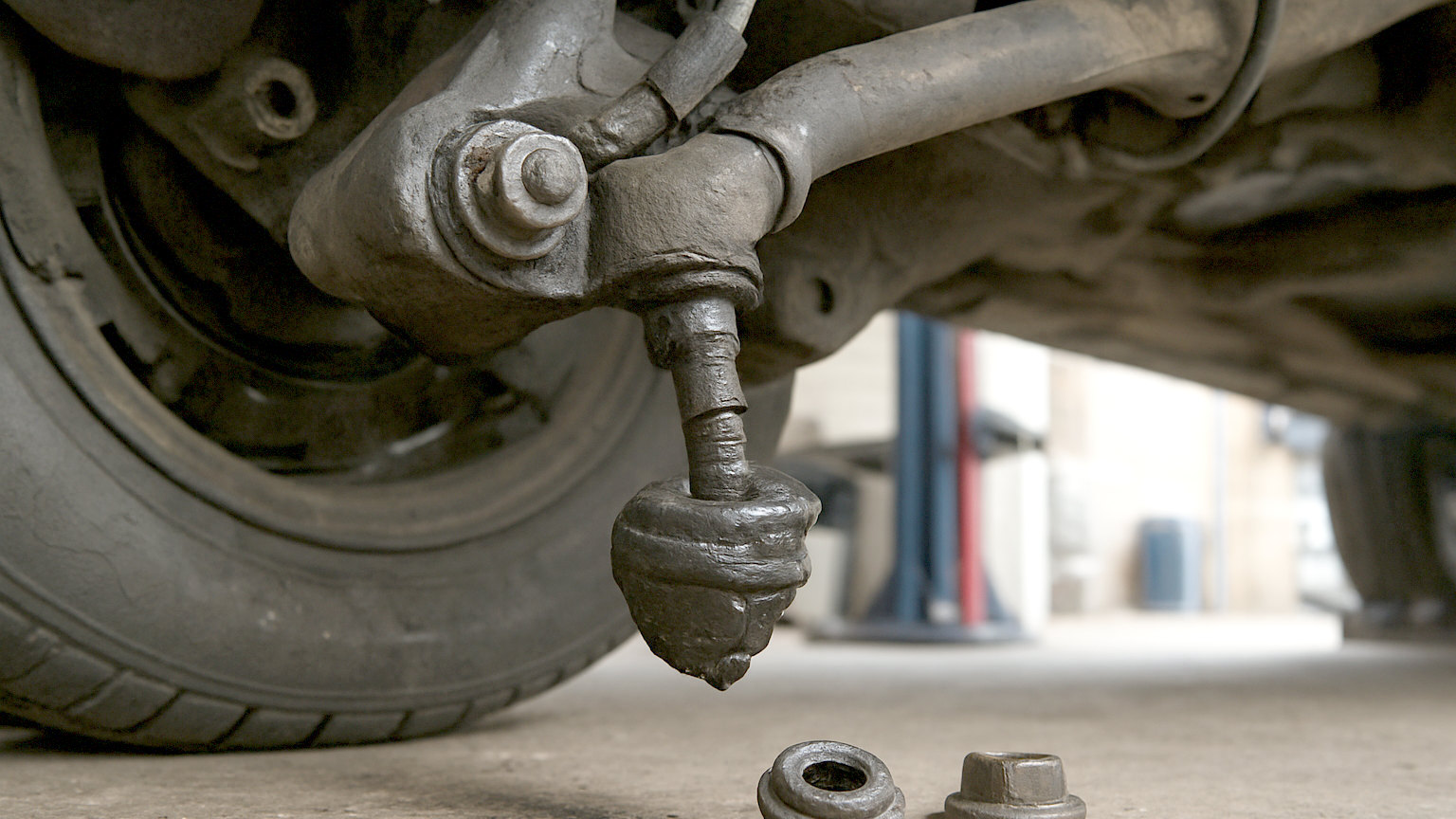
A reputable alignment technician will inspect the suspension before measuring anything, and may decline to adjust a car with worn components. That can feel like an unnecessary obstacle when you have arrived wanting a specific job done, and it is the right approach. Setting geometry on a car with play in it produces a result that is wrong the moment the car moves.
Why does wear matter so much?
Because alignment is measured on a stationary car and experienced on a moving one. A worn bush holds the arm correctly at rest and allows it to shift under braking, cornering and acceleration. The angles the tyre actually sees on the road are therefore quite different from the figures on the printout, which is why alignment on a worn car rarely cures the complaint.
Which components matter most?
Track rod ends and steering ball joints, since play there translates directly into changing toe. Front lower arm bushes, particularly the rear one, which controls how far the arm moves under braking. Suspension ball joints. Strut top mounts, which locate the top of the assembly. And wheel bearings, since play there affects every measurement taken at that corner.
What happens if it is set anyway?
The technician adjusts the angles to compensate for the position the worn component is currently sitting in. Replace that component later and the geometry is now wrong in a different way, so the alignment has to be paid for twice. In the meantime the car may drive slightly better or slightly worse, and the underlying wear continues regardless.
What is the correct order?
Inspect and replace worn components first, then measure and set the alignment afterwards. That sequence means the geometry is being set on a car whose parts are where they should be, and it means the alignment is done once rather than twice. Any workshop replacing suspension or steering parts should be including alignment at the end of the job.
Is measurement still useful?
Yes, even where adjustment should wait. A set of readings on a car with worn parts still reveals a bent component, since a caster or camber figure far outside specification indicates something has moved rather than worn. Taking the measurement as a diagnostic and deferring the adjustment is a perfectly sensible approach.
What about ride height?
It should be checked and corrected first as well, since camber and toe both vary with suspension travel. A sagging or broken spring lowers that corner and changes the geometry, so aligning a car in that condition sets the angles to suit a ride height that is wrong. Springs and dampers therefore come before alignment in the sequence.
Should you get a second opinion?
If a workshop declines to align your car and recommends parts, asking another to inspect it independently is reasonable, particularly if the list is long. What is worth recognising is that a technician who explains why the geometry cannot usefully be set is giving you accurate information rather than avoiding work, since the alignment itself is what they would be paid for.
What should you ask for?
A written list of what was found and why it affects the alignment, and a printout of the measured figures even if no adjustment is made. That gives you something to act on and something to compare against once the parts are replaced, and it turns a refused job into useful information rather than a wasted visit.
Does everything need replacing first?
Not necessarily, and the judgement is about which components actually affect the measured angles. A worn drop link or a perished exhaust mount has no bearing on alignment. A worn lower arm bush or track rod end absolutely does. Asking which items on the list are alignment critical separates the necessary from the merely advisable, and it lets you stage the work over a few months if the total is more than you want to spend at once.


