
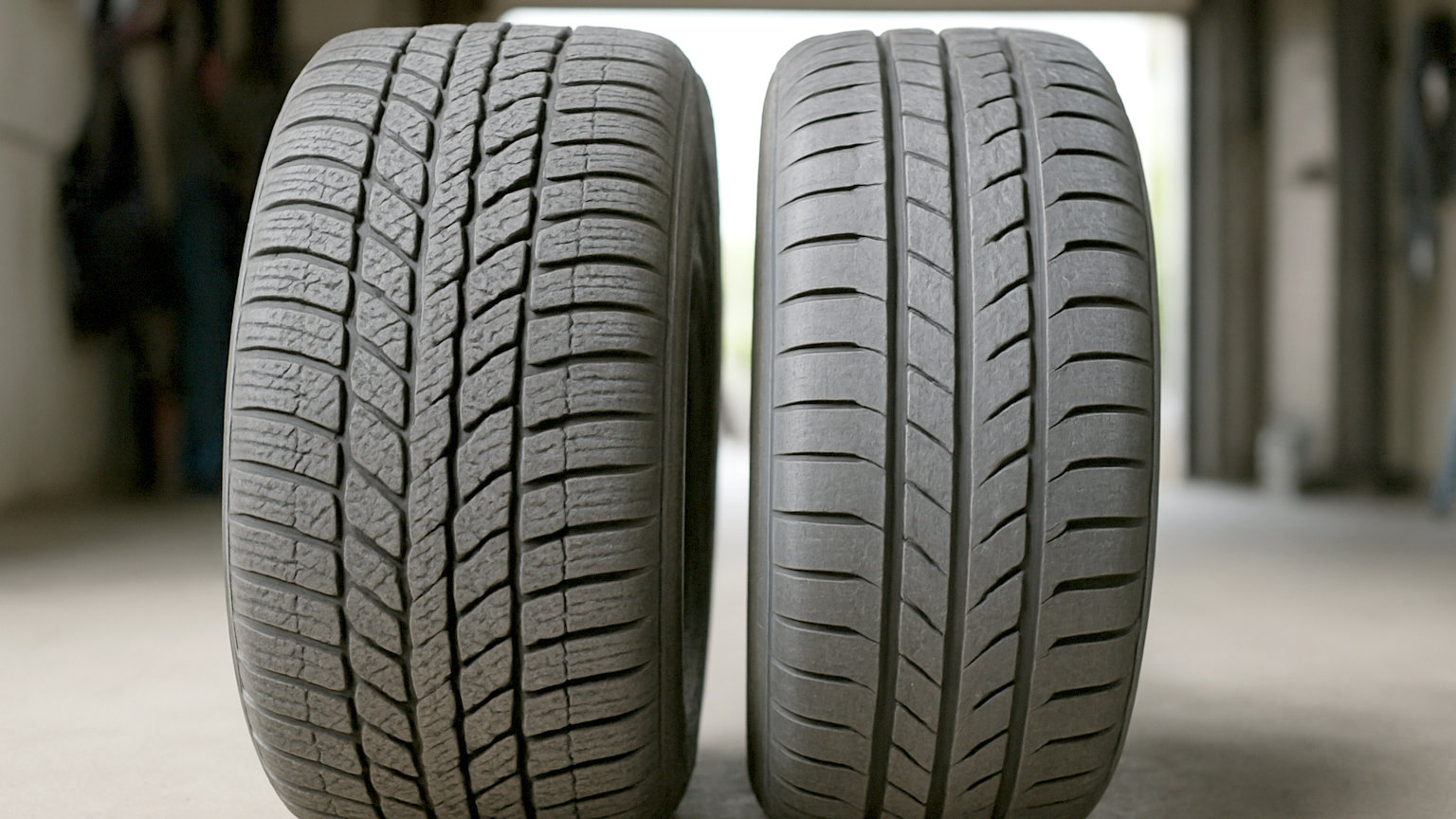
Winter tyres are widely misunderstood in the UK because they are associated with snow, which most of the country sees for only a handful of days a year. The more accurate way to think about them is as cold weather tyres, since the compound difference matters at any temperature below about seven degrees, which describes a great many British mornings from October to March.
What actually differs?
The rubber compound, principally. Summer tyres use compounds optimised for warmer temperatures, and they harden noticeably as the temperature drops, losing flexibility and therefore grip. Winter compounds contain more natural rubber and stay pliable when cold. The tread pattern differs too, with more sipes, meaning fine slits that grip loose surfaces and clear water.
Why does seven degrees matter?
It is the approximate crossover point below which winter compounds outperform summer ones on a dry or wet road, entirely separately from any snow or ice. That is the key point most people miss: a winter tyre is not only about snow traction, it is about braking and cornering on a cold wet road, which is the condition British drivers face constantly through the darker months.
What are all season tyres?
A compromise designed to work acceptably across a broad temperature range, with a compound and tread pattern between the two extremes. They are not as good as a dedicated winter tyre in genuinely cold conditions or as good as a summer tyre in the heat, and for many UK drivers that compromise is the most practical answer, since it avoids seasonal changeovers and storage.
What is the snowflake marking?
A symbol showing a three peaked mountain with a snowflake inside indicates the tyre has met a defined severe snow performance test. It is a more meaningful marking than the mud and snow lettering, which is not independently tested. If winter capability matters, that snowflake symbol is the one worth looking for on either a winter or an all season tyre.
Are they required by law in the UK?
No, unlike several European countries where winter tyres or chains are mandatory in certain months or conditions. If you drive abroad in winter it is worth checking the requirements of every country on the route, since penalties can be significant and insurance can be affected. Within the UK the choice is entirely yours.
Do they wear out faster?
Winter tyres wear quickly if used through a warm summer, since the softer compound is not designed for heat. Used seasonally they last well, and because you are alternating between two sets, the total tyre cost over several years is less different from running one set than people expect. All season tyres are designed to cope year round without that penalty.
Should all four be fitted?
Always. Fitting winter tyres to only one axle produces a car whose grip balance changes with temperature in a way the driver cannot anticipate, which is genuinely dangerous. If the budget only stretches to two, the answer is to keep the summer tyres rather than to mix, since a consistent car is safer than a partially upgraded one.
What about storage?
The set that is off the car should be kept clean, dry, out of direct sunlight and away from electric motors, which produce ozone that attacks rubber. Many tyre depots offer seasonal storage for a modest fee, which also means the changeover is booked and done properly rather than becoming a job that never quite happens once the weather turns.
Are they worth it in the UK?
It depends where and how you drive. Rural roads, hills, early starts and exposed areas make a strong case, and so does any journey that cannot be postponed in bad weather. For a car used mainly in town in mild southern conditions, all season tyres are often the sensible middle ground, giving most of the cold weather benefit with none of the changeover inconvenience.


