
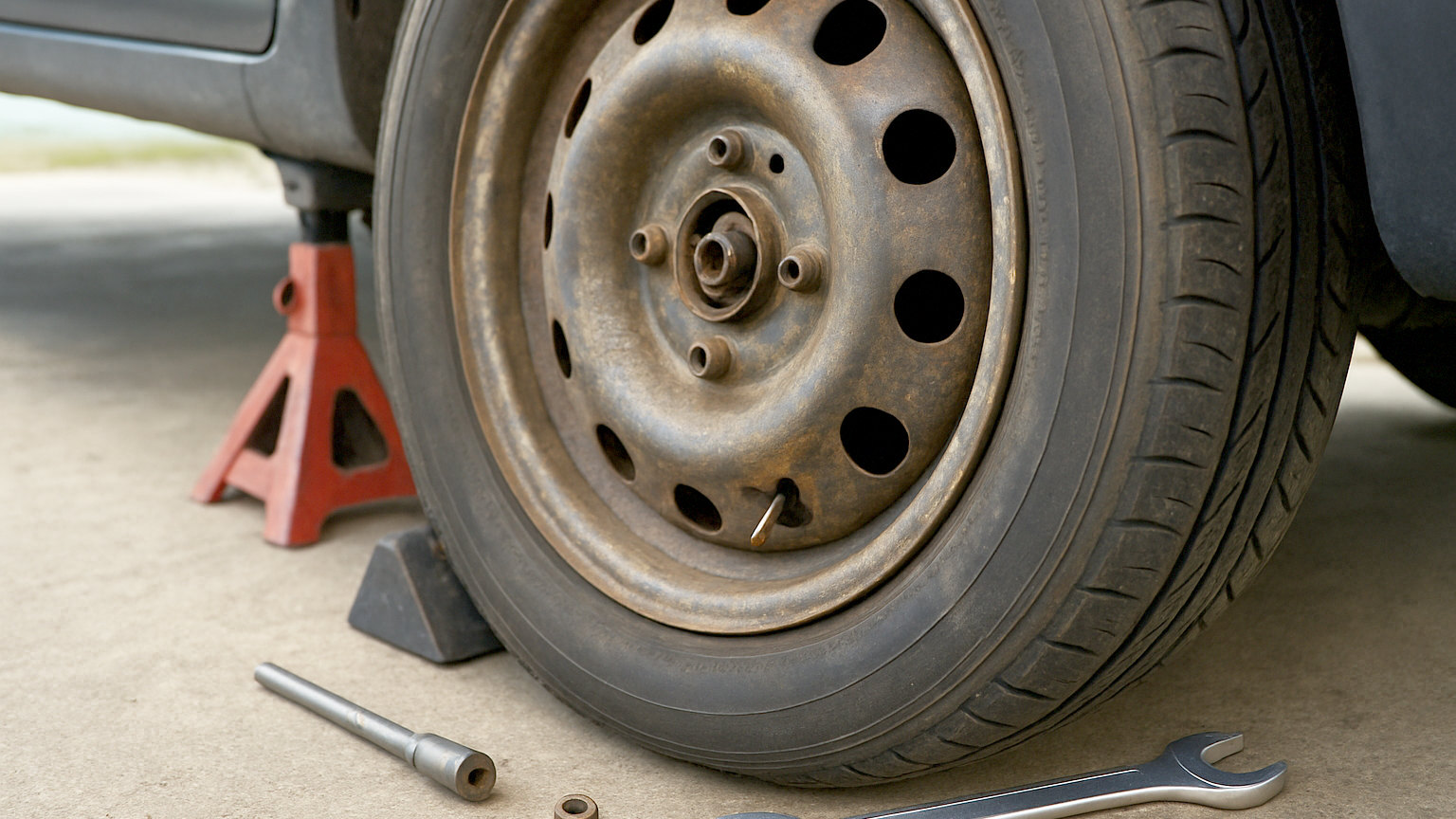
All tyres lose a little pressure over time, typically a pound or two per square inch each month, because air molecules gradually pass through the rubber itself. That is normal and it is why monthly checks matter. A tyre that needs topping up every week or two is doing something different, and there are four common explanations worth working through.
Could it just be the temperature?
Frequently, and it catches people out every autumn. Air pressure falls as temperature drops, by roughly one pound per square inch for every ten degrees Fahrenheit or so. A tyre set correctly in September will read noticeably low on a frosty November morning with no leak whatsoever. Checking when cold, and rechecking after a significant weather change, accounts for this.
What is a bead leak?
The bead is where the tyre seals against the rim, and on alloy wheels that surface corrodes over time, particularly where salt has reached it. The corrosion creates a rough surface that the tyre cannot seal against, producing a slow steady leak with no puncture to find. It is one of the most common causes of persistent pressure loss on cars more than a few years old.
How is a bead leak fixed?
By removing the tyre, cleaning the corrosion from the bead seat back to clean metal, and refitting with a suitable sealant. It is a modest job for a tyre fitter and it resolves the problem properly. Simply reinflating repeatedly achieves nothing, and adding sealant into the tyre through the valve is a temporary measure that complicates any later repair.
Can the valve be responsible?
Very often. Rubber valve stems perish and crack with age, particularly at the base where they pass through the rim, and the small core inside can also leak. Both are inexpensive and should be replaced whenever a new tyre is fitted, which is not always done. Applying a little soapy water around the valve reveals a leak as bubbles within seconds.
How do you find a slow puncture?
By inflating the tyre and spraying soapy water across the tread, sidewalls, valve and the join between tyre and rim, then watching for bubbles. A nail or screw in the tread is often visible once you look closely, sometimes sealing well enough that the loss is very slow. Mark it and have the tyre inspected rather than pulling it out, since removal releases the air immediately.
Could the wheel itself be leaking?
It can. A cracked alloy wheel, usually from a pothole impact, leaks air through the crack and produces a loss that no tyre inspection will explain. Porosity in a cast wheel can do the same. Both require the wheel to be inspected off the car, and a cracked wheel should be replaced rather than repaired if the crack is in a structural area.
Does it matter if it is only a few pounds?
Yes, because a tyre a few pounds low flexes more, runs hotter, wears its shoulders and uses more fuel, and because a slow leak usually gets worse rather than stabilising. There is also the practical risk that a tyre losing air steadily will eventually be significantly low at exactly the wrong moment, on a motorway or with a full load.
What should you do about it?
Note how much it loses over a week so you can describe it accurately, do the soapy water test to check the valve and the bead, and have the tyre removed and inspected if nothing is obvious. Ask specifically about the bead seat condition on alloy wheels, since it is the cause fitters find most often and the one owners least expect.
Should you use a sealant instead?
Not as a permanent fix. Aerosol sealants are designed to get you home after a puncture, and using one to mask a persistent slow leak coats the inside of the tyre, complicates any later inspection and can damage a pressure monitoring sensor. Finding and fixing the actual cause is both cheaper and more reliable.


