
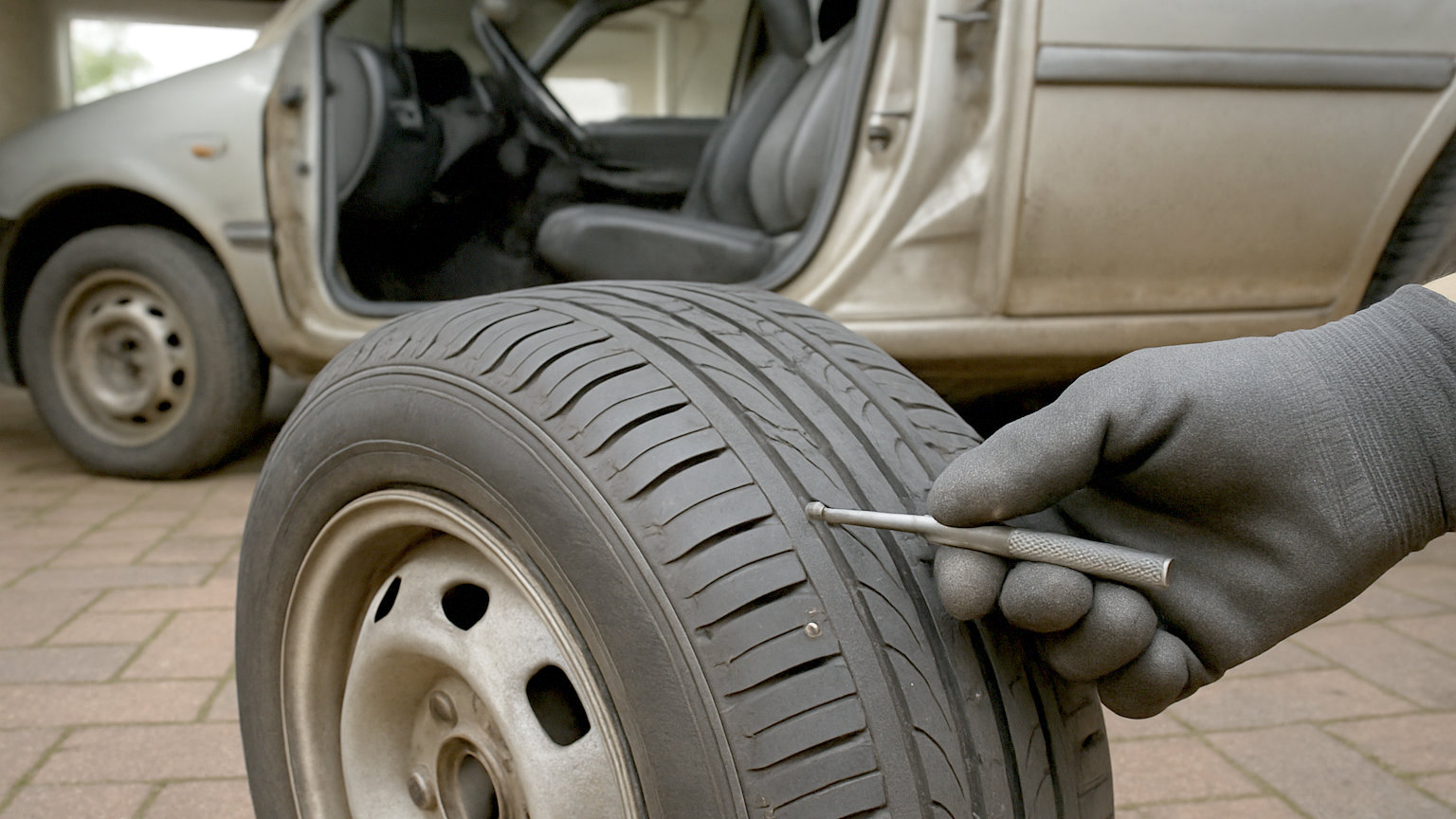
A puncture does not automatically mean a new tyre, and a properly carried out repair to the recognised standard is safe and permanent. Whether yours qualifies depends on where the damage is, how large it is, and crucially whether the tyre was driven on while deflated. Those three questions decide it, and a reputable fitter will assess all of them before quoting.
What is the minor repair area?
A defined central band of the tread, covering roughly the middle three quarters of the width, within which repairs are permitted. Damage outside that band, in the shoulder or the sidewall, cannot be repaired because those areas flex constantly and carry structural load. A puncture just outside the band means a new tyre even though the tyre looks otherwise perfect.
Why can sidewalls never be repaired?
Because the sidewall flexes with every rotation and it carries the load between the tread and the rim. A patch or plug there is subjected to continuous movement that no repair can withstand, and failure would be sudden. There is no exception to this, and any tyre with a sidewall cut, puncture or bulge must be replaced regardless of how much tread remains.
How large a puncture can be repaired?
The recognised standard permits repairs up to a specified diameter, commonly around six millimetres for car tyres, within the minor repair area. Anything larger compromises too many of the casing cords. Multiple repairs are permitted on some tyres provided they are adequately separated, which a fitter will assess against the standard rather than by judgement.
What is the correct repair method?
The tyre is removed from the rim so the inside can be inspected, since internal damage from running flat is invisible from outside. The injury is cleaned and reamed, and a combined plug and patch unit is fitted from the inside, sealing both the hole through the tread and the inner liner. Simply pushing a plug in from the outside without removing the tyre is not a compliant repair.
Why does driving on it matter so much?
Because running a tyre at very low pressure destroys the sidewall internally within a very short distance, even if it looks acceptable once reinflated. The internal surfaces chafe and break down, and the tyre becomes structurally unsound. That is why a fitter who has inspected the inside may refuse a repair that appeared straightforward, and it is a refusal worth accepting.
What about aerosol sealants?
They are a get you home measure rather than a repair, and many cars now carry one instead of a spare. They work on small tread punctures and not at all on sidewall damage or larger holes. Tell the fitter one has been used, since the sealant must be cleaned out and some products make a subsequent permanent repair impossible.
Can run flat tyres be repaired?
Most manufacturers say no, and it is worth knowing before you have a puncture. A run flat has reinforced sidewalls designed to support the car briefly with no air, and once it has done so the structure has been stressed in a way that cannot be assessed. Some manufacturers permit repair if the tyre has not been run flat, though many fitters will not risk it.
What should you expect from a fitter?
The tyre removed from the rim and inspected inside, a clear answer about whether the damage falls within the repairable area, and a repair to the recognised standard if it does. A fitter who plugs a tyre from the outside without removing it is not doing the job properly, and one who refuses a repair after inspecting the inside is usually protecting you rather than selling a tyre.
Is a repaired tyre as good as new?
Within the permitted area and carried out to the standard, yes, and it is a permanent repair rather than a temporary one. Some manufacturers reduce the speed rating of a repaired tyre, which matters little in ordinary use. What is not acceptable is a repair outside the permitted area, however neat it looks.


