
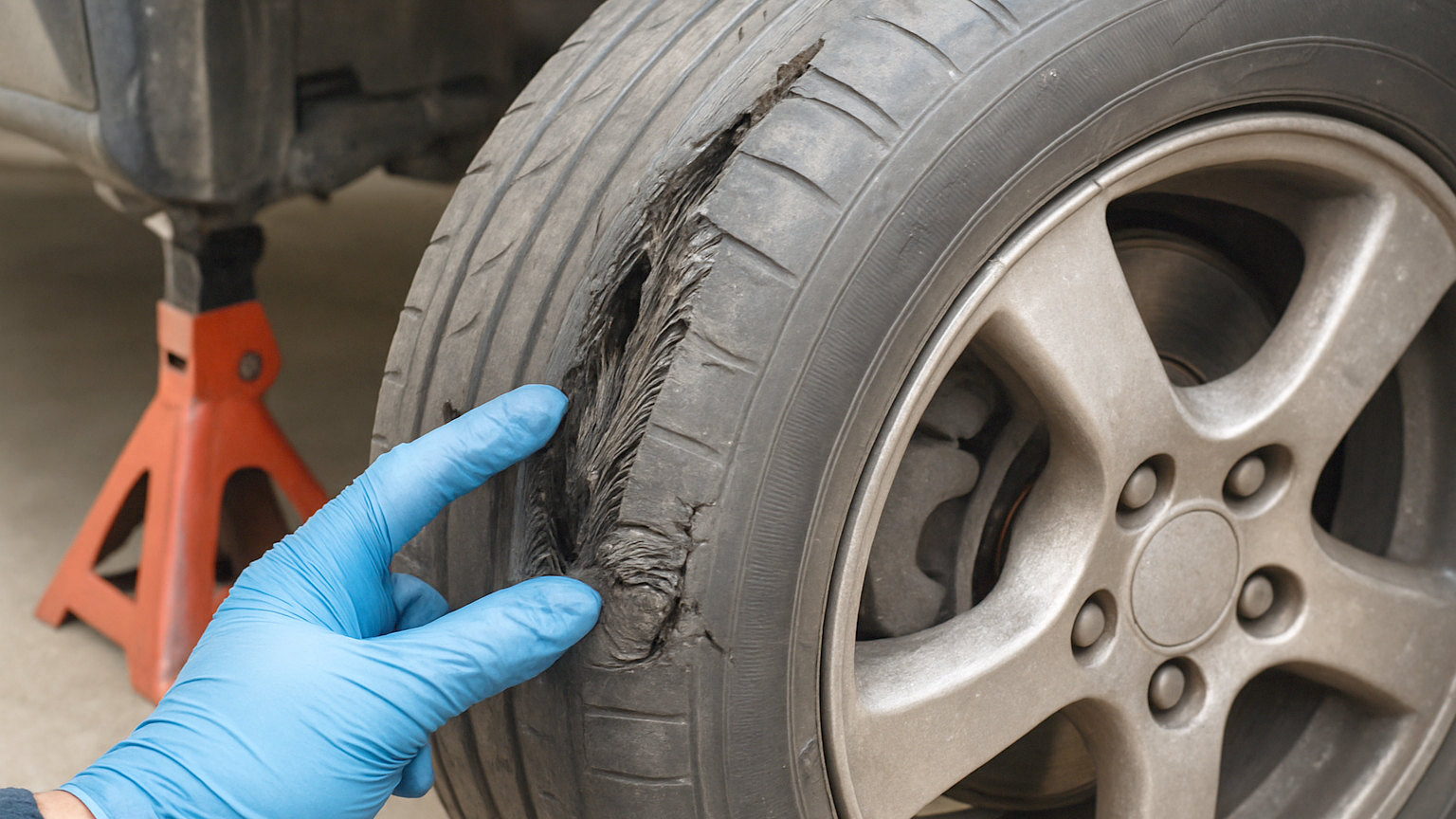
A blowout is a sudden structural failure of a tyre rather than the gradual deflation of a puncture, and it happens because the casing has been weakened to the point where it can no longer contain the pressure. It is frightening and it is largely preventable, since the main causes are conditions that develop over time and can be spotted during an ordinary inspection.
What is the main cause?
Underinflation, by a considerable margin. A tyre running low flexes far more than it should with every rotation, and that flexing generates heat within the sidewall. Sustained heat breaks down the bond between the rubber and the internal cords until the structure fails. That is why blowouts happen disproportionately on motorways in hot weather with a heavily laden car.
What else contributes?
Impact damage from potholes and kerbs, which breaks cords and creates a weak point that eventually ruptures, often appearing as a bulge first. Age, since old rubber is brittle and its internal bonding has weakened. Overloading the vehicle beyond the tyre load rating. Damage from a previous run flat episode. And occasionally a manufacturing defect, which is rare.
Why is a front blowout worse?
Because the front tyres steer the car, so a sudden failure produces a violent pull towards the affected side that must be corrected immediately. A rear blowout tends to produce a wallowing or fishtailing sensation that is less immediately dramatic but can develop into a spin if the driver overreacts. Both need the same fundamental response.
What should you actually do?
Grip the wheel firmly with both hands and keep the car straight. Do not brake, which is the instinctive reaction and the wrong one, because braking transfers weight and can turn a controllable situation into a spin. Ease off the accelerator gradually and let the car slow itself. Only once speed has fallen substantially should you brake gently and steer towards the verge.
Why is braking so dangerous?
Because the car already has drastically unequal grip across one axle, and braking adds a large longitudinal force to that imbalance. Hard braking with a failed front tyre pulls the car sharply towards that side. The whole aim is to reduce the forces acting on the car until the speed is low enough for the failure to matter less, which means doing as little as possible.
How do you prevent it?
Check pressures monthly and before long journeys, using the laden figures when carrying a full load. Inspect both sidewalls including the inner face for bulges and cuts, particularly after any pothole strike. Replace tyres showing cracking or over about ten years old. And avoid running the car overloaded, since load rating is a limit rather than a target.
What should you do afterwards?
Get well clear of the carriageway before doing anything else, and on a motorway leave the vehicle and stand behind the barrier rather than attempting a wheel change on a hard shoulder. Call for assistance. Once recovered, have the other tyres inspected too, since whatever caused one failure may well have affected its neighbour.
Does practice help?
Knowing the correct response in advance genuinely does, because the whole event lasts a few seconds and there is no time to reason it out. The single most useful thing to have fixed in your mind is that you hold the wheel straight and do not brake. Everything else follows from staying calm long enough for the speed to fall.
Is a rear blowout easier?
Less immediately violent, since the steering is unaffected, though the back of the car will feel loose and may begin to move sideways. The response is identical: hold the wheel straight, keep steering inputs small, and let the car slow gradually. Braking or steering sharply is what turns a rear failure into a spin, and on a heavily laden car or one towing a trailer that risk is higher still.


