
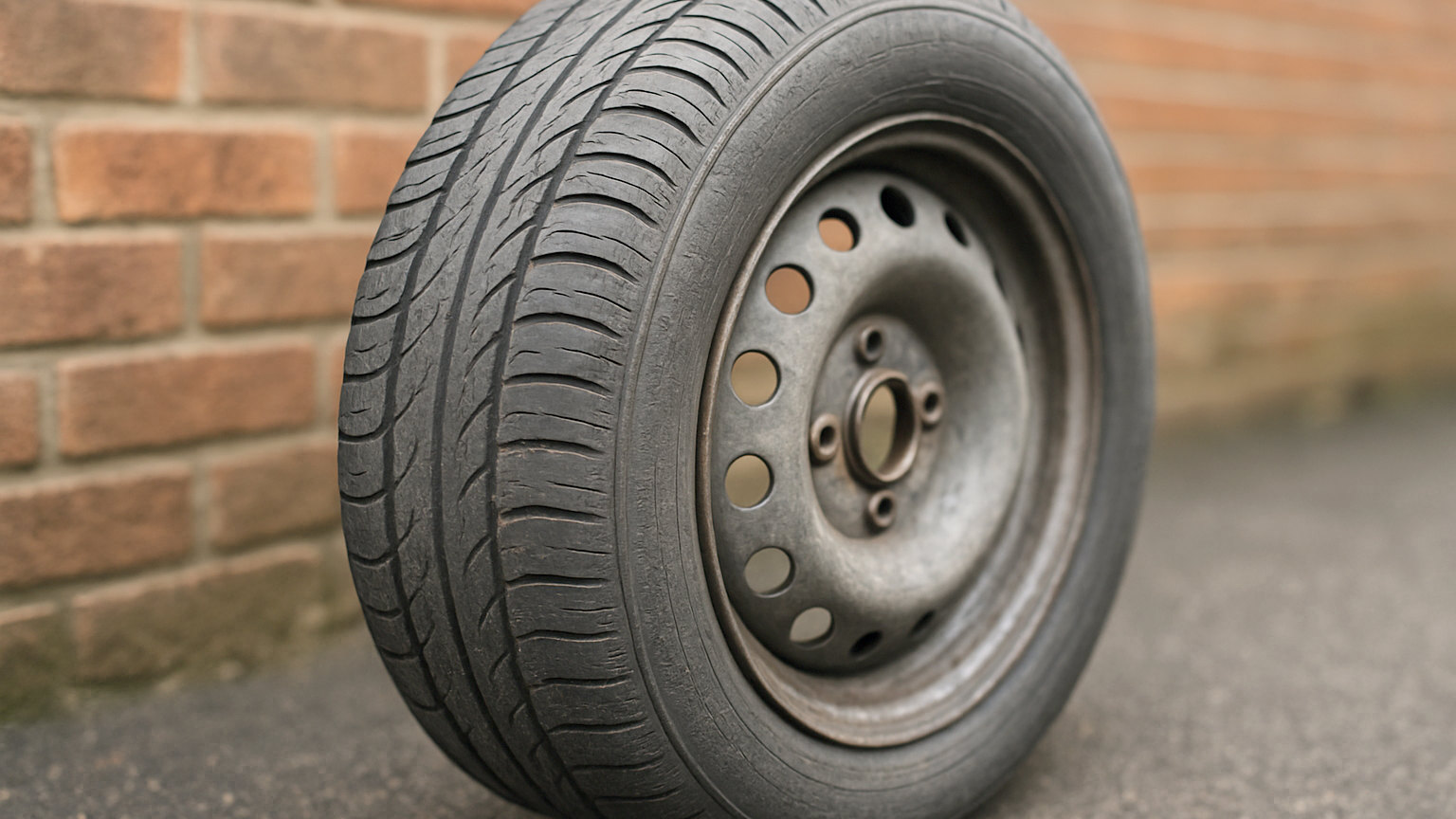
Tyres degrade with time as well as with use, and a tyre with plenty of tread can still be unfit for the road if it has spent a decade doing very little. Rubber hardens, loses flexibility and develops fine cracks as its compounds break down under the influence of oxygen, ultraviolet light and heat cycling, and none of that shows up on a tread depth gauge.
How do you find the age of a tyre?
From the date code moulded into the sidewall, a four digit number usually inside an oval at the end of a longer serial. The first two digits are the week of manufacture and the last two the year, so 2519 means the twenty fifth week of 2019. It appears on one sidewall only, so you may need to look at the inner face to find it.
What actually deteriorates?
The rubber compound loses its oils and antioxidants, becoming harder and less able to conform to the road surface. Grip falls away, particularly in the cold and the wet where a flexible compound matters most. The rubber also becomes more brittle, so it is more prone to cracking and to damage from impacts. The internal bonding between rubber and cords weakens too.
Is there a legal age limit?
For most cars, no, though tyres over ten years old are prohibited on the front axles of certain heavier vehicles and coaches. For ordinary cars the law addresses condition rather than age. Many manufacturers and safety organisations recommend replacement at around ten years regardless of tread, and inspection annually from about five years onwards.
What should you look for?
Fine cracking in the grooves between tread blocks and around the sidewall, sometimes called crazing or weather checking. A hard, shiny appearance to the rubber. Any deformation or flat spotting that does not work out after driving. A tyre that has visible cracking should be replaced whatever its tread depth, since the structure is deteriorating.
Does storage matter?
Considerably. Tyres kept out of direct sunlight, away from ozone sources such as electric motors, and at a stable moderate temperature age far more slowly. A car parked outside in strong sun ages its tyres noticeably faster than one garaged. Standing in one position for months also allows flat spots to set, particularly in cold weather.
Which vehicles are most affected?
Anything used infrequently. Caravans and trailers are the classic case, often running on tyres a decade old with almost no wear, and tyre failure on a caravan at motorway speed is a well documented hazard. Classic cars, motorhomes, and second cars used a few times a year all fall into the same category, as do spare wheels that have never been used.
What about buying new tyres?
Check the date code before they are fitted rather than afterwards. Tyres are sometimes sold having sat in storage for two or three years, which is not unreasonable if they have been stored properly, but you are entitled to know. A tyre more than about three years old at the point of sale is worth questioning, since you are paying for a full service life.
Does the spare need checking?
It does, and almost nobody does it. A spare that has sat in a boot well for eight years may be perished, flat, or both, and you discover this at the roadside in the dark. Checking its pressure and date code when you check the others is a small habit that occasionally saves a great deal of inconvenience.
Does mileage or age matter more?
Whichever arrives first. A tyre worn to the limit in three years is finished regardless of its age, and one with full tread at twelve years old is finished regardless of its mileage. The mistake is assuming that plenty of tread means plenty of life, which is exactly the assumption that leaves caravans and second cars running on decade old rubber that looks perfectly serviceable.


