
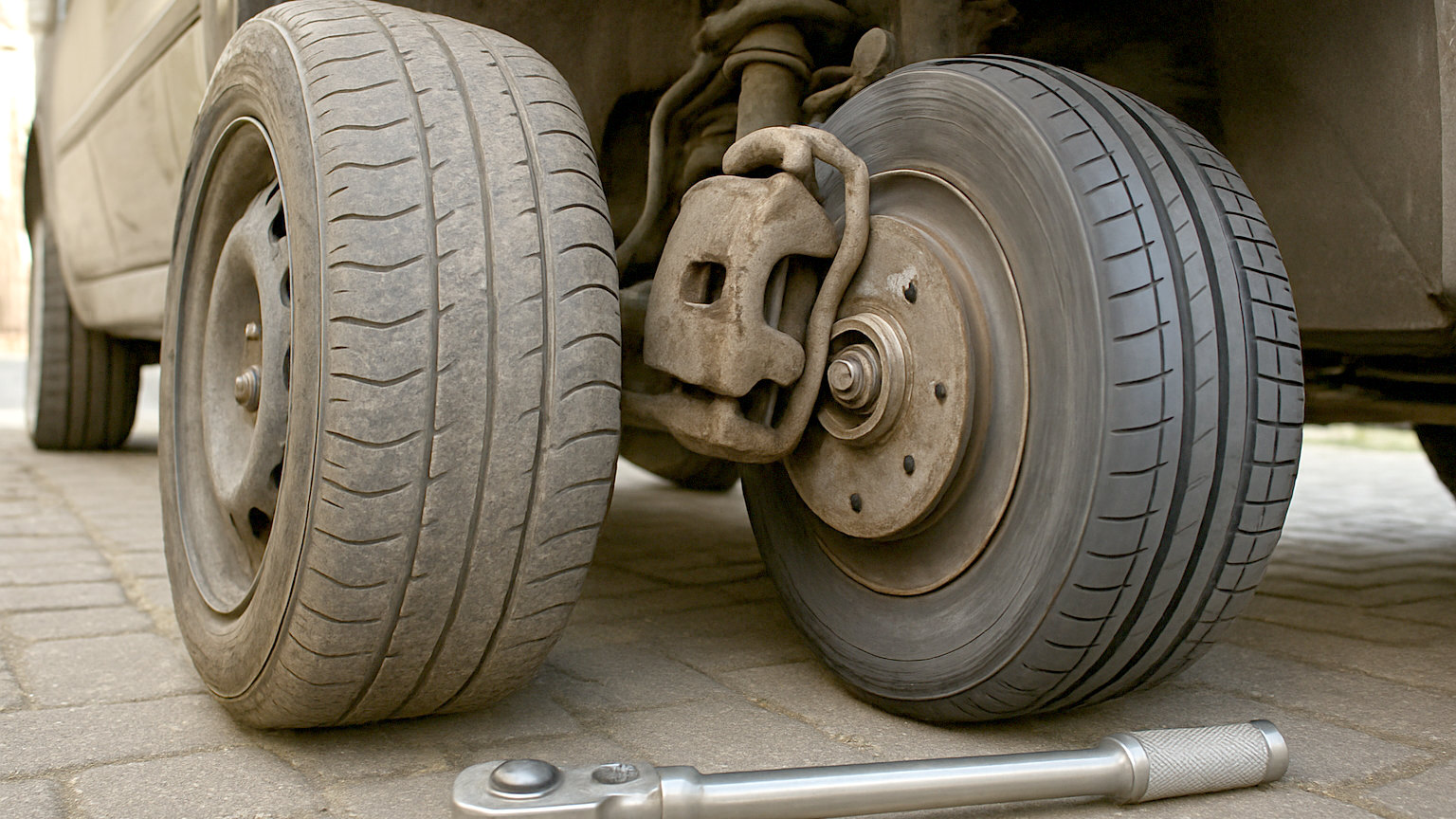
Replacing a single tyre is sometimes unavoidable and rarely ideal. Tyres on the same axle should match in make, model, size and, as far as possible, tread depth, because differences between them change how much grip each has and therefore how the car behaves under braking and cornering. That makes the axle pair the practical minimum unit for replacement.
Why must an axle pair match?
Because the two tyres on an axle work together, and different grip levels side to side produce uneven braking and unpredictable handling. Different tread depths also mean slightly different rolling circumferences, which on some vehicles affects traction control and stability systems. A new tyre alongside one worn to two millimetres is a compromise even when both are the same model.
Where should new tyres go?
On the rear, and this surprises people who assume the driven axle should have the best rubber. The reason is stability. If the front tyres lose grip first, the car understeers, which is stable and instinctively correctable by lifting off. If the rear loses grip first, the car oversteers and can spin, which is far harder to recover. Fitting the better pair to the rear protects against that.
Does that apply to front wheel drive too?
Yes, and it is where the confusion arises. On a front wheel drive car the fronts wear faster, so when two new tyres are bought, most people expect them on the front. Tyre manufacturers and safety bodies generally recommend moving the existing better tyres to the front and fitting the new pair to the rear, for exactly the stability reason above.
Can you mix brands across axles?
Front and rear can differ without great difficulty, provided each axle is a matched pair and all four are the correct size and rating. Mixing across an axle is what should be avoided. Mixing different tread patterns or compounds front to rear does change the balance slightly, so keeping all four the same is preferable where budget allows.
When are all four necessary?
On many four wheel drive vehicles, where significant differences in rolling circumference between axles put continuous strain on the centre differential or transfer case, and can cause expensive damage. Manufacturers of such vehicles often specify a maximum permitted difference in tread depth, and replacing all four together is the safe approach. The handbook is worth checking rather than assuming.
Can you mix summer and winter tyres?
It should be avoided entirely. The compounds behave completely differently at a given temperature, so a car with winter tyres on one axle and summer on the other has a grip balance that changes with the weather in a way the driver cannot predict. If fitting winter tyres, fit all four.
Does rotation help?
It evens out wear, which extends the useful life of a set and means all four reach the end together. The trade off is that you lose the ability to keep the best pair on the rear, and you lose the wear pattern information that each position provides. On a car with directional tyres, rotation is front to back on the same side only.
What if only one tyre is damaged?
If the other on that axle has plenty of tread and is the same model, fitting a single matching tyre is reasonable. If the remaining one is well worn or a different make, replacing the pair is the better decision. Some insurers and tyre retailers will supply a matching single tyre, and asking for the same model rather than simply the same size is worth doing.
What does the handbook say?
It is worth reading on this specific point, particularly for four wheel drive vehicles where the permitted difference in tread depth between axles may be stated explicitly. Ignoring that figure can cause expensive transmission damage that no tyre saving justifies, and it is one of the few areas where the manufacturer guidance is genuinely a requirement rather than advice.


