
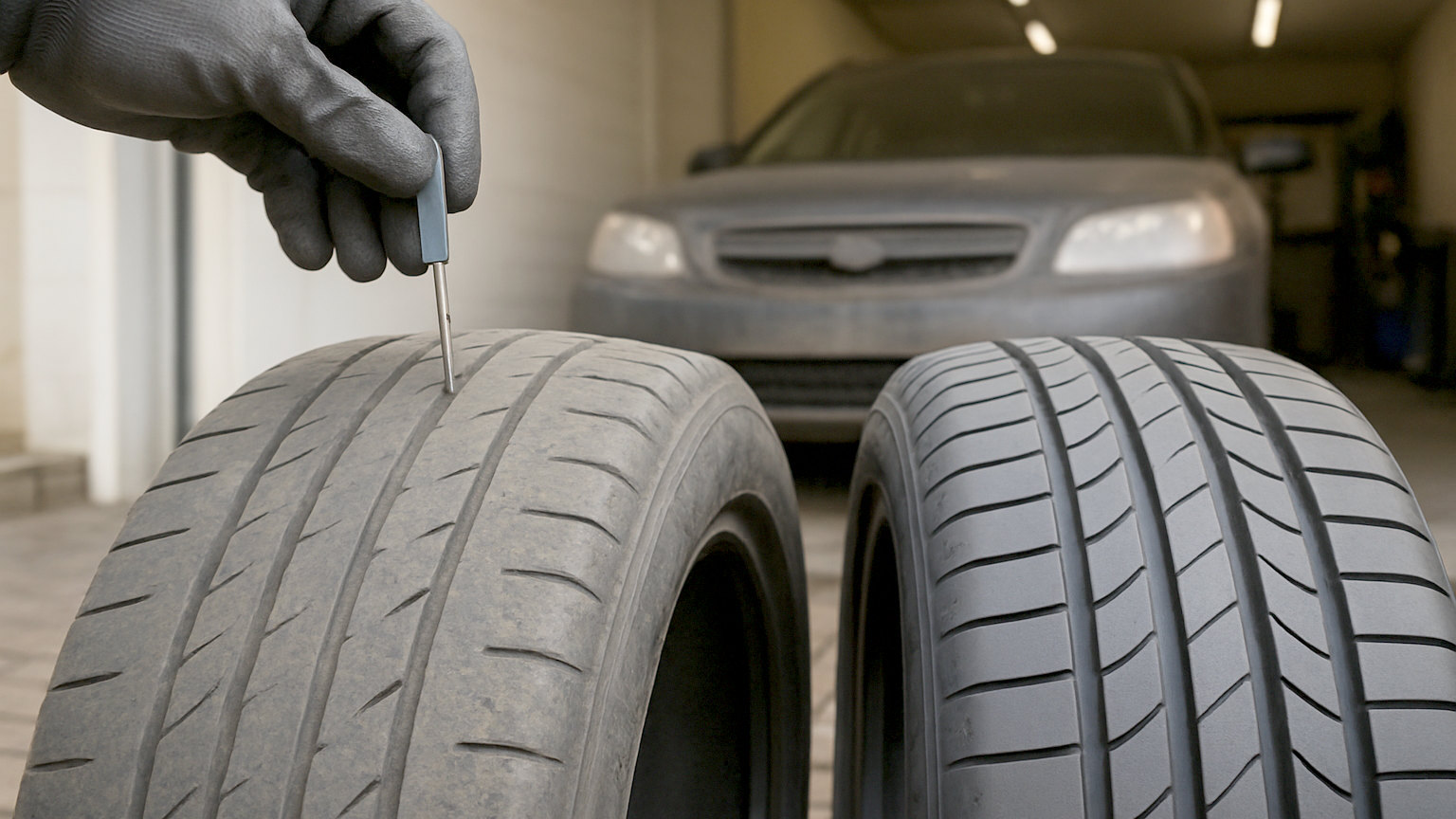
Part worn tyres are legal to sell in the UK, subject to a set of specific requirements, and they occupy an awkward position between genuine economy and false economy. The requirements exist because a used tyre may have damage that is not visible, and surveys have repeatedly found a high proportion of part worn tyres on sale failing to meet them.
What are the legal requirements?
A part worn tyre must have at least two millimetres of tread across the full width, must carry the original markings including size, load and speed ratings, must be free from cuts, bulges, exposed cords and repairs outside the permitted area, and must be marked with the words part worn in letters of a specified size. All of those apply at the point of sale.
How often are they met?
Less often than they should be. Trading standards investigations have found substantial proportions of part worn tyres on sale with unsafe damage, inadequate tread or missing the required marking. That does not mean every seller is careless, and it does mean the burden of checking falls heavily on the buyer in a way it does not with new tyres.
What is the cost per millimetre?
The calculation that changes the argument. A new tyre with eight millimetres of tread has around six and a half millimetres of usable life above the legal limit. A part worn with four millimetres has around two and a half. If the part worn costs half the price of the new tyre, you are paying roughly the same per millimetre while accepting an unknown history.
What cannot be assessed?
Whether the tyre has been run flat, which destroys the sidewall internally with no external sign. Whether it has been impacted hard enough to break cords that have not yet bulged. How it has been stored. What pressures it has run at. Whether it has been repaired improperly. A visual inspection cannot answer any of those, and they are exactly the things that cause sudden failure.
Does age matter here?
Considerably, and it is worth checking the date code before buying. A part worn tyre may have plenty of tread and be eight years old, in which case the rubber has hardened and its wet grip is well below what the tread depth suggests. Combining an unknown history with an advanced age is a poor basis for a component that connects the car to the road.
Are there situations where they make sense?
A few. A car being sold or scrapped shortly, where a legal tyre is needed briefly. A trailer used at low speed for short distances. A temporary replacement while waiting for a specific tyre to be ordered. In each case the exposure is limited and short. As a permanent solution on a family car doing motorway miles, the argument is much weaker.
What should you check if buying?
The part worn marking, the date code, the tread depth measured across the full width rather than at the deepest point, both sidewalls including the inner face, and evidence of any repair. Ask directly whether the tyre has been inspected internally. A seller who has removed it from the rim and looked inside is doing considerably more than most.
What is the sensible conclusion?
Budget new tyres from a recognised manufacturer often cost little more than part worns once cost per millimetre is calculated, and they come with a full service life, a known history and a warranty. For most people that comparison settles it. Where money is genuinely tight, a cheaper new tyre is almost always a better decision than a used premium one.
What if a garage suggests them?
Ask to see the part worn marking, the date code and the measured tread depth across the full width, and ask whether the tyre has been inspected internally. A seller who can answer all four confidently is operating properly. One who cannot is asking you to accept an unknown history on the component that connects your car to the road.


