
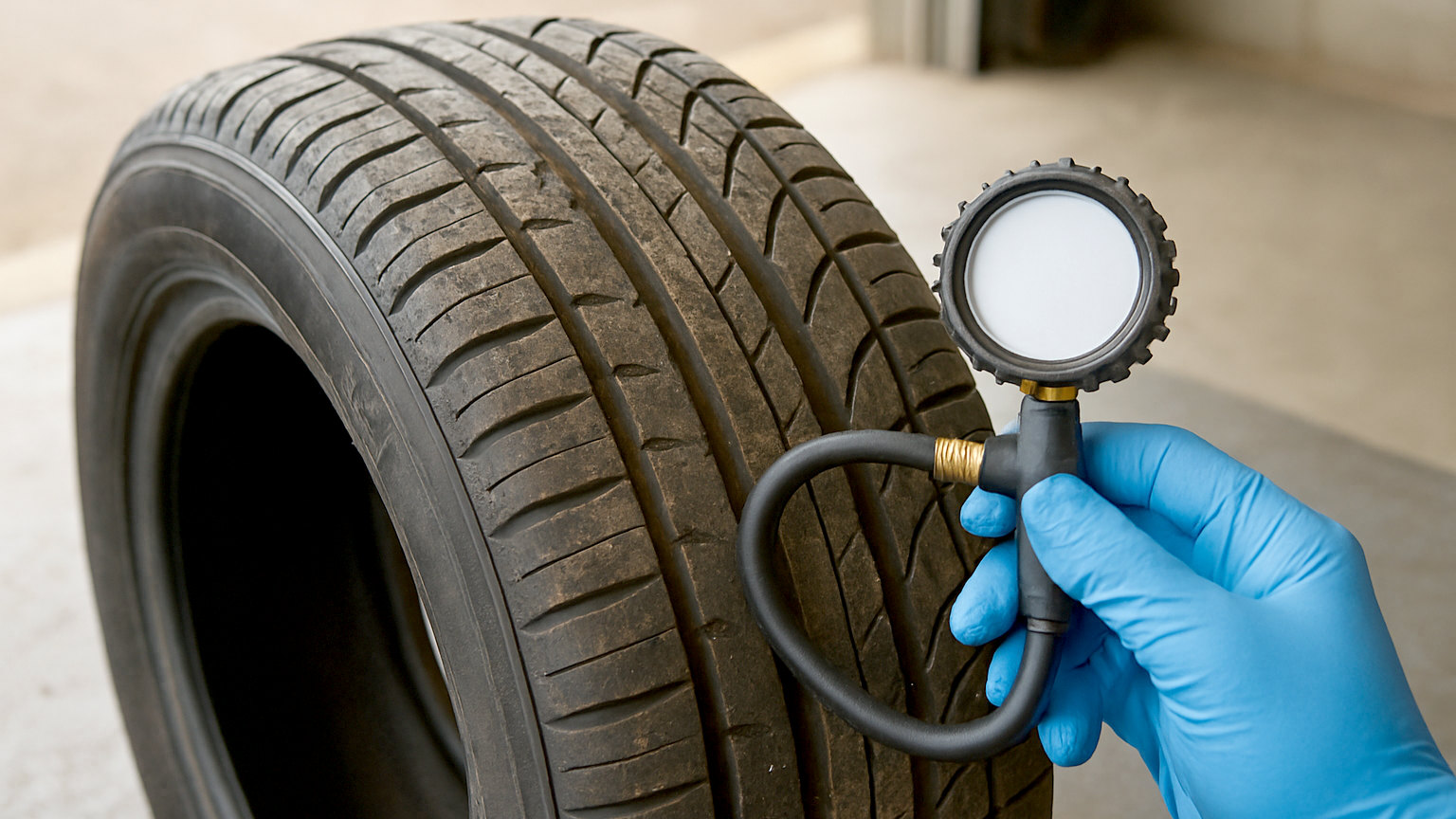
Tyre pressure is the single most influential maintenance item on a car, affecting braking, handling, fuel consumption, tyre life and comfort simultaneously. It is also the one most commonly got wrong, usually through checking at the wrong time or using the wrong figure. Both mistakes are easy to avoid once you know what the correct procedure actually is.
Why must tyres be cold?
Because driving heats the air inside and the pressure rises with it, often by several pounds per square inch after a motorway run. A tyre checked hot reads high, so setting it to the specified figure while warm leaves it underinflated once it cools. Cold means the car has stood for at least a couple of hours or has been driven no more than a mile or two.
Where do you find the correct pressures?
On the vehicle rather than the tyre. Most cars carry a placard inside the driver door shut, on the fuel filler flap or in the handbook, listing pressures for the front and rear and often separate figures for a fully laden car. The figure moulded into the tyre sidewall is its maximum rating, not the pressure for your vehicle, and using it is a common and consequential error.
Should front and rear be the same?
Frequently not. Most cars specify a different figure front to rear to reflect the weight distribution, and the difference can be significant. Setting all four to the same pressure because it is simpler upsets the balance the manufacturer intended and affects how the car handles. The placard gives the correct figures and they are worth following precisely.
What about laden pressures?
Many placards give a higher set of figures for carrying a full load or towing, and they matter. A car loaded with luggage and passengers on holiday needs the laden pressures, particularly at the rear, or the tyres will run overloaded and hot. Setting them before a long trip and returning to normal pressures afterwards takes a few minutes and it genuinely reduces risk.
What does underinflation cost?
More than people expect. An underinflated tyre flexes more, generates more heat, wears its shoulders away rapidly and uses measurably more fuel. It also responds more slowly to steering and is far more vulnerable to damage from potholes, since there is less air cushioning the rim. Severe underinflation can lead to overheating and structural failure at speed.
Is overinflation better?
No, though it is sometimes suggested as a fuel saving measure. An overinflated tyre has a smaller contact patch, so grip and braking are reduced, particularly in the wet. It wears the centre of the tread away, rides harshly and transmits more impact into the suspension. A few pounds above the placard figure is a poor trade for a marginal economy gain.
Are forecourt gauges reliable?
Variably. They are used constantly, dropped regularly and rarely calibrated, and readings between two machines on the same forecourt can differ noticeably. A decent personal gauge costs very little and gives a consistent reference, which matters more than absolute accuracy since consistency lets you spot a tyre losing pressure.
How often should you check?
Monthly at minimum and before any long journey. Tyres lose pressure naturally through the rubber over time, perhaps a pound or two a month, so a tyre that was correct in October will be low by Christmas without any leak at all. Do not forget the spare, which is useless at the pressure it has quietly dropped to over three years in the boot.
What about nitrogen filling?
Nitrogen molecules are marginally larger than oxygen, so a nitrogen filled tyre loses pressure slightly more slowly and its pressure varies a little less with temperature. The effect on an ordinary road car is small, and ordinary air is already around four fifths nitrogen. It does no harm, and it is not a substitute for checking pressures regularly with a gauge, which remains the only thing that actually tells you where they are.


