
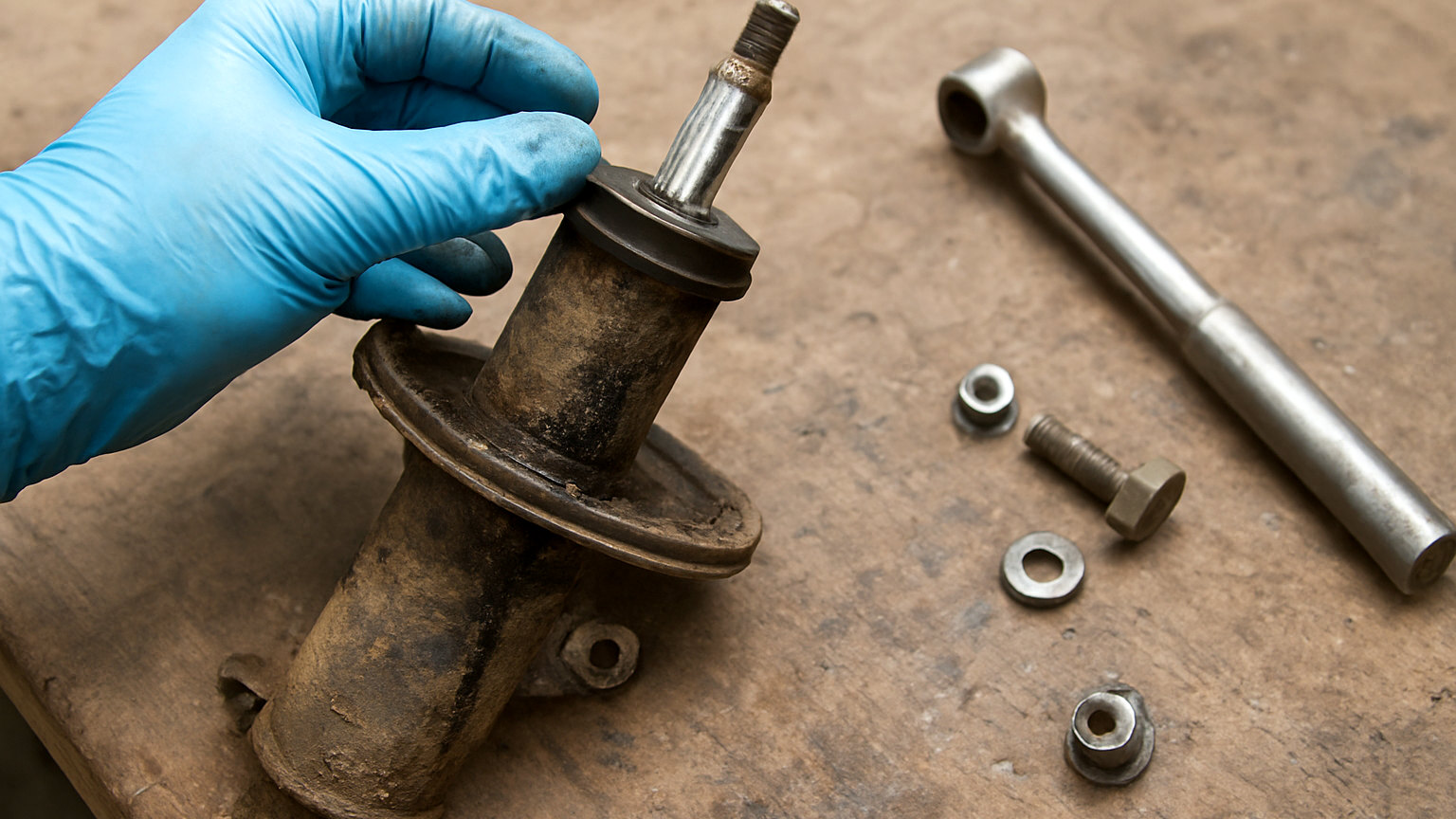
Worn suspension is usually discussed in terms of comfort and tyre wear, and the safety implications matter more. Components rarely fail suddenly, which is what makes the risk easy to underestimate. What actually happens is a gradual reduction in braking performance, stability and steering precision that the driver adapts to without noticing.
How do worn dampers affect braking?
By allowing the tyre to bounce rather than staying pressed to the road. A tyre that is momentarily unloaded generates no braking force during those moments, so stopping distances lengthen measurably, particularly on uneven surfaces and in emergency braking. Independent testing has repeatedly demonstrated the effect, and it is invisible to the driver because it only appears when it matters.
Which components can fail suddenly?
Ball joints and track rod ends are the ones that matter, since separation removes the connection between the wheel and the steering or suspension entirely. It is rare, because wear gives long warning through knocking and play, and that is exactly why the warnings should not be ignored. Broken coil springs can also contact a tyre, which is a genuine hazard.
What do worn bushes do?
Allow the suspension geometry to change under load, so the car steers slightly on its own during braking and cornering. That reduces the precision available at exactly the moment it is needed, and it produces uneven tyre wear which reduces grip further. It is a compounding problem rather than a single defect.
How does it affect an emergency manoeuvre?
Considerably. A sudden swerve loads the suspension hard and rapidly, and worn dampers let the body continue moving after the input, so the car takes longer to settle and may be still moving when the second input arrives. Stability control works better with a car whose tyres stay in contact with the road, so worn suspension reduces its effectiveness too.
Why does nobody notice?
Because the decline happens over tens of thousands of miles and the driver adapts continuously. There is no warning light and no service interval for dampers. Most people only realise after driving a similar car with fresh components, at which point the difference is immediately obvious. That gradual adaptation is precisely what makes it a safety issue rather than a comfort one.
Does the MOT catch it?
Partially. A leaking, broken or insecure damper is a failure, as is excessive play in joints and bushes. What the test does not include is any measurement of damping efficiency, so a car can pass with all four dampers substantially degraded provided none is leaking. An MOT pass is therefore not confirmation that the suspension is in good order.
How can it be assessed properly?
By asking for a damper efficiency test on a vibrating plate, which many garages and tyre centres offer and which produces a percentage figure per corner. It takes minutes and it gives an objective answer rather than an opinion. Comparing the figures side to side matters as much as the absolute values, since imbalance affects stability directly.
What should be prioritised?
Anything with play in a steering or suspension joint, since those are the components that can fail. Then dampers, since they affect braking and stability most. Then bushes, which affect precision and tyre wear. On a car being kept, addressing all three transforms how it drives and restores a margin that has quietly disappeared.
Is it worth doing on an older car?
Frequently yes, since the improvement is one of the most noticeable available and the components are not especially expensive relative to what they affect. A car that is otherwise sound and being kept for a few more years is a good candidate, and the difference in how it brakes and steers is usually striking.
It is also work that improves tyre life, which recovers part of the cost over the following couple of years, and it removes the uneven wear that would otherwise consume the next set as well.


