
Oversteer is what happens when the rear tyres run out of grip before the front, so the back of the car begins to slide outwards and the vehicle turns more sharply than the steering input asks for. It is less common on modern road cars than understeer and considerably harder to correct, because the response required runs against instinct.
What does it feel like?
The back of the car steps out and the nose points further into the corner than intended. On a rear wheel drive car it can be provoked by applying power; on any car it can occur through excessive entry speed or a sudden change of direction. The key characteristic is that the car begins to rotate, which is why it escalates far more quickly than understeer.
Why is it harder to correct?
Because the instinctive reactions of braking hard and lifting off sharply both transfer weight forward, taking load off the rear tyres precisely when they need it most. That worsens the slide. The correct response is to reduce steering lock, steer gently towards where you want to go, and ease rather than snap off the throttle, which takes conscious effort rather than reflex.
What is lift off oversteer?
A specific version that catches drivers out, where lifting off the accelerator mid corner transfers weight forward, unloads the rear tyres and lets the back step out. It is most likely in a front wheel drive car entering a corner too fast, where lifting off feels like the safe response. It is one of the more common ways an ordinary road car loses grip at the rear.
Why do new tyres go on the rear?
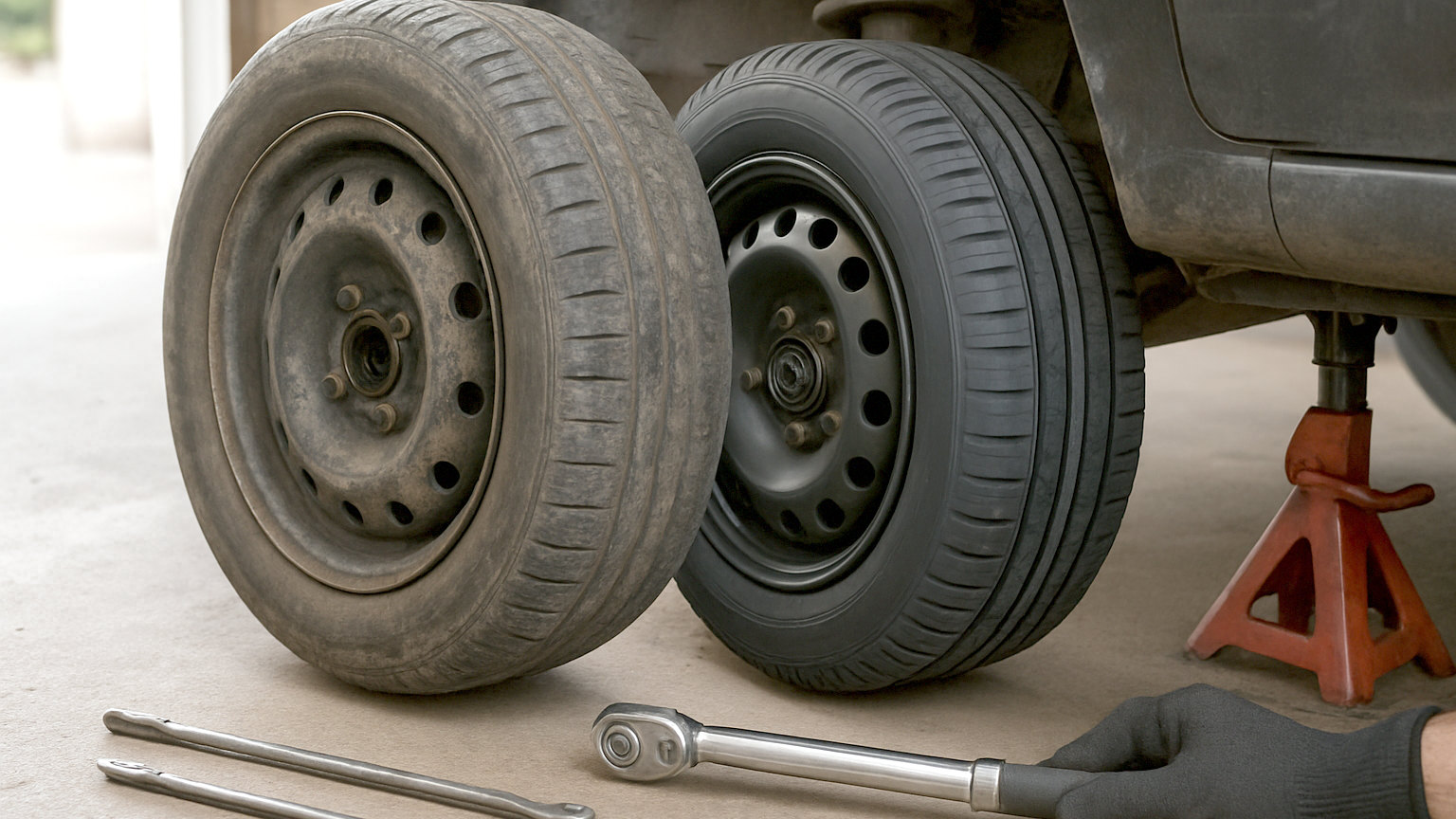
Because a car that understeers is easier to manage than one that oversteers, so it is safer to have the better tyres at the back. It surprises people who assume the driven axle should have the newer rubber. Tyre manufacturers and safety organisations are consistent on this, and it is one of the more useful pieces of advice in the whole subject.
What causes it besides driving?
Worn or underinflated rear tyres. Rear dampers that have failed, letting the back of the car move around. Worn rear suspension bushes allowing the axle to shift under load. A rear thrust angle out of square. And weight distribution, since a heavily loaded boot lifts weight off the front and changes the balance considerably.
Does stability control prevent it?
Largely, and it is remarkably effective. Electronic stability control detects the car rotating differently from the steering input and brakes individual wheels to correct it, faster than any driver could. It is one of the most significant safety advances of recent decades. What it cannot do is create grip that is not there, so it delays the limit rather than removing it.
Should you practise correcting it?
Not on public roads, where deliberately provoking a slide is dangerous and illegal. Skid pan sessions and car control courses exist precisely for this, and they are genuinely valuable because the correct response has to become instinctive to be useful. Reading about it helps understanding; only practice in a controlled environment builds the reflex.
What should you check on the car?
Rear tyre pressures and tread, comparing them against the front. Whether the rear tyres match each other. The condition of the rear dampers and bushes, since both let the back move if worn. And the load distribution if the car is regularly carrying weight in the boot, since the laden tyre pressures exist for exactly that reason.
Is it always dangerous?
A small amount of rear movement on a slippery surface at low speed is manageable and stability control will usually catch it. What makes oversteer serious is speed, since the rotation develops faster than a driver can react and the consequences of getting it wrong increase sharply. Reducing speed in poor conditions is the practical protection.
Modern stability control catches the great majority of these events before a driver would even notice, which is why the system should be left switched on in ordinary road use.


