
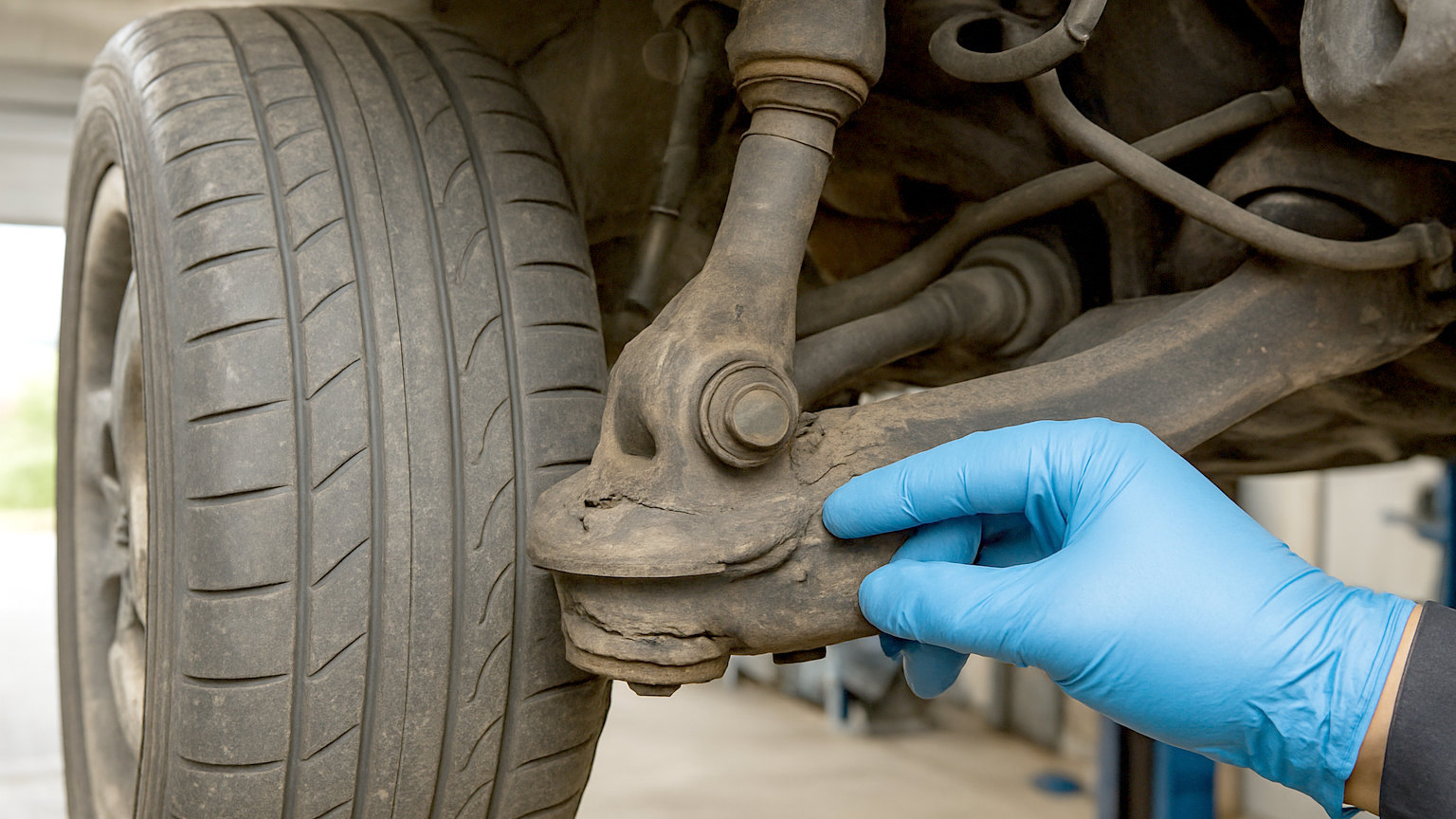
Tramlining is the tendency of a car to follow ruts, grooves and painted lines in the road surface, tugging at the steering and requiring correction. It is one of the more commonly misunderstood handling complaints, because it is frequently a characteristic of the tyres fitted rather than a fault, while also being made noticeably worse by several things that are.
Why do wide tyres tramline more?
Because a wider contact patch is more likely to straddle a rut or a ridge, so the two sides of the tyre sit at different heights and generate a sideways force. A narrow tyre sits within a rut rather than across it. That is why fitting wider wheels and tyres often introduces tramlining on a car that never did it before.
Does profile matter?
Considerably. A low profile tyre has a stiff short sidewall that transmits surface irregularities into the steering rather than absorbing them. A taller sidewall deflects and soaks up much of the same input. That combination of wide and low, which is exactly what larger diameter wheels require, is the classic recipe for a car that follows every groove.
Does the tread pattern contribute?
Yes. Tyres with pronounced straight circumferential grooves tend to tramline more than those with more broken patterns, since the grooves can align with ridges in the surface. Some models within the same size are noticeably better than others, which is worth researching if tramlining is a persistent irritation on your car.
When is it a fault rather than a characteristic?
When it has appeared or worsened without the tyres or wheels having changed. That points at something mechanical, most often worn front suspension bushes allowing the arm to move under load, worn track rod ends, or an alignment setting that has drifted. Any of those turns a mild characteristic into something that requires constant correction.
How does alignment affect it?
Toe out at the front makes a car noticeably darty and more inclined to follow ruts, since each wheel is trying to steer outwards and any disturbance is amplified rather than damped. Unequal caster reduces the self centring that would otherwise pull the car back into line. A four wheel alignment measures both, and correcting them usually produces an improvement.
Do worn bushes make it worse?
Significantly. A worn bush lets the suspension arm move as the wheel is pushed sideways by a rut, so instead of the geometry holding the wheel steady it allows the deflection to become a genuine change of direction. That is why tramlining that appears on a car with several years of mileage is worth investigating rather than accepting.
Can tyre pressure help?
Slightly. Pressures at the low end of the recommended range give a slightly softer response, and correct pressures matter more than any deliberate adjustment. What should not be done is reducing pressure below the placard figure to soften the effect, since that costs grip, wears the shoulders and increases fuel consumption for a marginal comfort gain.
What should you check?
Whether it started when new tyres or wheels were fitted, which usually settles the question immediately. Tyre pressures and condition. Front suspension bushes and steering joints for play. And a four wheel alignment. If everything measures sound and the car has always done it, the tyres are the answer and a different model at the next replacement is the practical route.
Is it dangerous?
Tiring rather than dangerous in most cases, since the car follows the rut rather than losing grip. What deserves attention is tramlining severe enough that the steering is pulled from your hands over a ridge, or that has appeared alongside other changes, since that suggests worn components rather than tyre choice.
Keeping both hands on the wheel on rutted surfaces is sensible in any case, since the input arrives without warning and a firm grip removes most of the drama. Slowing slightly on a heavily rutted nearside lane also helps considerably.


