
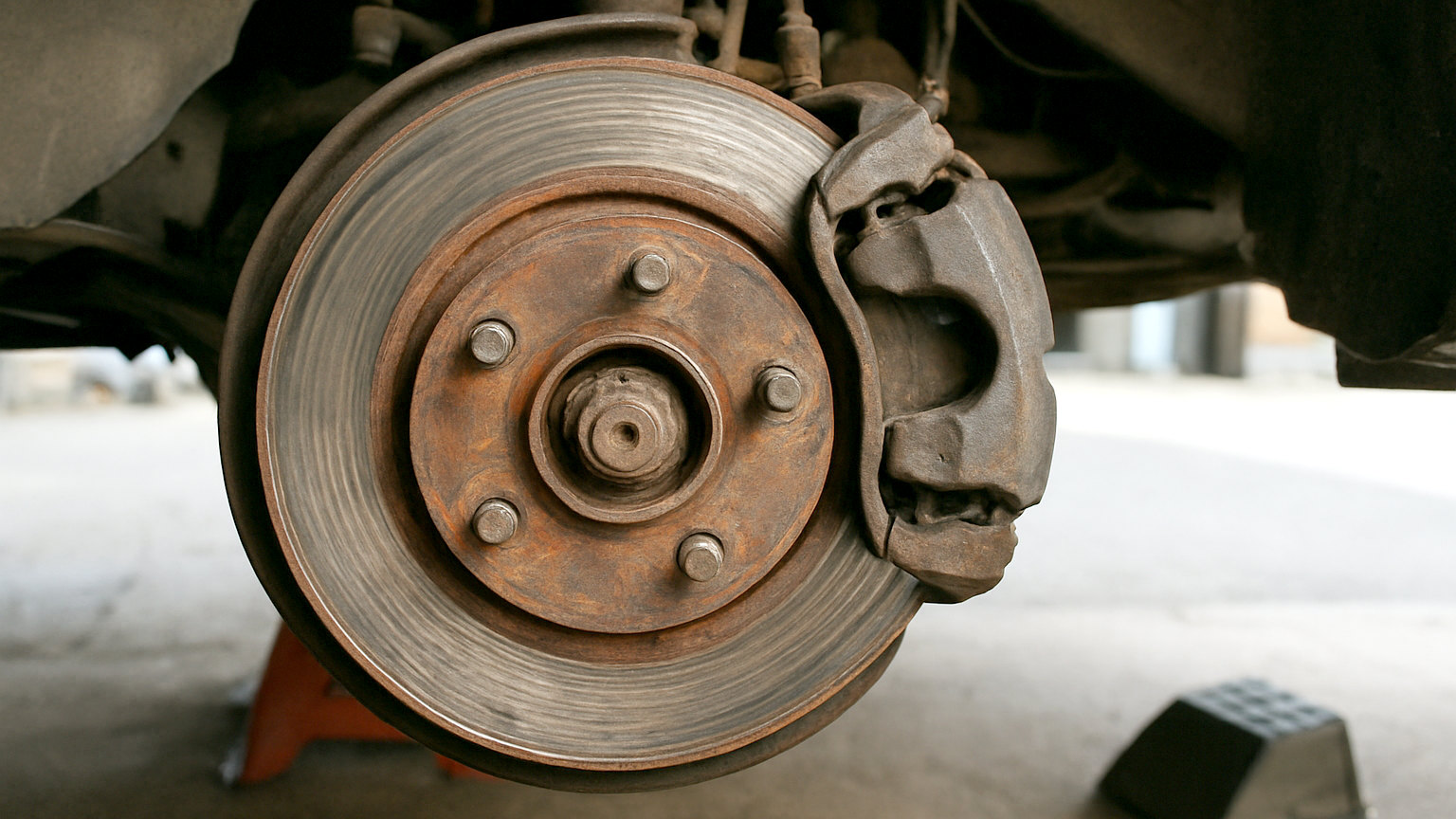
Heavy braking is the most demanding thing most drivers ask of a car outside an emergency, and it exposes weaknesses that never appear in ordinary driving. Weight transfers sharply forward, the front tyres are loaded to their limit and the rear tyres are unloaded, and any imbalance between the two sides or the two axles reveals itself immediately.
What is happening during heavy braking?
Deceleration transfers weight from the rear to the front, so the front tyres gain grip and the rear lose it. The front brakes therefore do the great majority of the work by design. The car dives, the suspension compresses, and the geometry changes as it does so. Every one of those effects is amplified if a component is worn.
What does brake imbalance do?
If one side of an axle generates more braking force than the other, the car is pulled towards the stronger side under braking, and the effect grows with pedal pressure. Causes include a seizing caliper, a collapsed flexible hose acting as a one way valve, or contaminated pads on one side. It is measured at the MOT and a significant difference is a failure.
How do dampers affect braking stability?
Considerably. Worn dampers allow excessive nose dive, which unloads the rear further and can make the back feel light. They also let the tyres bounce over an uneven surface, and a bouncing tyre generates no braking force during the moments it is off the ground. Independent testing has repeatedly shown measurable increases in stopping distance on cars with degraded dampers.
Why does the rear feel light?
Because weight has genuinely moved off it. That is normal, and it becomes a problem when combined with worn rear tyres, poor rear damping or a car braking on a bend where lateral forces are also acting. In extreme cases the rear can begin to step out, which is why braking hard mid corner is generally poor practice.
What does ABS activation tell you?
That a wheel was about to lock, which is the system working correctly. Frequent activation under moderate braking on a dry road suggests a problem, either with grip at that wheel or with the system itself. A pulsing pedal and a grinding noise are normal ABS behaviour and are frequently mistaken for a fault by drivers who have never triggered it before.
Can tyres cause it?
Frequently. Different tread depths or different tyre models across an axle give unequal grip, so the car pulls under braking. Underinflation on one side does the same. Since braking loads the tyres far more than cruising does, a difference that is imperceptible at a steady speed becomes obvious under heavy braking.
What about worn suspension?
Worn bushes let the suspension arms move backwards under braking load, which changes the geometry at exactly the moment precision matters most. Front lower arm rear bushes are the usual culprit. The car then steers slightly on its own under braking, which feels like instability and is genuinely a loss of control authority.
What should you check?
Tyre pressures and tread across each axle. Whether one wheel runs hot after a drive, indicating a dragging brake. The brake efficiency and imbalance figures on the last MOT certificate, which are printed and are worth reading. And a damper efficiency test, since worn dampers are the most commonly overlooked contributor to poor braking stability.
How should you brake in an emergency?
Firmly and progressively, keeping the car straight and letting the ABS do its work rather than lifting off when the pedal pulses. Steering and braking simultaneously divides the available grip, so braking first and steering afterwards usually produces a better result. Practising a firm stop in a quiet safe place is worthwhile.
Most drivers have never braked as hard as their car is capable of, which is why the pedal effort and the pulsing come as a surprise at exactly the wrong moment.


