
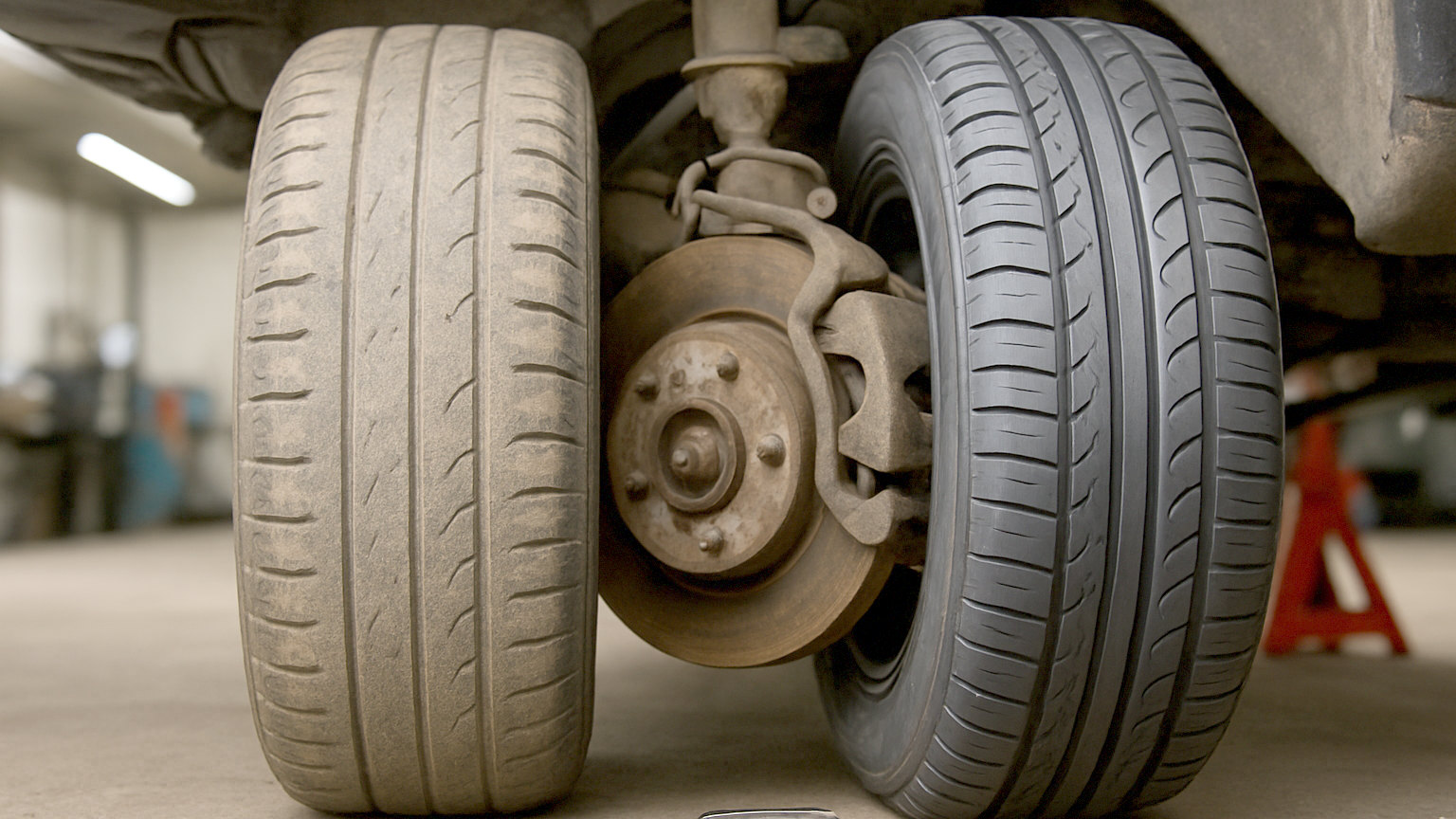
Aquaplaning happens when a tyre cannot displace water fast enough and rides up onto a film of it instead of contacting the road. At that moment the tyre generates essentially no grip for steering, braking or acceleration, and the car continues in whatever direction it was already travelling. It is one of the few situations where a driver has almost no control at all.
How does tread prevent it?
By providing channels through which water can escape from under the contact patch. A tyre at motorway speed on a wet road has to move a remarkable volume of water in a fraction of a second, and the tread grooves are what carry it away. As tread depth falls, the volume the tyre can displace falls with it, and the speed at which aquaplaning begins drops accordingly.
Why does the legal minimum not protect you?
Because 1.6 millimetres is a legal floor rather than a safe working depth. Independent testing consistently shows aquaplaning resistance and wet braking falling away substantially between three millimetres and the limit. That is why many safety organisations recommend replacement at around three millimetres, and it is a judgement about risk rather than a legal requirement.
What does it feel like?
The steering suddenly goes light and unresponsive, the engine note may rise if the driven wheels lose traction, and the car feels as though it is floating. There is often no noise from the tyres. The most disconcerting part is how little sensation there is, since the usual feedback through the wheel simply disappears.
What is the correct response?
Hold the wheel straight, ease off the accelerator gradually, and do not brake or steer sharply. The tyres will regain contact as speed falls, and any steering input applied while they are aquaplaning will take effect abruptly at the moment they do, which can throw the car off line. Doing as little as possible until grip returns is the whole technique.
What increases the risk?
Speed above everything, since the water has less time to escape. Worn tread. Underinflated tyres, which distort the contact patch and reduce the ability to channel water. Wide tyres, which have more area to lift. Standing water in ruts and along the edges of the carriageway. And the first rain after a dry spell, when oil and rubber on the surface reduce grip further.
Where does standing water collect?
In wheel ruts worn into the nearside lane by heavy traffic, at the edges of the carriageway where drainage is poorest, in dips and under bridges, and on roads with worn or inadequate camber. Recognising those locations and moderating speed before reaching them is more effective than reacting once the car is already in it.
How do you spot it in advance?
Watch the spray from vehicles ahead, since heavy plumes indicate deep water. Look at how the surface reflects light, since standing water is often visible as a sheen. And note that if you cannot see spray from other cars in heavy rain, they may be aquaplaning already rather than the road being dry.
What should you check on the car?
Tread depth across the full width of each tyre with a gauge, since wear on one shoulder reduces water clearance even where the centre looks acceptable. Pressures, monthly and cold. And the EU tyre label wet grip rating when buying replacements, since it is the single most useful comparison available between tyres of similar price.
Does speed matter more than tread?
Both matter and speed is the one you control moment to moment. Aquaplaning begins at a speed determined by tread depth, water depth and tyre width, so reducing speed in heavy rain is the immediate protection while adequate tread is the underlying one. Neither substitutes for the other.
A tyre close to the legal limit will aquaplane at a speed that feels entirely ordinary, which is the practical argument for replacing at around three millimetres rather than waiting.


