
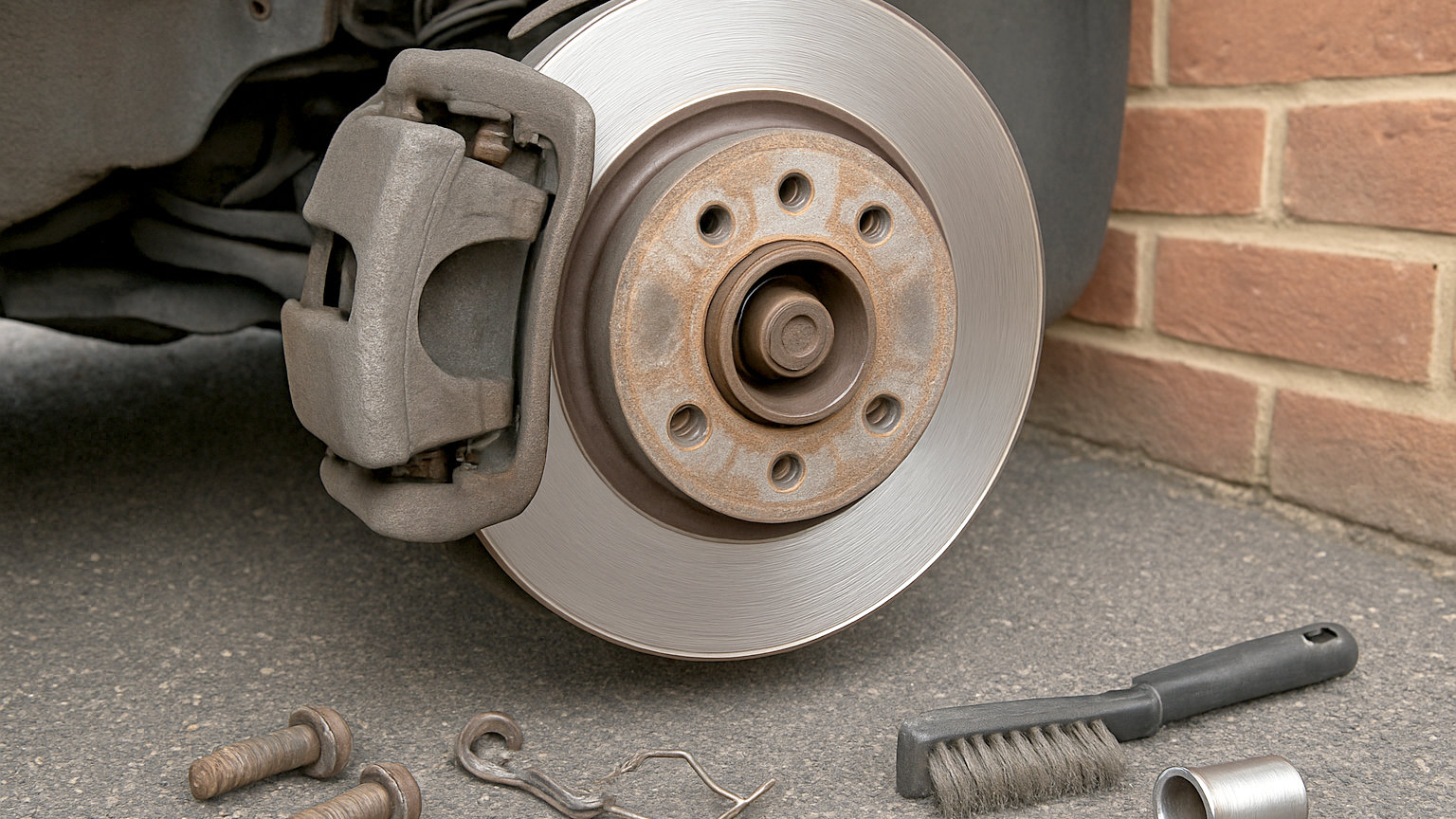
Replacing brake pads can be done in twenty minutes per axle, and doing the job properly takes considerably longer. The difference between the two shows up within a year as uneven wear, judder, noise or a seized caliper, and it explains why quotes for what appears to be the same work can differ substantially. Knowing what should be included makes those quotes comparable.
What happens to the slide pins?
They should be removed, cleaned, inspected and regreased with a proper high temperature brake grease, and their rubber boots replaced if damaged. A pin that is stiff or corroded prevents the caliper floating, which causes the inner pad to do all the work. Skipping this is the most common shortcut in brake work and the most common reason new pads wear unevenly.
Why does the hub face matter?
Because a new disc fitted onto a rusty hub face sits fractionally out of true, and that runout develops into thickness variation and judder within a few thousand miles. Cleaning the face back to bare metal with a wire brush takes a minute and it is the single most important step in preventing judder after a disc change. It is also frequently omitted.
What is a hardware or fitting kit?
The stainless clips, shims and springs that let the pad slide freely in its carrier and prevent rattle. They corrode and swell, trapping the pad so it cannot retract fully. Quality pad sets include a fitting kit, and using it rather than reusing the old corroded clips is what stops the new pads binding and dragging.
Should the caliper piston be inspected?
Yes. It should retract smoothly when wound or pushed back, and the dust boot should be intact with no splits, since a damaged boot lets water reach the piston and seal. A piston that is stiff, or a boot that has failed, means the caliper needs attention now rather than at the next pad change when it will have seized completely.
What about the brake fluid?
Pushing the pistons back forces old fluid from the caliper back up into the reservoir, so the level should be checked before and after. It is also a natural moment to consider a fluid change if one is due, since brake fluid absorbs moisture and has a replacement interval of its own. A reservoir that overflows when pistons are retracted usually means it was topped up to hide pad wear.
Do the discs need preparation?
New discs arrive with a protective coating that must be removed with a suitable cleaner before fitting, or the pads will not bed properly. Existing discs being reused benefit from being lightly abraded to remove glazing and old pad deposits. Neither takes long and both make a noticeable difference to how the new pads bed in.
How should the wheels go back on?
With a torque wrench, tightened progressively in a diagonal pattern to the manufacturer figure. Wheels tightened unevenly or with an impact gun can distort a disc, which produces judder that appears within weeks and is then blamed on the discs themselves. It is a small detail with a disproportionate effect on the outcome.
What should you ask before agreeing?
Whether the slide pins are cleaned and regreased, whether a new fitting kit is included, whether the hub faces are cleaned, and what the measured disc thickness was. Those four questions distinguish a proper job from a quick one, and a workshop that answers them readily is telling you something useful about how it works.
Why do quotes differ so much?
Partly the parts and partly the time. A quote covering pads only, fitted quickly with old hardware reused, will always be cheaper than one including a hardware kit, pin service, hub cleaning and disc measurement. Both are described as a brake job, and the difference appears twelve months later. Asking what is included makes the comparison meaningful rather than a matter of price alone.


