
Brake pedal feel is one of the most informative things about a car, because a healthy hydraulic system is firm and consistent. A pedal that has become spongy, or that sinks slowly towards the floor while you hold steady pressure at a junction, is reporting a fault in that system. It is also the one brake symptom that justifies acting immediately rather than at the next convenient service.
Why is a firm pedal normal?
Because brake fluid cannot be compressed, so pressing the pedal transmits movement directly to the caliper pistons. Anything that introduces compressibility, whether air in the lines or a hose swelling under pressure, softens that connection and the pedal travels further before the brakes bite. That is why pedal feel is such a reliable indicator of hydraulic health.
What does a spongy pedal indicate?
Air in the system, most commonly. Air compresses, so pressing the pedal squashes it before moving any fluid. Air enters through a leak, after brake work, or because the fluid level has fallen low enough for the reservoir to draw it in. It also enters when fluid has boiled, which happens on a long descent with old moisture laden fluid.
What does a sinking pedal indicate?
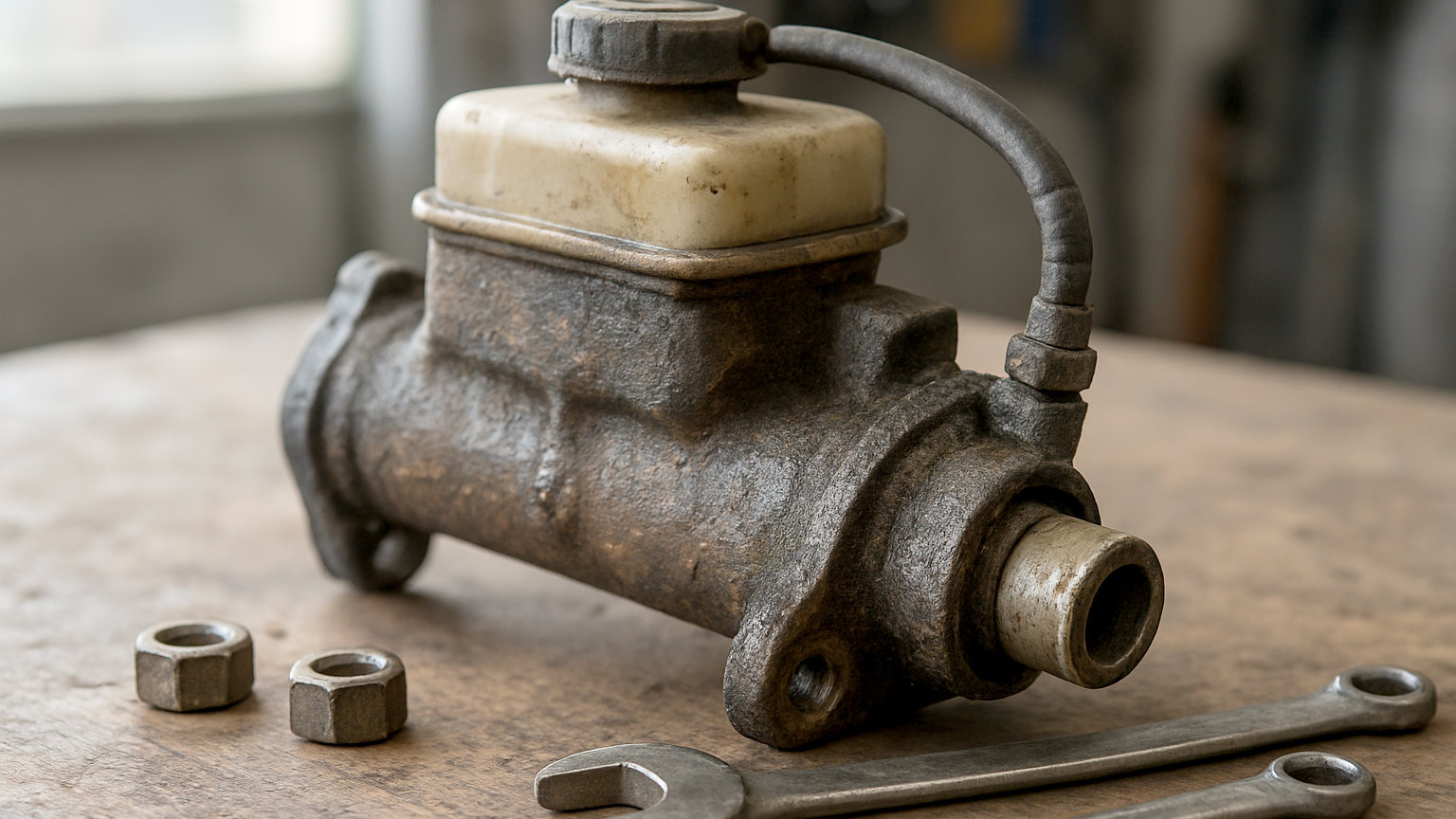
A pedal that slowly descends while you hold steady pressure means fluid is escaping past a seal. If there is no external leak, it is passing internally within the master cylinder, which is a well recognised failure. It is a serious symptom because it can progress, and a master cylinder that fails completely leaves you with drastically reduced braking.
Where should you look for leaks?
At the fluid reservoir first, since a level below minimum means fluid has gone somewhere. Then behind each wheel for wet patches on the inside of the tyre or running down a caliper. Then at the flexible hoses, which perish and bulge, and along the rigid pipes where corrosion is common. And inside the car at the pedal box, where a leaking master cylinder often shows as dampness.
Can pad wear cause a soft pedal?
Not softness as such, though very worn pads mean the pistons extend further and the pedal travels more before biting. A falling fluid level from pad wear can eventually let air into the system if it is ignored, which then produces genuine sponginess. That is why a low reservoir should always prompt an inspection rather than simply a top up.
Could it be the flexible hoses?
Yes, and it is often missed. Rubber brake hoses perish internally with age and can swell under pressure, which absorbs pedal movement and produces a soft feel. They can also collapse internally, restricting flow and causing a brake to bind or release slowly. Hoses are a wear item on older cars and worth replacing on any vehicle where they are original and more than a decade old.
Does bleeding always fix it?
If air entered through a repair or a temporarily low reservoir, yes. If air is entering because a seal has failed, bleeding restores the pedal briefly before it deteriorates again. A system that needs bleeding repeatedly has a leak, and finding it matters far more than continuing to bleed. Fresh fluid should always be used rather than reusing what comes out.
How urgent is it?
Immediately. Braking is the system you cannot manage without, and a soft or sinking pedal indicates a fault that can progress to a substantial loss of braking. If the pedal has changed noticeably, the car should be inspected before further driving rather than after the weekend, and a pedal that reaches the floor means the car should not be driven at all.
What should you do in the meantime?
Check the fluid level immediately, since a low reservoir tells you a great deal. If the car must be moved a short distance, pump the pedal before each application to build what pressure remains, leave far more room than usual and keep the speed very low. If the pedal reaches the floor or the level is empty, arrange recovery rather than attempting to drive.


