
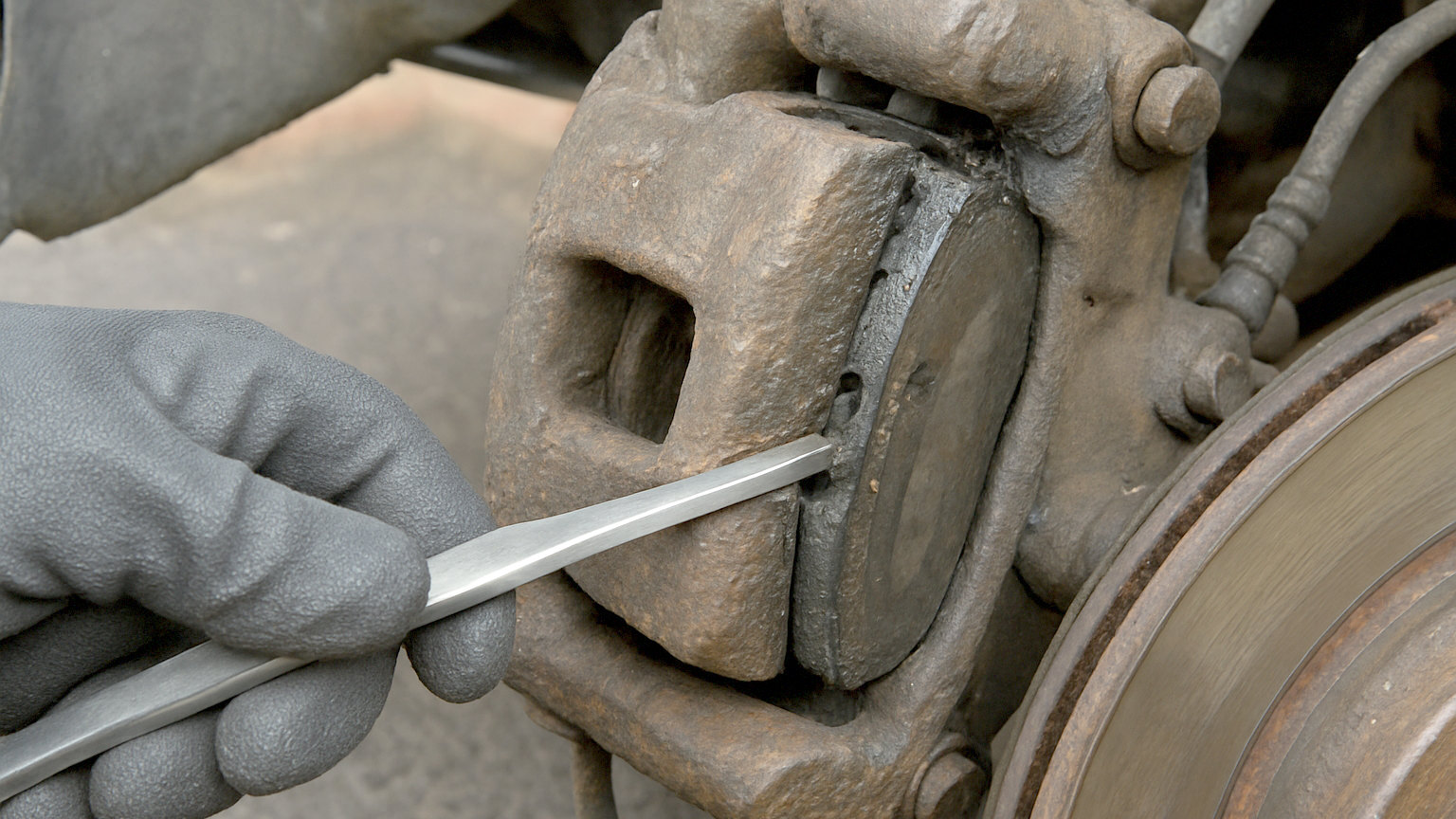
A seized caliper is one that will not release the pad from the disc once you lift off the brake pedal. The result is a brake that drags continuously, generating heat, wasting fuel, wearing the pad away rapidly and pulling the car to one side. It is one of the most common brake faults on older cars and it is usually caused by corrosion rather than by wear.
What actually seizes?
Two quite different things, and they need different repairs. The piston can corrode in its bore, usually after moisture has entered past a damaged dust boot, so it will not retract. Or the slide pins on which the caliper floats can seize in their bores, which stops the caliper releasing evenly. The second is far more common and considerably cheaper to put right.
How do you spot one?
After a drive with minimal braking, carefully compare the temperature of each wheel, taking real care since they can be extremely hot. A dragging brake produces a wheel noticeably hotter than its opposite number, and often a smell of hot brake material. The car may also pull to that side under braking or feel sluggish, since it is effectively driving with the brake partly applied.
What does the pad wear tell you?
A great deal. A pad worn far more than its partner on the same caliper indicates seized slide pins, since only the piston side pad is being pushed. Both pads on one side of the car worn far more than the other side indicates a seizing piston on that corner. Reading the old pads before they are discarded is one of the most informative things available.
Can you check it without tools?
Partly. With the wheel raised and the car in neutral, spinning the wheel by hand should meet a small amount of drag, since pads rest lightly against the disc, but it should turn several times freely. A wheel that stops almost immediately, or that requires real effort to turn, is dragging. Comparing left and right on the same axle makes the difference obvious.
What does it cost you if ignored?
Fuel economy suffers measurably, since the engine is working against the brake constantly. The pad wears out rapidly and then the disc is destroyed. The disc overheats, which can distort it and produce judder. The wheel bearing on that corner runs hot, which shortens its life. And the caliper itself may be beyond recovery by the time it is addressed.
Can a caliper be freed rather than replaced?
Sometimes. Seized slide pins can usually be freed, cleaned and regreased, which is inexpensive and often solves the problem entirely. A seized piston can occasionally be freed and the caliper rebuilt with a new seal and boot kit, provided the bore is not pitted. Where the bore is corroded, replacement or a reconditioned exchange unit is the answer.
Should both sides be replaced?
Not necessarily, unlike pads and discs. A caliper is not a friction component so an old one and a new one work together perfectly well, provided both release properly. What matters is that the other side is inspected at the same time, since it is the same age in the same conditions and frequently not far behind.
How is it prevented?
By servicing the slide pins at every pad change, replacing damaged dust boots promptly, and changing brake fluid at the recommended interval, since moisture in old fluid corrodes caliper bores from the inside. Cars that stand for long periods are more prone to it, so occasional use and avoiding leaving the handbrake applied for months both help.
How urgent is it?
Fairly. A dragging brake generates a great deal of heat, and in extreme cases it can overheat enough to boil the fluid at that corner, which produces a sudden loss of braking. Long before that it will have destroyed the pads and the disc. It is not a fault to leave until the next service, particularly if you can already smell it after a drive.


