
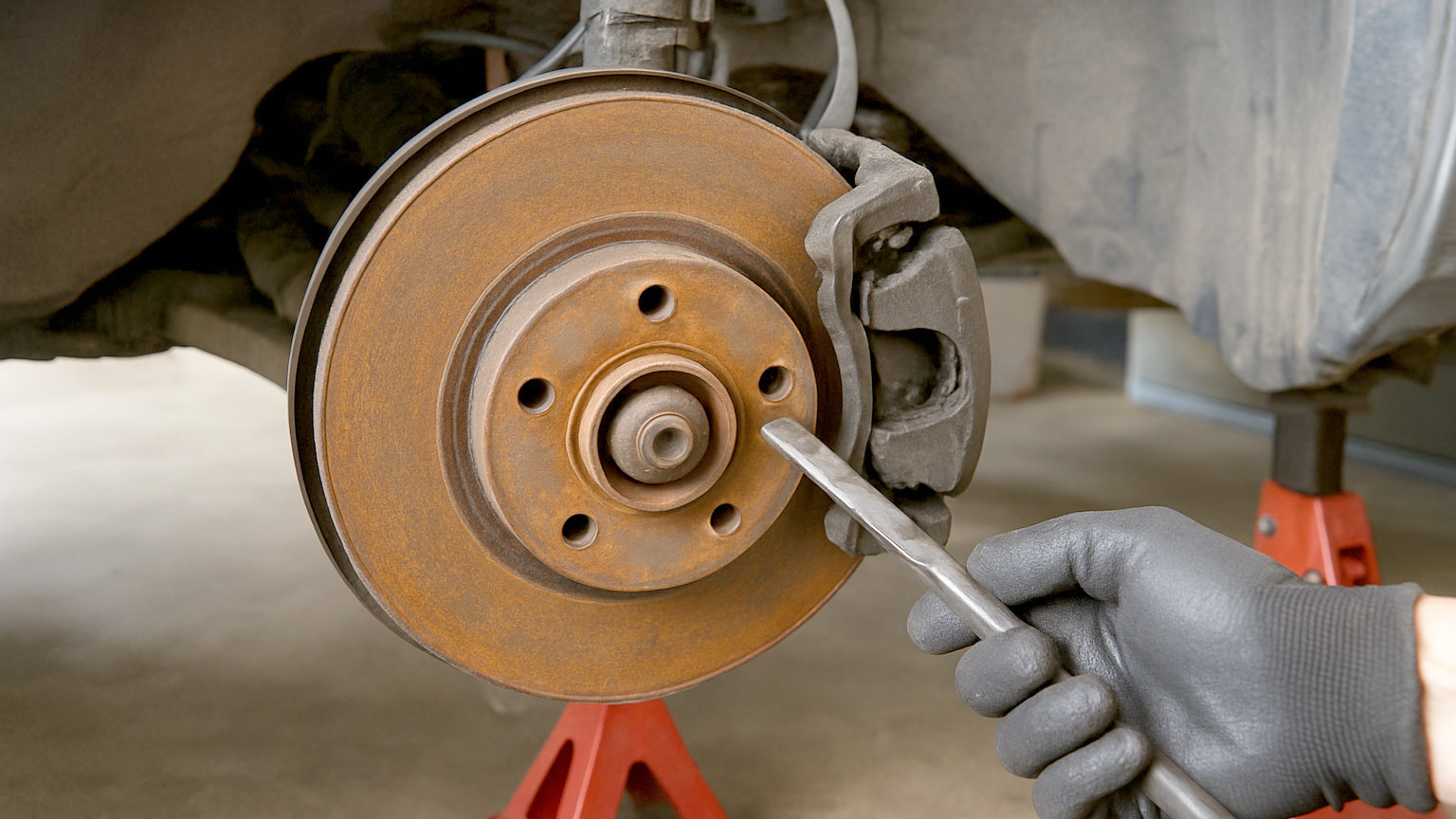
Brake discs are bare cast iron, deliberately so, since the friction surface cannot be painted or plated where the pads run. That means they begin rusting almost immediately in damp air, and a car left overnight after rain will show a light orange film by morning. That version is entirely harmless. What matters is how long a car has stood and whether the pads have bonded to the surface.
Why does surface rust clear so quickly?
Because the film is extremely thin and the pads scrub it away within the first few brake applications. It usually produces a rough grinding feel and noise for the first hundred yards, which then disappears entirely. That is normal and it happens to every car with disc brakes. It is worth knowing simply because the noise sounds far more serious than it is.
What happens over weeks rather than hours?
The rust becomes deeper and more established, and it can begin to pit the surface where moisture has sat, particularly around the outer edge and where the pads rest. A car left for a month develops rust that takes considerably longer to clear and may leave a permanently rougher surface. Cars stored outdoors near the coast suffer far worse than those in a dry garage.
Can pads bond to the discs?
Yes, and it is the version that causes real trouble. After several weeks or months, particularly in damp conditions, corrosion can effectively glue the pad to the disc. The car then refuses to move, or moves with a loud bang as the bond breaks, sometimes leaving a patch of pad material stuck to the disc. That patch causes judder afterwards and may mean the disc needs replacing.
What about the handbrake?
The rear brakes are the usual casualties, since an applied handbrake holds the pads or shoes firmly against the disc or drum for the whole period. That is why leaving a car in gear on level ground, or chocked rather than braked, is recommended for long storage. A seized handbrake cable is a related and common outcome of a car standing through a wet winter.
How do you free bonded brakes?
Gently, and preferably by rocking the car backwards and forwards in gear rather than applying full power. Sharp bursts of throttle can break the bond but risk damaging the transmission and can tear the friction material away. Where a car has stood for a very long period, jacking each wheel and freeing it by hand, or removing the caliper, is a more controlled approach.
Do rusty discs need replacing?
Not if the rust is superficial and clears with use. They do if the surface is deeply pitted, since a pitted disc will not give the pads an even surface and will cause noise and vibration. After long storage it is worth inspecting the friction surface once the car has been driven a few miles, since anything that remains after that is permanent.
Why do electric and hybrid cars suffer?
Because regenerative braking does most of the work, so the friction brakes are used lightly and infrequently and the discs never get scrubbed clean or hot. Rust builds up over time in a way it does not on a conventional car. Some vehicles include a routine that applies the friction brakes periodically for exactly this reason, and occasional deliberate firm braking helps.
How do you prevent it during storage?
Store under cover and out of the damp where possible. Leave the car in gear rather than on the handbrake, chocking the wheels instead. Move it a short distance every few weeks if you can, which cleans the discs and exercises everything else. And take it for a proper drive after any long period rather than judging the brakes on the first fifty yards.
When should you be concerned?
If the roughness has not cleared after a few miles of normal driving, if there is a persistent judder that was not there before storage, or if one wheel feels as though it is dragging. Any of those suggests the rust has left a lasting mark or a caliper has seized while standing, which needs inspecting rather than driving through.


