
A pull that appears only when you press the brake pedal, and disappears when you release it, is different from a general pull that is present all the time. It means one side of the car is generating more braking force than the other, and the cause is therefore within the braking system or in what the tyres are doing. It also affects stability under hard braking, which makes it worth resolving promptly.
What is the most common cause?
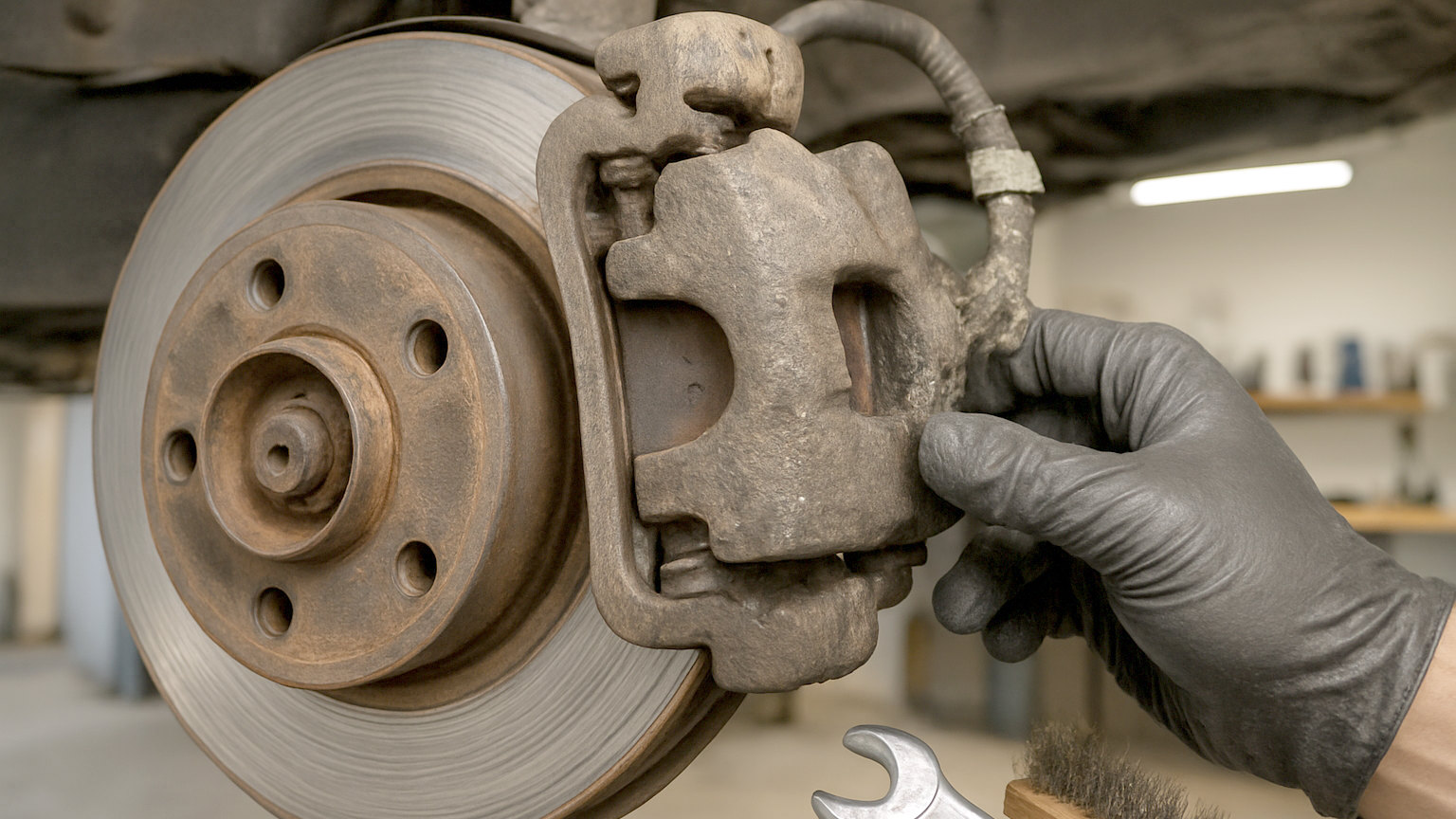
A caliper on one side not working properly. A piston that is sticking so the pad drags produces a pull towards that side even without braking, and one that is seized and not applying produces a pull away from it under braking. Both are common on older cars and both are found by comparing wheel temperatures after a drive and by checking pad wear.
How does a collapsed hose cause it?
Rubber brake hoses perish internally, and the lining can break away and form a flap that acts as a one way valve. Fluid then reaches the caliper but cannot return freely, so that brake applies normally and releases slowly, dragging afterwards. It is a genuinely deceptive fault, since the hose looks perfectly sound from outside and the caliper itself is fine.
Can pad condition produce it?
Yes. Pads of different types or ages across an axle have different friction levels, which is why they are always replaced in pairs. Contamination is another cause, since oil or brake fluid on one pad from a leaking hub seal or caliper reduces its friction dramatically. A contaminated pad cannot be cleaned and must be replaced along with fixing whatever leaked onto it.
Could it be the tyres instead?
Frequently, and it is worth checking first because it costs nothing. Significantly different pressures across an axle change how much braking force each tyre can transmit. Different tread depths, different tyre models or one tyre considerably more worn than the other do the same. Checking pressures with a gauge and comparing tread takes five minutes.
What about the suspension?
Worn bushes and joints allow the geometry to change under braking load, so the car can pull even though both brakes are working equally. A worn lower arm bush or a failing top mount produces exactly this, and it is often accompanied by a clunk. That is why a brake pull that persists after the brakes have been checked should prompt a suspension inspection rather than more brake work.
How do you narrow it down?
Check tyre pressures, then drive gently and compare wheel temperatures afterwards, then have the pads inspected on both sides for uneven wear or contamination. If one wheel is hot and its pads are worn more, the caliper or hose on that corner is the suspect. If everything looks equal, attention moves to the tyres and the suspension.
Is it dangerous?
It can be. Under hard braking, particularly in wet conditions, uneven braking force can make the car unstable and harder to keep straight. It also means one side is doing more work and will wear out sooner. Brake imbalance is measured at the MOT and a significant difference across an axle is a failure, so it is not something that will pass unnoticed at the next test.
What should be done about it?
Have the brakes inspected properly, including the flexible hoses which are frequently overlooked, and the calipers checked for free movement of both piston and slide pins. Expect the repair to be a caliper service, a hose or a set of pads rather than anything dramatic. What is not sensible is adjusting your driving to compensate, since the imbalance will worsen.
Could it be the ABS?
Occasionally, and it is worth mentioning if a warning light is showing. A fault within the ABS or stability control system can affect how pressure is distributed between wheels, producing a pull that no amount of caliper work will resolve. That is why any brake pull accompanied by an ABS warning should have the codes read before mechanical components are replaced.


