
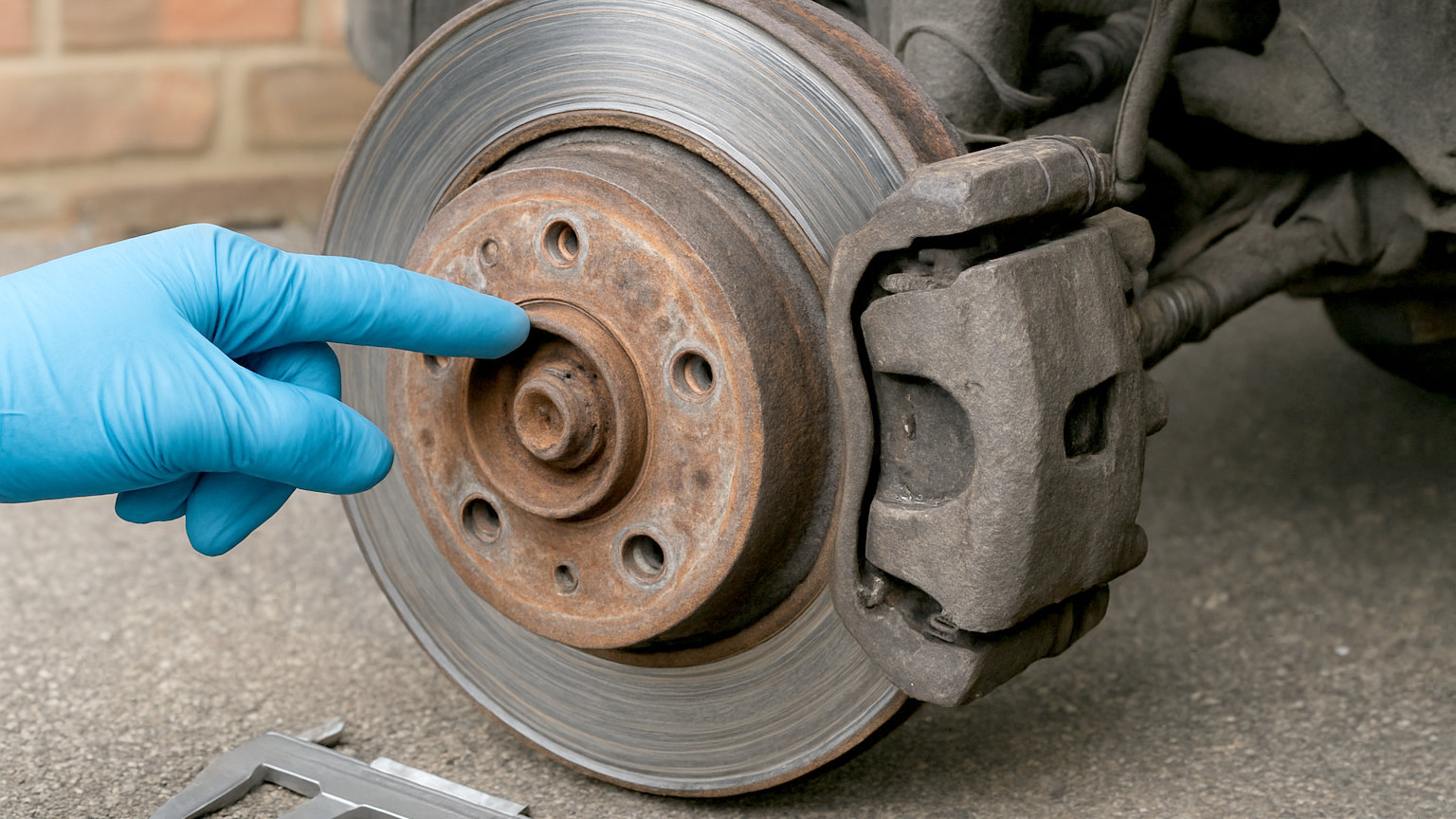
Brake discs are consumable items in exactly the way pads are, and they wear from both sides as the pads rub against them. Every disc carries a minimum thickness figure, usually cast or stamped into the hub area or the edge, and that figure is a safety limit rather than a guideline. Below it, the disc can no longer manage heat or withstand stress reliably.
Why does thickness matter so much?
Because a disc has to absorb an enormous amount of heat during braking and then dissipate it. A thinner disc has less material to absorb that heat, so it reaches higher temperatures for the same work, which increases the chance of brake fade, distortion and cracking. It is also structurally weaker and more prone to breaking up under stress, which is why the limit exists.
Where is the figure found?
Usually cast into the disc itself, either around the hub face or on the outer edge, often prefixed with a marking indicating minimum thickness. Manufacturers publish the figure as well, and any parts supplier can confirm it for your vehicle. Knowing it turns a subjective assessment into a measurement, which is exactly what you want when deciding whether discs need replacing.
How are discs measured?
With a micrometer, taken at several points around the disc and slightly inward from the outer edge to avoid the unworn lip. Measuring at multiple points also reveals thickness variation, which is the difference between the thickest and thinnest points and which causes judder. Both the absolute thickness and the variation matter, and a proper inspection should report both.
What is the lip on the edge?
The raised ridge you can feel at the outer edge of a worn disc, where the pad has not reached and the original surface remains. It gives a quick indication of how much material has been removed, since the depth of that lip is roughly half the total wear. A pronounced lip you can catch a fingernail on suggests a disc well into its life, and it is the easiest visual check available.
What is disc thickness variation?
Uneven wear around the circumference, so thicker and thinner sections pass through the caliper as the disc rotates. The pads are pushed in and out slightly with each revolution, which produces the judder felt under braking. It is a separate measurement from overall thickness and a disc can be within its minimum while having enough variation to be unusable.
Can discs be machined instead of replaced?
They can, provided enough material remains above the minimum after machining. An on car lathe skims the disc in position, which also corrects any runout introduced by the hub. It is a legitimate repair and it can be good value on expensive discs. On many mainstream cars, new discs cost little more than the machining, which makes replacement the more sensible option.
What are the symptoms of worn discs?
Judder under braking, a deep lip at the outer edge, scoring or grooves in the friction surface, cracks radiating from the vane openings on ventilated discs, and blue discolouration indicating overheating. Rust that has pitted the surface deeply, common on cars that have stood, also justifies replacement even if the thickness is acceptable.
Do they fail an MOT?
Yes. A disc that is excessively worn, pitted, scored, cracked or below its minimum thickness is a failure, and so is one that is loose or insecure. Testers assess condition visually and through the brake efficiency test. Since discs are inspected anyway during any brake work, asking for the measured thickness alongside the pad thickness gives you a clear picture of what to expect next time.
Do all discs wear at the same rate?
No. Front discs wear far faster than rear ones for the same reason front pads do, and the pad material makes a real difference too, since harder semi metallic compounds remove more disc material than softer organic ones. Driving conditions matter as well, since grit and salt act as an abrasive. That is why two identical cars can have very different disc thicknesses at the same mileage.


