
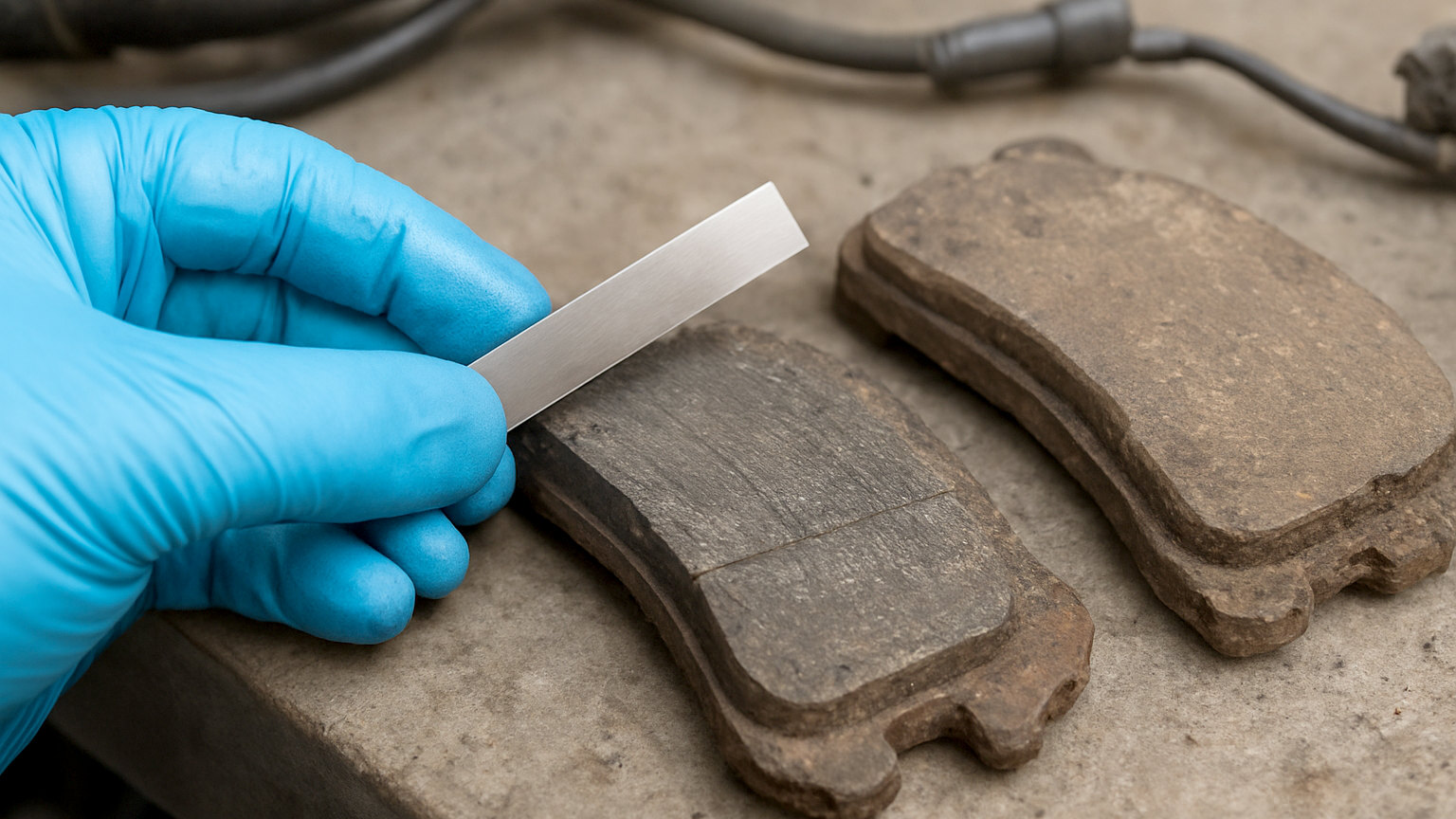
It is entirely normal to replace front pads two or three times for every rear set, and the reason is physics rather than a design compromise. Under braking, weight transfers forward onto the front wheels, which gives the front tyres more grip and allows the front brakes to do more work without locking. The system is designed to use that, and the wear rates follow.
How much of the work do the fronts do?
Typically around seventy percent on an ordinary car, and more under hard braking when weight transfer is greatest. That proportion is built into the design through larger front discs and calipers with bigger pistons, so the front brakes are physically capable of generating more force. Front pads therefore absorb the majority of the energy and wear at a correspondingly faster rate.
What is brake bias?
The distribution of braking force between front and rear axles. Too much rear bias makes the rear wheels lock first, which causes the car to spin, so manufacturers deliberately bias towards the front where locking simply causes understeer. Older cars used a mechanical pressure limiting valve to achieve this, while modern vehicles manage it electronically through the ABS system.
What is electronic brake force distribution?
A function within the ABS module that varies rear brake pressure according to load and deceleration, applying more rear braking when the car is heavily laden and less when it is light. It replaces the fixed mechanical valve and does the job far better, which is why modern cars stop more effectively. It also means the rear brakes sometimes work harder than the old rule of thumb suggests.
Do some cars wear rear pads quickly by design?
Some do. Vehicles with sophisticated stability control use the rear brakes for individual wheel intervention, and cars with electronic parking brakes that apply the rear calipers can see additional wear. Heavier vehicles and those that tow regularly work the rear brakes harder. So a car getting through rear pads faster than expected is not automatically faulty.
When is rear wear abnormal?
When one side is significantly worse than the other, when rear pads wear faster than fronts on an ordinary car, or when rear pads wear unevenly across their face. Any of those suggests a mechanical fault such as a seizing caliper, sticking slide pins or a handbrake mechanism that is not fully releasing, all of which cause a brake to drag continuously.
How do you spot a dragging rear brake?
After a drive with little braking, carefully assess whether one rear wheel is noticeably hotter than the other, taking care since they can be very hot. A dragging brake also produces a fuel consumption penalty, a slight pull, and sometimes a smell. Jacking that corner and spinning the wheel by hand reveals resistance that should not be there.
Do rear drums change the picture?
Cars with rear drums usually see very long rear friction life, since drums are less efficient and the bias is even more strongly front biased. Drums do have their own issues, particularly seizing wheel cylinders and adjusters that stop working, which cause the shoes to sit too far from the drum and reduce rear braking without any obvious symptom.
Should the ratio worry you?
Not on its own. What matters is whether both sides of an axle wear evenly and whether the rate has changed. A car that has always gone through three sets of fronts to one set of rears is behaving normally. One that has suddenly started eating rear pads has developed something, and that deserves an inspection of the calipers and handbrake mechanism rather than simply new pads.
Does it change how you should budget?
It helps to expect it. Planning for front pads roughly twice as often as rear ones, and discs at perhaps every second set of pads, gives a realistic picture of brake costs over the life of a car. Being told the rears need doing at the same time as a second set of fronts is entirely normal rather than a sign of anything being wrong.


