
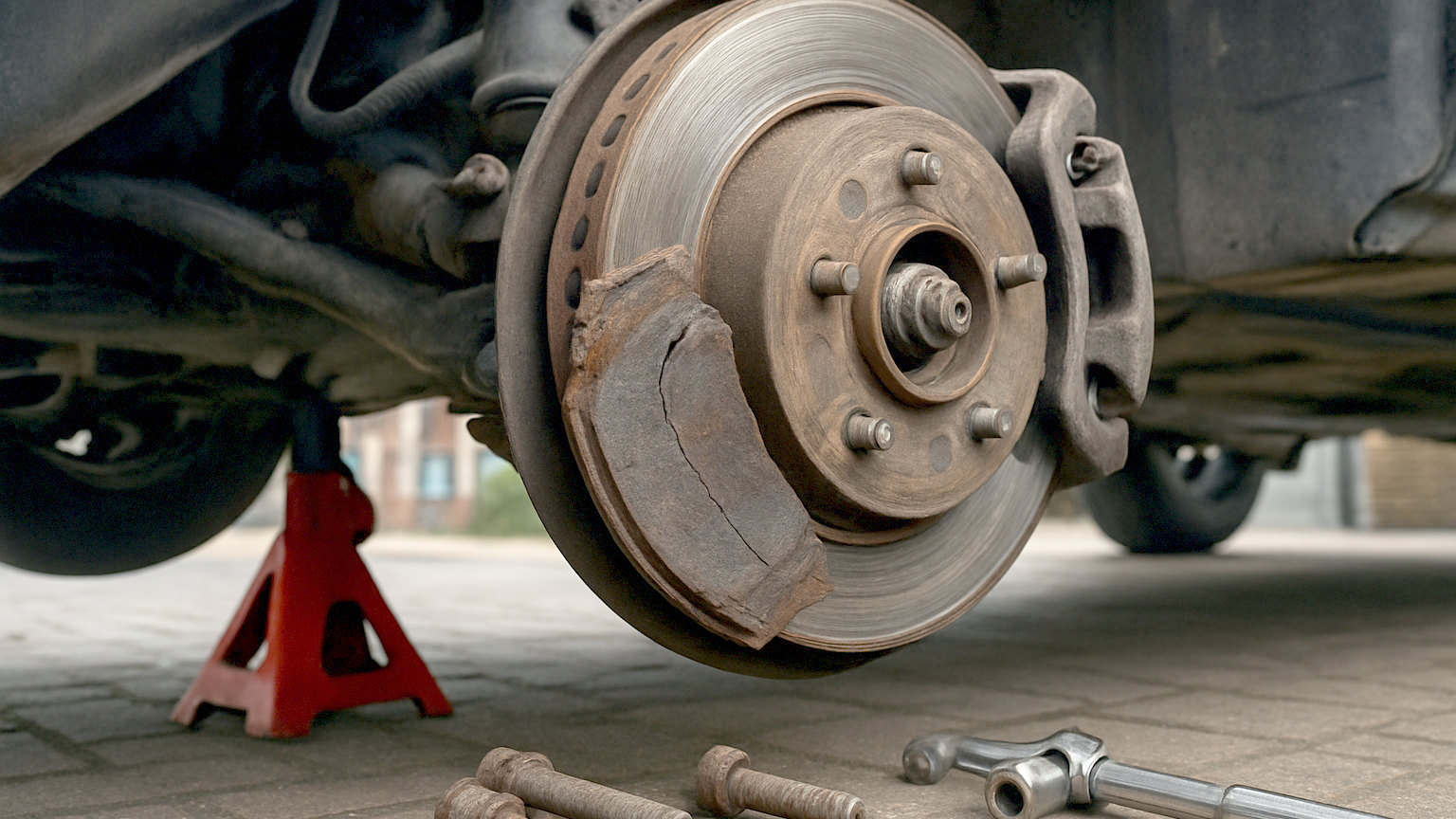
With most car parts, buying cheaply means accepting a shorter life. Brake pads are different, because the consequence of poor quality is not only that they wear out sooner but that they perform less well when you need them most. That makes this one of the few areas where the argument for spending more is about capability rather than longevity.
What actually differs between pads?
The friction material formulation, principally. That determines the coefficient of friction, how consistently it performs as temperature rises, how much it wears, how much dust it produces and how quietly it operates. Cheap pads frequently perform acceptably when cold and lose friction as they heat, which is the property that matters in an emergency stop or a long descent.
What is brake fade?
A loss of friction as the pad material overheats, so the same pedal pressure produces less braking. Good pads maintain their coefficient across a wide temperature range. Poor ones fall away sharply once hot, which is why the difference between pads is invisible in ordinary driving and dramatic on a mountain road or during repeated hard stops.
Are all pads sold in the UK approved?
Replacement pads for road use should carry an approval marking indicating they have been tested to a common standard, which requires their performance to be within a specified range of the original equipment. It is worth looking for that marking. Its absence, particularly on very cheap online listings, is a reason for caution, since it means no independent verification of performance.
What are the main material types?
Organic pads are quiet and gentle on discs but wear faster and fade sooner. Semi metallic pads handle heat better and give stronger bite, with more noise and more disc wear. Ceramic pads produce little dust, run quietly and last well, and generally cost more. Which suits a car depends on its weight, its performance and how it is used, and the original specification is a sensible guide.
Do expensive pads damage discs faster?
Some do, and it is a genuine trade off. Harder, more aggressive materials that resist fade also wear discs more quickly. A performance pad on a car used for ordinary commuting may cost more in discs than it saves in anything else. Matching the pad to the actual use, rather than buying the most capable available, is the sensible approach.
What about noise and dust?
Cheap pads are considerably more likely to squeal, partly through formulation and partly because they often come without the shims and hardware that better sets include. Heavy dust that coats the wheels is another common characteristic. Neither is a safety matter, and both are daily irritations that make a modest saving feel less worthwhile.
Does the fitting kit matter?
Considerably. Quality pad sets include the stainless abutment clips, shims and grease sachets needed to fit them properly. Budget sets frequently do not, so the old corroded hardware is reused and the new pads bind in the carrier. That produces uneven wear and dragging, which then gets blamed on the pads themselves when the real issue was what came in the box.
What is the sensible position?
Buy pads from a recognised manufacturer with the correct approval marking, matched to the vehicle rather than to a performance aspiration. The price difference between the cheapest listing and a reputable brand is usually modest compared with the labour of fitting them, and it is buying performance in the situation where performance is the entire point of the component.
Does the same apply to discs?
Broadly, though the differences are less dramatic. Cheap discs are more prone to distortion under heat, to corrosion and to inconsistent thickness from new. Since the labour is identical whichever disc is fitted, and a distorted disc means doing the job again, the argument for a recognised brand is much the same as it is for pads. What is worth avoiding on both is the unbranded listing with no manufacturer named at all.


