
Brakes are the most thoroughly assessed system in the MOT, and unusually they are measured rather than merely inspected. A car is tested for how effectively it stops and for how evenly the braking is distributed, which means a vehicle that feels perfectly adequate on the road can still fail on the figures. Understanding what is measured makes preparing for the test straightforward.
How is braking actually measured?
On a roller brake tester, which spins each wheel while the brake is applied and measures the force generated. From those figures the tester calculates overall efficiency as a percentage of the vehicle weight, and the imbalance between the two wheels on each axle. Both must meet minimum requirements, and both are recorded on the certificate.
What is brake imbalance?
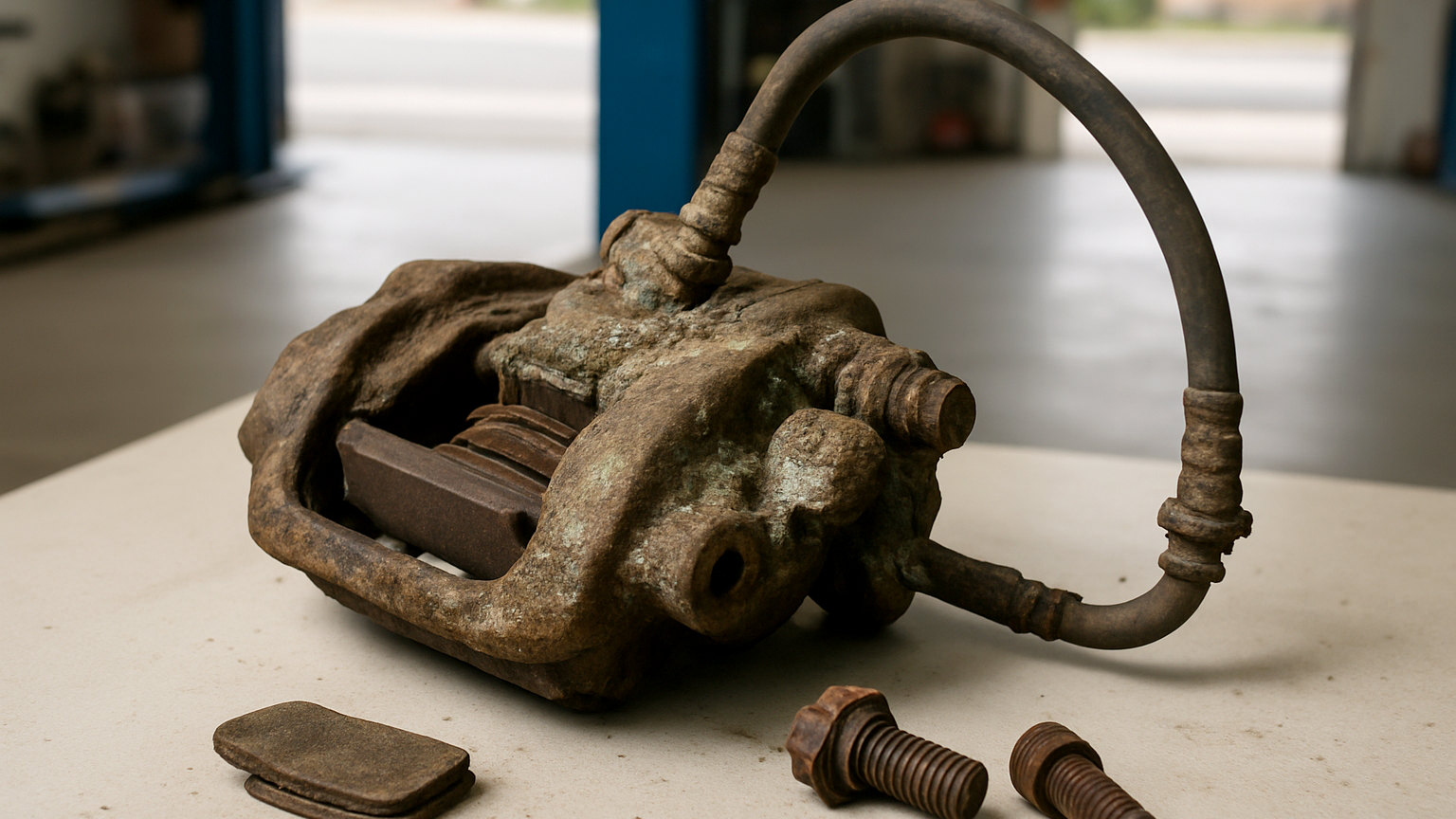
The difference in braking force between the left and right wheels on the same axle. A significant difference makes the car unstable under heavy braking and is a failure in its own right, even if the total efficiency is acceptable. It is usually caused by a seized or partially seized caliper, a collapsed flexible hose, or contaminated pads on one side.
Which components are failure items?
Pads worn below the minimum thickness. Discs that are excessively worn, cracked, scored or below their minimum. Corroded or damaged brake pipes and flexible hoses. Fluid below the minimum mark. Leaking calipers or cylinders. A handbrake that fails its efficiency figure. A brake warning lamp illuminated. Missing or insecure components anywhere in the system.
Why do brake pipes cause so many failures?
Because rigid steel pipes run the length of the underside and corrode from the outside, particularly where they pass through clips or near the rear axle. A pipe that is corroded to the point of weakness is a failure even if it is not yet leaking. It is a common finding on older cars and it is worth inspecting before the test, since a corroded pipe rarely improves.
What about the handbrake?
It is tested for efficiency separately and it fails a surprising number of cars, particularly those with cable operated systems where the cables have stretched or seized. Cars that are used mainly on the level, and drivers who rely on leaving an automatic in park, often find the handbrake has quietly deteriorated because it is rarely used firmly.
Does the ABS light matter?
Yes. An illuminated ABS or brake system warning lamp is a failure, and testers also check that the lamps illuminate during the initial bulb check, so removing a bulb is not a solution. Since ABS faults are usually a wheel speed sensor rather than the expensive module, resolving them beforehand is generally less costly than people fear.
How can you prepare?
Check the fluid level and its colour. Look at the pads through the wheels and at the discs for scoring, cracks and a heavy lip. Inspect the visible brake pipes and hoses for corrosion, chafing and bulges. Try the handbrake on a slope. And switch the ignition on to confirm the brake and ABS lamps illuminate and then extinguish.
Should advisories be acted on?
On brakes, particularly. An advisory for pads or discs approaching their limits means they will reach it well before the next test, and continuing until they fail usually means discs as well as pads. An advisory for pipe corrosion is worth acting on promptly, since a corroded pipe eventually leaks and a leaking brake pipe is a serious matter rather than an inconvenience.
Can you see the figures?
Yes, and they are worth looking at. The test certificate records the measured brake efficiency and imbalance figures rather than simply a pass, so comparing them year on year shows whether performance is declining even while still passing. A car whose efficiency has dropped noticeably since the previous test is telling you something before it becomes a failure, which is a useful early warning that most owners never think to look for.


