
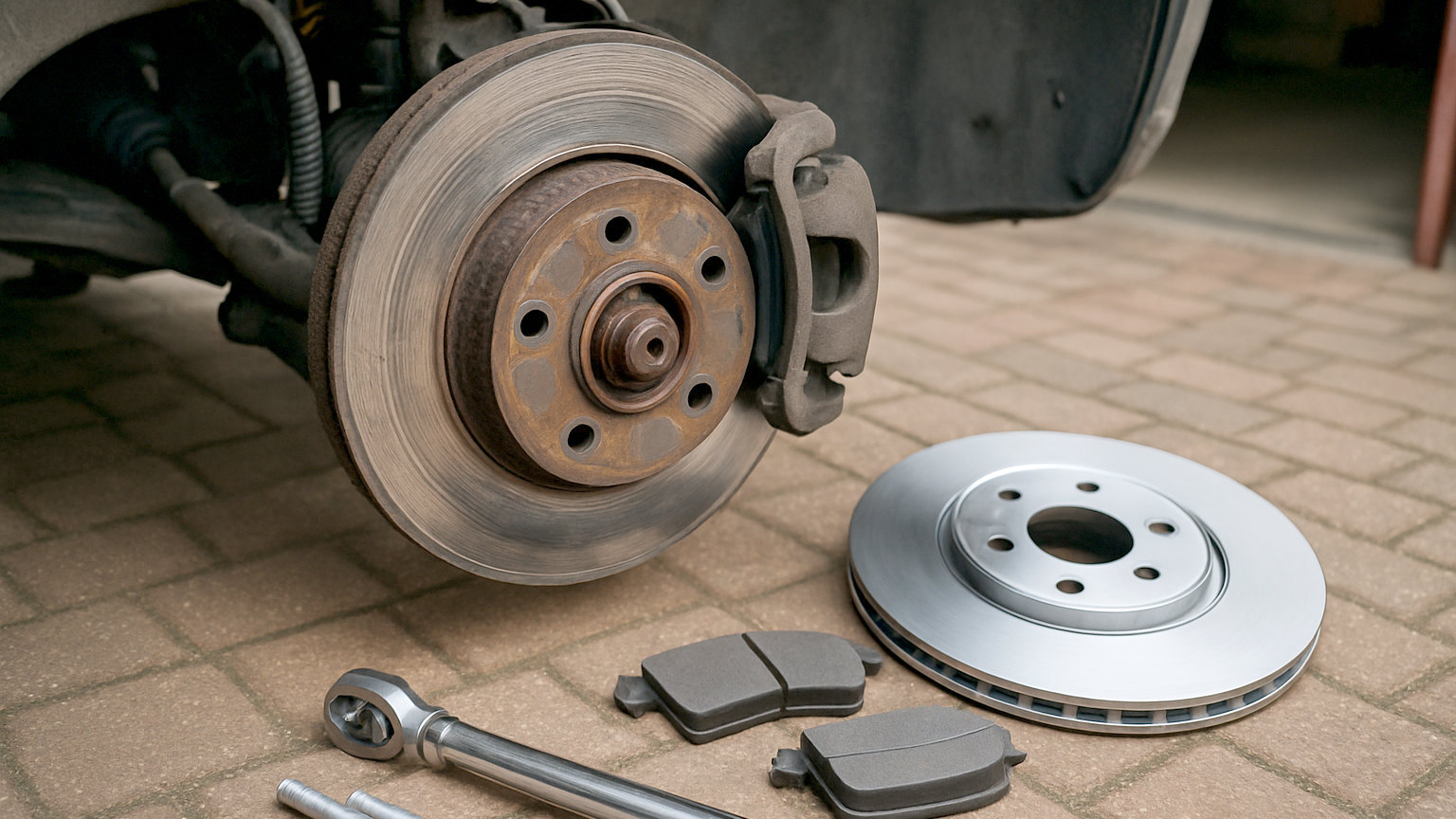
New brakes do not perform at their best straight out of the box. The pad and the disc need to mate to each other, which means the pad surface conforming to the disc and a thin even layer of friction material transferring onto it. That process is called bedding in, and how it is done in the first few hundred miles determines how the brakes behave for the rest of their life.
Why does a transfer layer matter?
Because most modern braking relies on pad material against pad material rather than pad against bare iron. A thin even film of friction material deposits onto the disc during bedding, and the pad then works against that. When it is even, braking is smooth and consistent. When it is patchy, thicker in some places than others, the result is the judder that people mistake for a warped disc.
What is the recommended procedure?
Manufacturers vary, and the pad supplier instructions should be followed where given. A common approach is a series of moderate stops from around thirty miles an hour, allowing the brakes to cool between each, followed by a few firmer stops from higher speed, again with cooling in between. The aim is progressive heat cycling rather than one hard application.
What should you avoid?
Heavy braking in the first few miles, since the surfaces have not yet mated and hard use glazes the material. Towing or carrying heavy loads immediately after fitting. And critically, holding the car stationary on the brake pedal immediately after a series of firm stops, since that presses hot pad material against one spot on the disc and deposits it unevenly, which is exactly what causes judder.
How long does it take?
The initial bedding happens within the first few dozen stops, and the pads continue to settle over roughly the first two hundred miles. Braking may feel slightly less strong during that period, which is normal and worth allowing for by leaving a little more distance. If it still feels poor after a few hundred miles, something else is wrong rather than the bedding being incomplete.
Do new discs need preparing?
Yes. They arrive with a protective coating to prevent corrosion in storage, and that must be removed with a suitable brake cleaner before fitting. Leaving it in place prevents proper bedding and produces poor braking for the first few hundred miles. It is a two minute job that is occasionally skipped, and it makes a noticeable difference.
What about new pads on existing discs?
The old disc carries a transfer layer from the previous pads, and mixing materials produces uneven friction. Lightly abrading the disc surface to remove glazing and old deposits gives the new pads a clean surface to bed against. It is worth asking whether this was done, since it is the difference between smooth new brakes and a set that judders from the start.
Can bedding go wrong?
It can. Uneven deposits produce judder that feels exactly like a distorted disc and is frequently misdiagnosed as one. In mild cases a careful series of firm stops with cooling in between can redistribute the material and clear it. In worse cases the disc needs machining or replacing, which is why doing the bedding properly first time is worth the modest effort.
Does it apply to every car?
To some degree, though the importance varies with the pad material. Performance and semi metallic pads are more sensitive to bedding than soft organic ones. On any car, driving gently for the first hundred miles and avoiding sitting on the pedal after heavy braking costs nothing and protects a repair you have just paid for.
What should you expect during the period?
Slightly longer stopping distances, a little more pedal pressure needed, and possibly some light noise as the surfaces mate. All of that should settle within the first couple of hundred miles. What you should not accept is a pedal that feels soft, a pull to one side, or a judder, since none of those are bedding characteristics and all indicate something needs looking at.


