
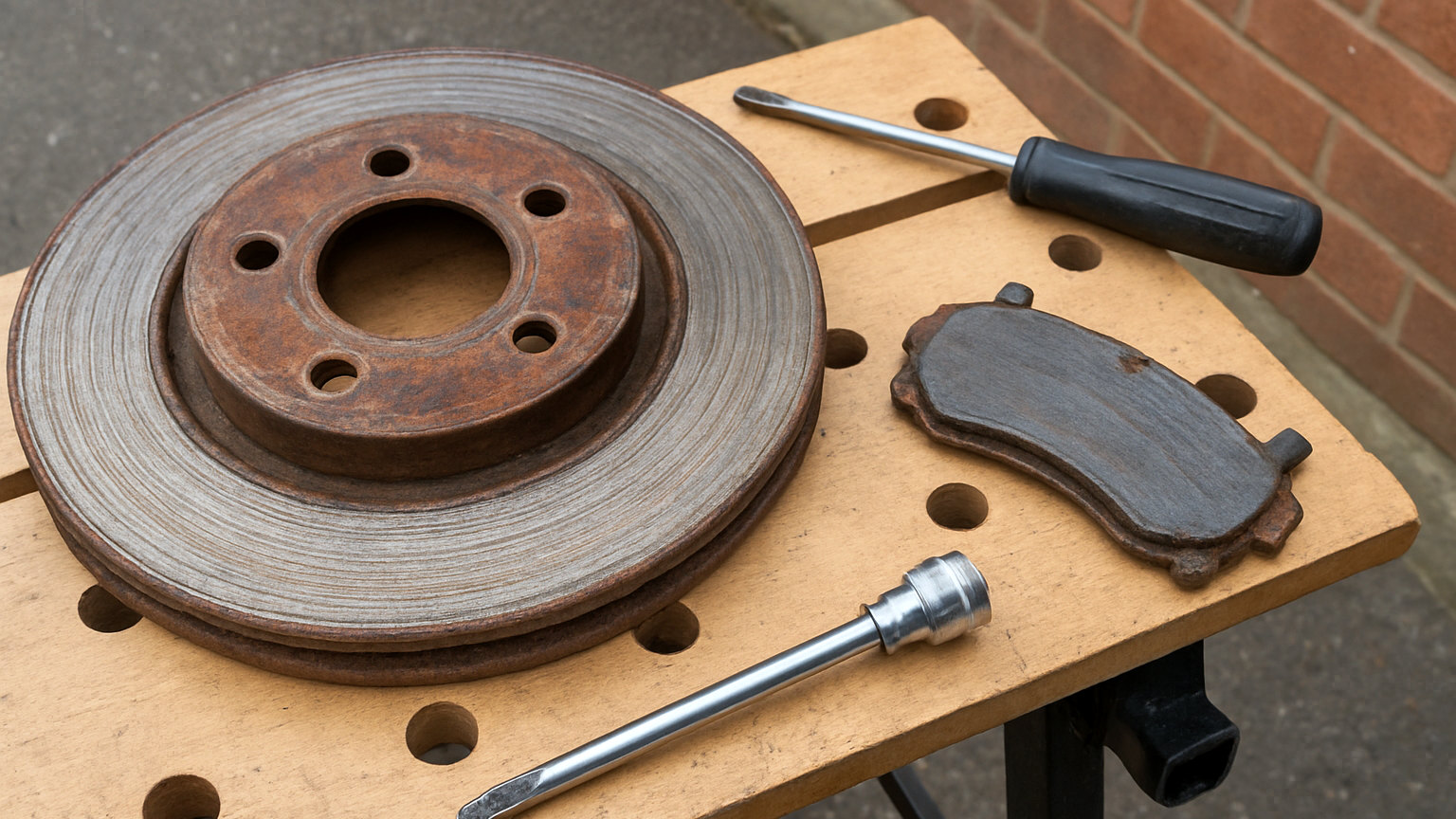
Brake squeal is one of the most common complaints in motoring and one of the most misunderstood, because it does not always mean the brakes are worn out. The noise is a vibration between the pad and the disc occurring at a frequency your ear can hear, and it can be triggered by wear, by glazing, by missing hardware or simply by a pad material that resonates on that particular car.
What actually produces the noise?
As the pad is pressed against the rotating disc, friction causes it to grip and release thousands of times a second in a stick and slip cycle. That is normal and usually inaudible. When the frequency of that cycle coincides with a natural resonance of the pad, the caliper or the disc, it becomes amplified into a squeal. The noise is therefore a resonance problem as much as a wear problem.
Does squealing mean the pads are worn out?
Sometimes, and it is the first thing to check. Many pads carry a metal wear indicator designed to contact the disc once the friction material reaches its minimum, producing a deliberate squeal. That version typically appears under light braking and disappears under firm pressure, which is a distinctive pattern. If the pads measure healthy, however, the squeal is coming from something else entirely.
What is glazing?
Overheated friction material develops a hard shiny surface where the resins have melted and re-solidified. A glazed pad has a lower coefficient of friction and a greater tendency to vibrate, so it squeals and brakes less effectively. It usually follows a period of heavy use such as a long descent, or the opposite, a car used so gently that the pads never reach the temperature that keeps them working properly.
Can missing hardware cause it?
Very commonly, and it is one of the main reasons a brake job can be followed by squealing. Pads sit in the caliper with stainless clips, anti rattle springs and shims that damp vibration and stop the pad moving. When those are corroded, omitted or reused from the old set, the pad is free to vibrate and squeal. A quality pad set includes a fitting kit for exactly this reason.
Does the pad material matter?
Considerably. Harder semi metallic compounds resist fade and produce strong bite, and they are noticeably more prone to noise. Softer organic and ceramic materials are quieter and gentler on discs, at the cost of some outright performance. Fitting a hard pad to a family car that is driven gently is a reliable way of introducing squeal that the original pads never produced.
Is it worse in certain conditions?
Yes, and the pattern is informative. Squealing confined to the first few applications on a damp morning is surface rust being cleaned off and is entirely normal. Squealing that appears only when the brakes are cold and disappears once warm suggests material or hardware rather than wear. Squealing that has appeared and is getting worse over weeks is more likely to be genuine wear.
Does it affect braking performance?
Not necessarily. A car with squealing brakes may stop perfectly well, particularly where the cause is hardware or resonance. Glazed pads are the exception, since the same surface condition that causes the noise also reduces the friction available. That is why the noise should be investigated rather than simply tolerated, even though it is frequently harmless in itself.
What should you check first?
The pad thickness, since that settles the wear question immediately, and whether the wear indicator is contacting the disc. Then whether the pads move freely in their carrier or are binding on corroded abutments. Then the disc surface for glazing or a heavy lip. Those three checks cost nothing beyond removing a wheel and they identify the great majority of squealing brakes.
Can you ignore it?
Only once you know why it is happening. A squeal caused by hardware or resonance on healthy pads is a genuine annoyance rather than a hazard, and some owners reasonably live with it. A squeal that is a wear indicator doing its job is a different matter entirely, and ignoring that one leads directly to grinding and a considerably larger bill.


