
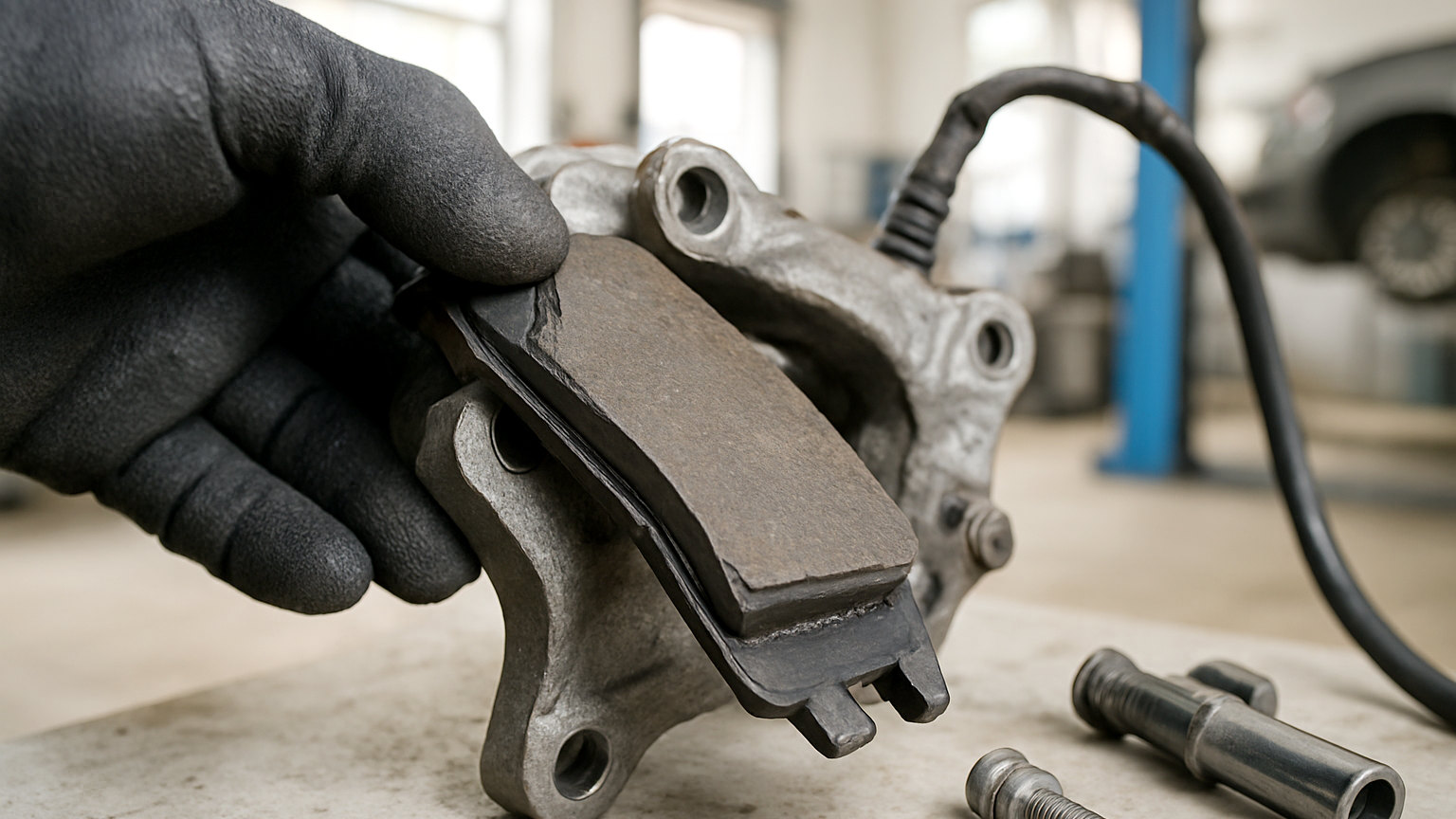
Shims and brake grease are the two things most likely to cure a squeal, and they work on the same principle: damping the vibration between the pad and everything around it. Used correctly they resolve a large share of brake noise complaints. Used incorrectly, particularly with grease in the wrong place, they cause considerably worse problems than the noise they were meant to fix.
What does a shim actually do?
It is a thin layer, usually steel with a rubber or polymer coating, fitted between the pad backing plate and the caliper piston or body. Its job is to absorb the vibration that would otherwise resonate into an audible squeal, in much the same way that a damping pad on a panel stops it drumming. Many pads have shims bonded on from new.
Should shims be reused?
Generally not. Their damping layer degrades with heat and age, and a corroded shim can also trap the pad rather than allowing it to move. Where new pads come with shims already bonded, the old ones should be discarded. Where they are separate items in the fitting kit, the new ones should be used rather than the originals refitted.
Where should brake grease be applied?
On the back of the pad where it contacts the piston or caliper body, on the pad backing plate edges where they slide in the carrier abutments, and on the caliper slide pins. A thin film is all that is required. Those are the points where metal moves against metal, and lubricating them both quietens the brakes and lets everything move as designed.
Where must it never go?
On the friction surface of the pad or the disc, without exception. Grease contaminating the friction material cannot be cleaned off, since the material is porous and absorbs it, so the pad must be replaced. It also dramatically reduces braking on that corner and causes a pull. Being generous with grease near the friction surface is a genuine safety error rather than an untidy one.
Which grease should be used?
A product specifically formulated for brakes, which is designed to withstand very high temperatures and to be compatible with the rubber seals and boots it will contact. Ordinary multipurpose grease melts and runs, and some attack rubber. Copper based greases have traditionally been used on the backing plates, though many manufacturers now specify a synthetic ceramic type, particularly near sensors.
Do they work on a badly worn brake?
No, and this is where the limits lie. Shims and grease damp vibration; they do not restore friction material, correct a scored disc or free a seized caliper. Applying them to a brake that is squealing because the pads are finished simply masks a warning. They are a solution to a resonance problem, not a substitute for the repair the noise may be requesting.
What about anti squeal sprays and pastes?
Aerosol products applied to the back of the pad form a rubbery damping layer and they genuinely work in many cases. They are best regarded as an alternative to a shim rather than an addition to proper fitting practice. The same rule applies with even more force: nothing should reach the friction surface, and applying these with the pads in place is asking for trouble.
Is this something a garage should be doing anyway?
Yes. Cleaning the abutments, fitting new hardware and shims, and applying brake grease at the correct points are part of a properly done pad change rather than an optional extra. A squeal appearing immediately after brake work usually means one of those steps was skipped, and it is entirely reasonable to ask whether they were carried out.
Do they help with judder?
No, and it is worth being clear about that. Judder comes from uneven disc thickness or a disc running out of true, and nothing applied to the back of a pad addresses either. Shims and grease damp high frequency vibration, which is a different problem with a different cause and a different remedy.


