
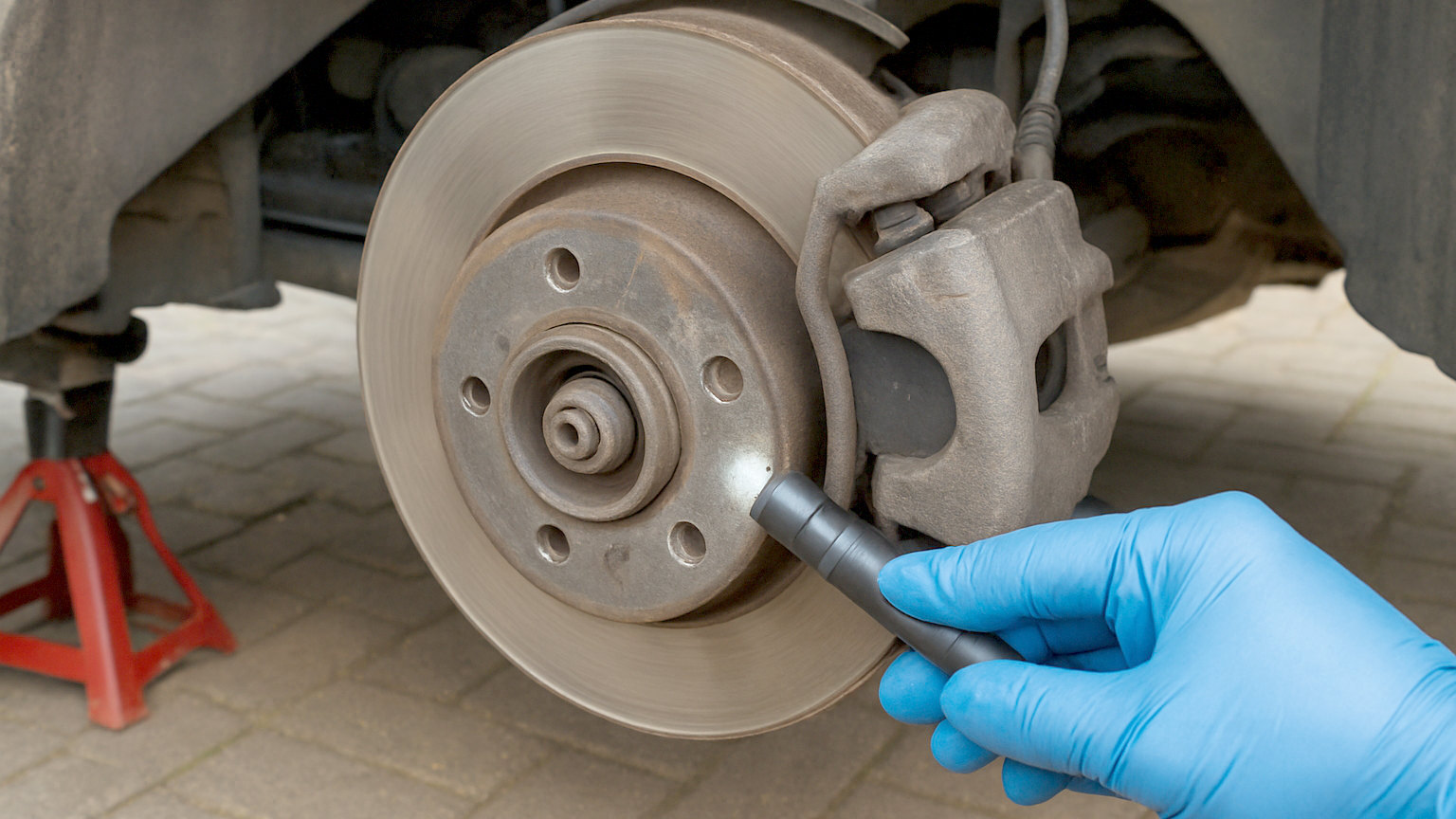
A low groaning or moaning as a car comes to a stop is quite different from a high pitched squeal, and it usually has a different cause. Both come from vibration between pad and disc, but a groan occurs at a much lower frequency, typically at walking pace as the car is about to stop, and it is often felt through the pedal as well as heard.
Why does it happen at low speed?
Because at very low rotational speed the stick and slip cycle between pad and disc happens slowly enough to produce a low frequency vibration rather than a high one. The whole suspension and body can resonate with it, which is why a groan often sounds like it comes from everywhere and feels like it is coming through the floor. It usually stops the instant the car does.
Is it a sign of anything wrong?
Frequently not. Many cars groan slightly at walking pace as a characteristic of their pad material and caliper design, and it is more noticeable on some models than others. If the brakes are otherwise effective, the pads are healthy and the noise has always been present, it is a characteristic rather than a fault. What matters is whether it is new or getting worse.
Can pad material cause it?
Considerably. Harder semi metallic compounds are more prone to low speed groan than softer organic or ceramic materials, so a car that never groaned on its original pads and does so on a new set is telling you about the material rather than about a fault. Fitting pads closer to the original specification usually resolves it, which is worth knowing before anything is dismantled.
What about glazing?
A glazed pad surface, hardened by overheating or by very gentle use that never brings it up to temperature, has a greater tendency to vibrate at low frequency. Lightly abrading the pad and disc surfaces removes the glaze, and a series of firm stops with cooling in between often clears it. That is a legitimate remedy and it costs nothing but a quiet stretch of road.
Could it be the ABS?
Worth distinguishing. A rapid pulsing or grinding felt through the pedal during hard braking, or on a slippery surface, is the ABS working and is entirely normal. Some systems also perform a brief self test at low speed after starting, which produces a short buzz or groan from the front of the car. Neither is a fault, and both are frequently mistaken for one.
Can dry or corroded hardware produce it?
Yes. Pads binding in corroded abutments cannot move freely, which changes how they contact the disc and encourages low frequency vibration. Slide pins that have stiffened do the same by preventing the caliper floating evenly. Cleaning the carrier back to bare metal, fitting new hardware clips and regreasing the pins resolves a good proportion of groaning complaints.
Does the disc condition matter?
It does. A disc with an uneven surface, a heavy lip or patchy pad deposits gives the pad an inconsistent surface to work against, which promotes vibration. If the groan is accompanied by any judder through the pedal, the disc surface is the likely contributor rather than the pad material or the hardware.
When should you have it looked at?
If it is new, if it is getting worse, if it comes with any judder or pull, or if the pedal feel has changed. A groan that has been present since the last brake service points at the pads or the hardware fitted then, and it is reasonable to raise that with whoever carried out the work rather than accepting it as unavoidable.
Can anything be done at home?
A series of firm stops from moderate speed, with cooling in between, will often clear light glazing and reduce a groan noticeably. Beyond that the remedy involves removing the pads to clean the abutments and fit fresh hardware, which is a workshop job on most cars but an inexpensive one.


