
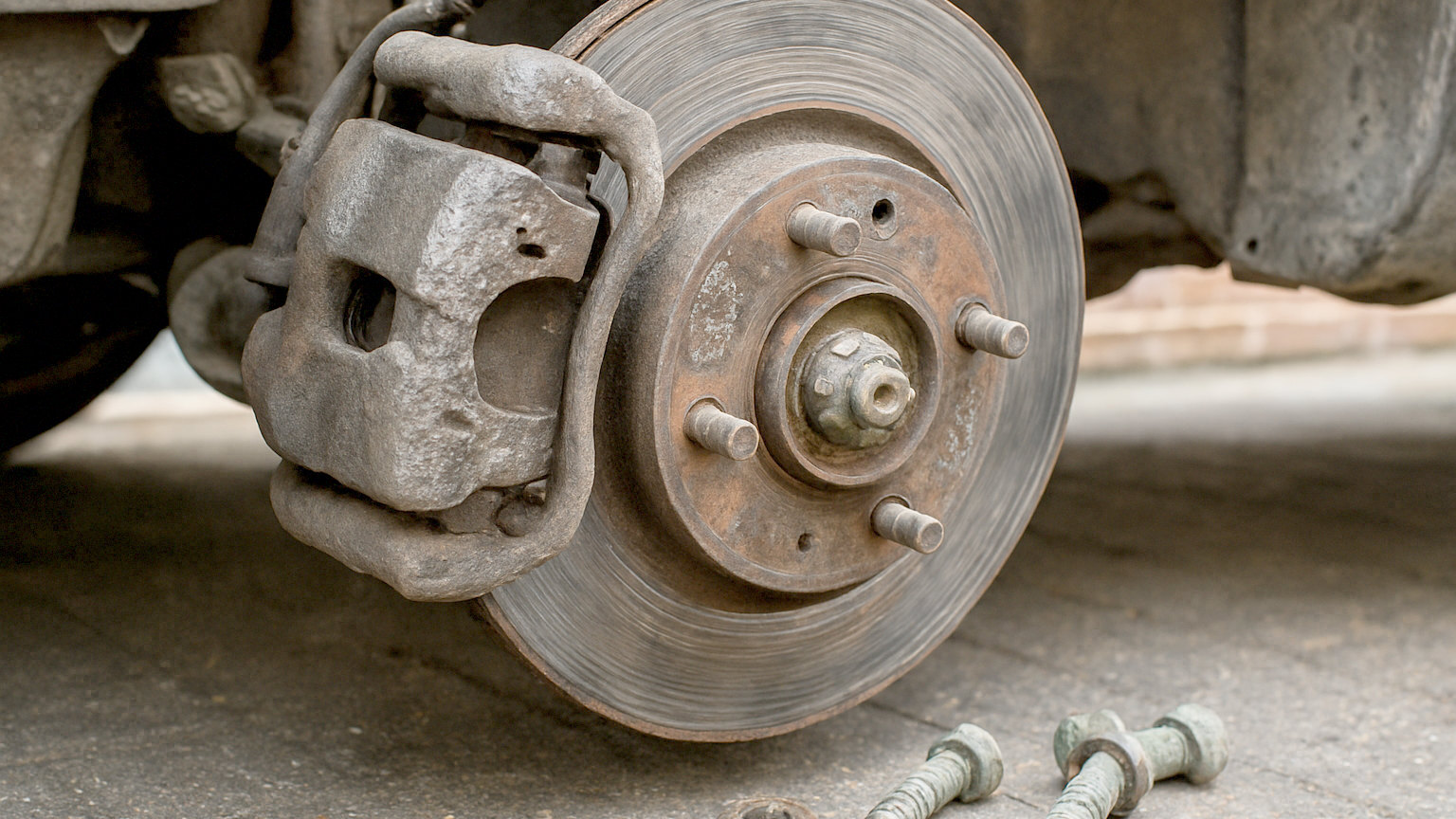
Grinding under braking is among the small number of car noises that justify stopping to look rather than continuing to the next convenient moment. In most cases it means the friction material has worn away entirely and the steel backing plate is contacting the disc directly. That destroys the disc rapidly, reduces braking performance and turns a modest pad replacement into something considerably larger.
What does metal on metal actually do?
The backing plate is hard steel, and the disc is cast iron. Pressed together under braking force they cut into each other, producing deep circular grooves in the disc within a very short distance. What began as a pad replacement now requires discs as well, and if the caliper has been damaged by the pad sitting at an angle, that too. It is the most expensive brake outcome available.
Why did the warning not come first?
Usually it did. Most pads have a wear indicator that squeals before this point, and many cars display a warning light. Grinding therefore normally means an earlier warning was missed or ignored, or that the wear indicator was on the pad that wore less. Occasionally a pad wears unevenly enough that the indicator never contacts the disc, which is why visual inspection matters more than waiting for a noise.
Could it be something harmless?
It could, and it is worth checking before assuming the worst. A small stone lodged between the disc and its dust shield produces a grinding or scraping that follows wheel speed and often comes and goes. So does a bent dust shield touching the disc. Both are trivial and free to correct, and both are common enough that they should be eliminated first.
What about grinding after standing?
Surface rust on the discs after rain or an overnight stand produces a rough grinding for the first few applications, which then disappears entirely. That is normal and every car with disc brakes does it. The distinction is that this version clears within a few hundred yards, while worn out pads grind every time you brake regardless of how far you have driven.
Does it happen only at low speed?
Grinding that appears only when almost stopped, and that follows wheel rotation rather than brake pressure, is more likely to be a stone, a dust shield or a wheel bearing. Grinding proportional to how hard you press the pedal is coming from the friction surfaces. That distinction is worth making, because it separates a two minute fix from a substantial repair.
Is braking performance affected?
Considerably. Steel against cast iron generates far less friction than a proper pad material, so stopping distances lengthen noticeably. The braking that remains is also uneven, since the two sides will not be identical, which can cause pulling. It is not a situation where the car simply makes an unpleasant noise while stopping normally.
Should you drive on it?
As little as possible. Every mile deepens the damage to the disc and reduces the chance of the caliper surviving. If the car must be moved, keep the distance short and the speed low, brake gently and early, and go directly to a garage. Setting off on a long journey with grinding brakes is a poor decision on both cost and safety grounds.
What should you expect to pay for?
Pads and discs on that axle at minimum, since a disc that has been ground by a backing plate is beyond saving. Possibly a caliper if it has been damaged or has seized, which is frequently what caused the uneven wear in the first place. Asking whether the caliper and its slide pins were the underlying cause is worth doing, since fitting new pads into the same conditions repeats the outcome.
How do you avoid getting here?
Have the pads measured at every service and ask for the figure in millimetres rather than a verdict. Act on a wear indicator squeal within a week or two rather than at the next convenient moment. Between them those two habits mean you replace pads on their own, which is the cheapest version of this repair by a considerable margin.


