
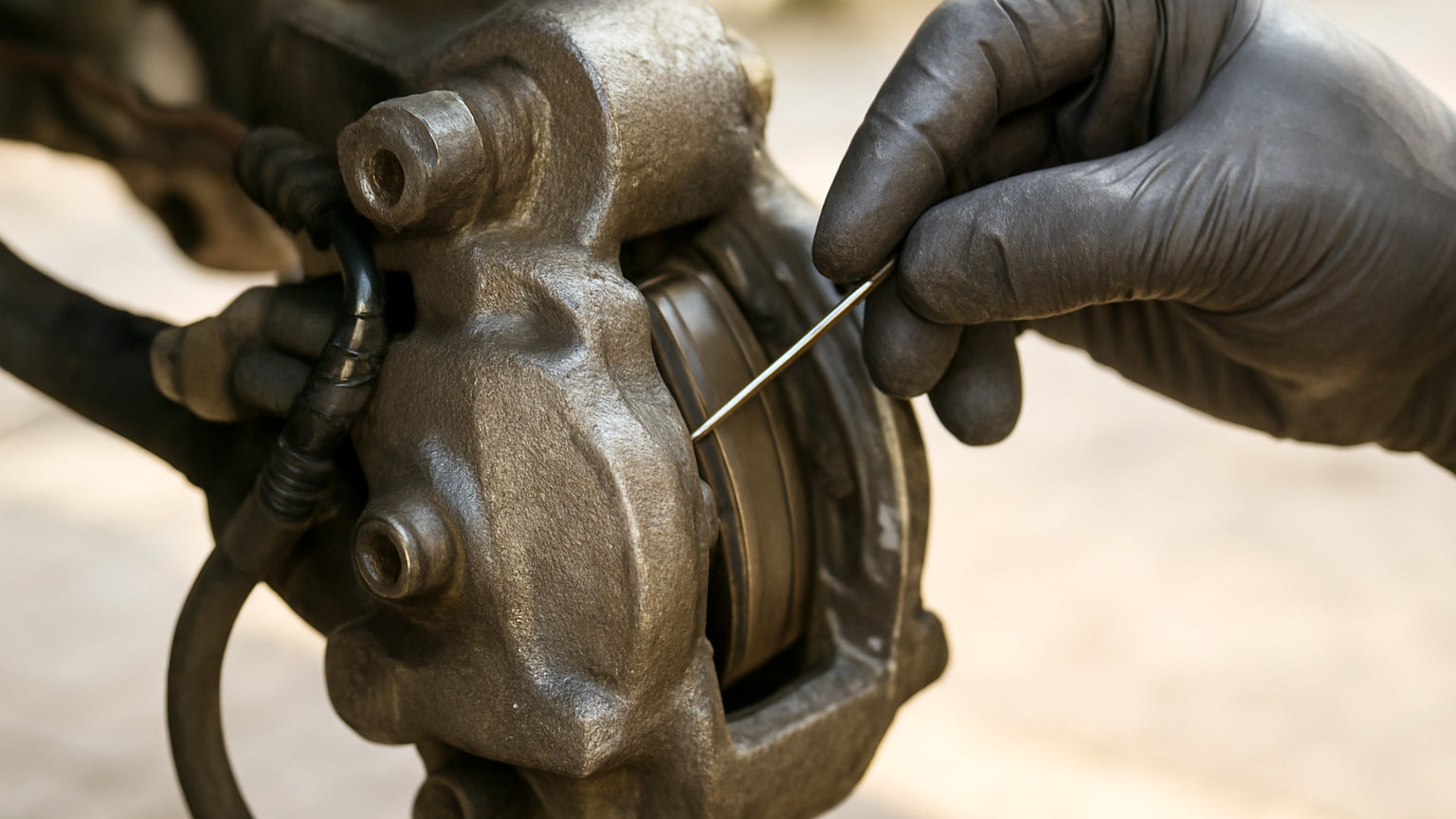
A single distinct clunk when you first press the brake pedal, or when you release it, is different from a squeal or a grinding. It is a one off movement rather than a continuous noise, which means something with clearance in it is shifting position as the braking load is applied or removed. Several components can do that, and where they sit determines how much it matters.
Why does it happen on first application?
Because the pad sits in its carrier with a small amount of designed clearance so it can move freely. When you brake, friction pushes the pad against one side of that carrier. If the clearance has grown through wear or corrosion, the pad moves further before it makes contact, and that movement is audible. Releasing the brake lets it move back, which is why some cars clunk on release too.
What increases that clearance?
Corroded abutments where the pad slides, missing or collapsed stainless hardware clips, a worn caliper carrier, or pads that are slightly undersized for the carrier. On older cars the abutment surfaces rust and are then cleaned aggressively during a pad change, which removes material and increases the gap. Fitting new hardware clips restores the correct fit.
Could the caliper itself be moving?
Yes. A sliding caliper floats on guide pins, and if those pins or their bushes are worn the whole caliper can shift under braking load. That produces a heavier clunk than a pad moving. It also means the caliper is not applying the pads evenly, so it usually comes with uneven pad wear that confirms the diagnosis when the wheel comes off.
How do you tell it from a suspension knock?
By whether it depends on the brake pedal. A brake related clunk occurs when you apply or release the brakes and can be reproduced at walking pace on a smooth surface by dabbing the pedal. A suspension knock occurs over bumps regardless of braking. Testing both separately, on a flat quiet road, distinguishes them within a couple of minutes.
Can loose fixings cause it?
They can, and it matters. Caliper carrier bolts that have loosened, or a caliper not properly tightened after work, produce a clunk under braking and are a genuine safety concern. If the noise appeared immediately after brake work, the torque of those fixings should be checked before anything else is investigated, since it is both the most likely cause and the most serious.
What about the rear brakes?
Rear calipers with an integrated parking brake mechanism can produce a clunk as the mechanism engages or releases, particularly on cars with an electronic parking brake. Some of that is normal operation. What is not normal is a clunk that has appeared recently or that is accompanied by the parking brake holding poorly.
Does it affect braking?
The noise itself does not, and a car with a clunking pad usually stops perfectly well. What matters is what it indicates. Excessive movement in the carrier accelerates pad wear at the edges, and a caliper moving on worn pins applies the pads unevenly. Both eventually affect braking performance even though the initial symptom is only a noise.
What should be done about it?
Have the pads removed, the abutments cleaned, new hardware clips fitted and the slide pins inspected and regreased. Have the caliper carrier bolts checked for correct torque. That is a modest job that resolves most brake clunks, and it should be part of any pad change anyway, which is why the noise often appears on cars where that work was done quickly.
Should you be concerned?
A single clunk on a car that otherwise brakes normally is rarely urgent, though it is worth having checked at the next opportunity. What changes that is a clunk that appeared immediately after brake work, since loose fixings are both possible and serious, or a clunk accompanied by any change in pedal feel or braking performance.


