
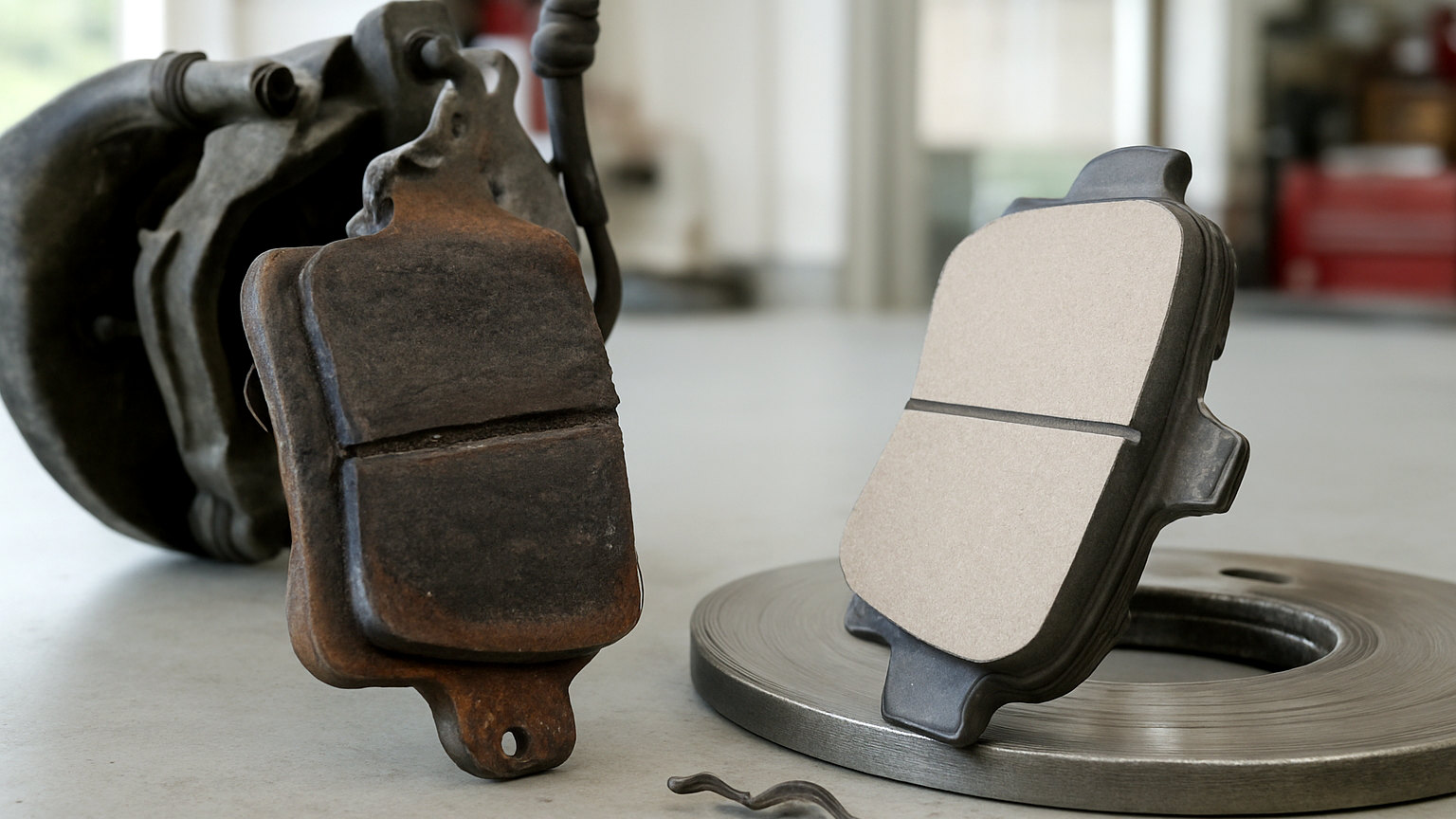
Pad material determines how quiet a brake is at least as much as how well it is fitted, and the differences between compounds are substantial. The complication is that the characteristics people want, meaning quiet operation, low dust and long life, do not always align with strong braking performance when hot, so choosing pads involves a genuine trade off rather than simply buying the best.
What are the main types?
Organic pads use a mixture of fibres and resins, and they are soft, quiet and gentle on discs while wearing faster and fading sooner. Semi metallic pads contain a high proportion of metal, which handles heat well and gives strong bite at the cost of noise and disc wear. Ceramic pads use ceramic fibres with a small metallic content, offering low noise, low dust and long life.
Why are ceramics quieter?
Because the ceramic compound produces vibration at frequencies largely above what the human ear registers, so the stick and slip cycle that causes squeal is less audible. They also produce lighter coloured dust that does not adhere to wheels as readily. For an ordinary car driven normally, they are frequently the most pleasant material to live with.
Are they better in every respect?
No, and this is where marketing can mislead. Ceramic compounds generally take longer to reach their optimum operating temperature, so cold bite can be slightly weaker, and they are typically not the first choice for heavy vehicles, towing or track use where sustained high temperatures are involved. Semi metallic pads remain better suited to genuinely demanding conditions.
Do they cost more?
Usually, and the difference is modest compared with the labour to fit them. Given that the alternative is often living with squealing brakes or paying for a second attempt, the additional cost is easy to justify on a car where noise matters. On a vehicle used for towing or carrying heavy loads, the money is better spent on a compound suited to the heat.
What did the car come with?
The most useful reference point. Manufacturers select a compound to suit the vehicle weight, its performance and its intended use, and a car that was quiet from new was quiet on that material. Fitting something noticeably harder is a common reason a car starts squealing after its first pad change, and returning to the original specification usually resolves it.
Do harder pads wear discs faster?
Yes, appreciably. Semi metallic compounds remove more disc material than organic or ceramic ones, so a performance pad fitted to a car used for ordinary commuting can cost more in discs than it saves elsewhere. That is a genuine consideration when comparing prices, since discs are the more expensive component.
Does the material affect braking distances?
Less than people expect in ordinary use, since any approved pad must perform within a specified range. The differences appear under sustained heavy braking, where the better materials maintain their friction and the poorer ones fade. For a car that never experiences that, the practical differences are noise, dust and longevity rather than stopping distance.
What is the sensible choice?
For most cars, a quality pad from a recognised manufacturer at or close to the original specification, with ceramic worth considering if noise and dust have been a problem. For towing, heavy loads or spirited driving, a compound rated for the heat matters more than quietness. What is rarely sensible is choosing on price alone, since the labour cost is identical whichever pads go on.
Can you mix compounds front and rear?
Front and rear are separate systems doing different amounts of work, so different compounds on each axle is acceptable and common. What must never be mixed is left and right on the same axle, since different friction levels produce a pull under braking and an imbalance that fails the MOT.


