
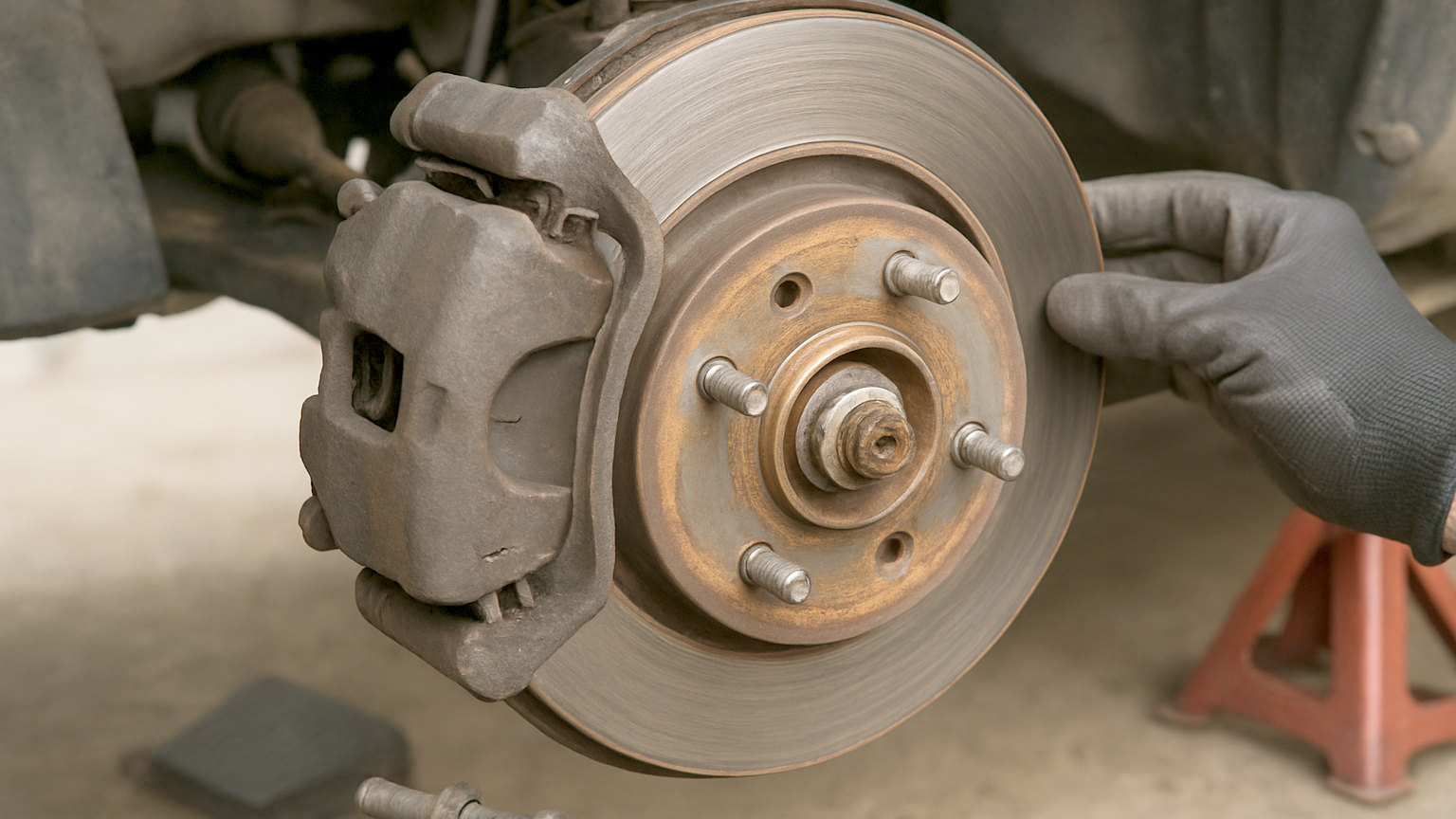
Brakes that squeak, grind or feel rough for the first few applications of the day and then behave impeccably are displaying one of the most common and least significant symptoms in motoring. Brake discs are bare cast iron, and they begin rusting within hours in damp air. That thin film is scrubbed away by the pads within the first few stops, and the noise goes with it.
Why do discs rust so quickly?
Because the friction surface cannot be painted, plated or protected in any way, since anything applied to it would interfere with braking. It is therefore exposed cast iron sitting in whatever weather the car is parked in. After rain, after a wash, or on a heavy dew, a light orange film forms in a matter of hours. Every car with disc brakes does this.
How long should the noise last?
A few applications, or a few hundred yards at most. If the roughness clears by the end of your road, it was surface rust and nothing more. If it is still there after a mile of normal driving, or if it returns during the journey, something else is happening and the noise deserves proper investigation rather than being dismissed as a weather effect.
Is it worse in some conditions?
Considerably. Cars parked outside near the coast, or anywhere with salt in the air, rust faster and more heavily. Washing a car and parking it immediately produces noticeable rust by morning. A car left standing for a week develops far more than one used daily. Winter, with salted roads and constant damp, is the season when this is most obvious.
Can it damage the discs?
Light overnight rust, no. What does cause lasting damage is prolonged standing, where the rust becomes established and pits the surface, or where the pads bond to the disc entirely. A car left for a month or more can end up with a permanently rougher disc surface that produces ongoing noise and judder, which is a different problem from the ordinary morning squeak.
Why is it worse on some cars?
Vehicles with regenerative braking, including hybrids and electric cars, use their friction brakes so little that the discs never get properly scrubbed and heated. Rust accumulates rather than being cleaned off, so morning noise is more pronounced and lasts longer. Some of these vehicles run a routine that applies the friction brakes periodically for exactly this reason.
When is morning noise a genuine fault?
When it persists beyond the first few stops, when it is a metallic grinding rather than a light roughness, when it is accompanied by a pull or a change in pedal feel, or when it has become steadily worse over weeks. A wear indicator squeal also tends to appear first thing and it does not disappear, which is the key distinction from surface rust.
Can anything reduce it?
Parking under cover helps most. Avoiding washing the car immediately before leaving it for days makes a difference. On a car used infrequently, a short drive every week or so keeps the discs clean and exercises everything else at the same time. None of this eliminates it entirely on a car parked outdoors in a British winter.
Should you mention it at a service?
Only if it lasts beyond the first few stops or has changed in character. A garage told about morning brake noise on a car parked outside will almost certainly find the pads and discs perfectly healthy, which is a wasted inspection. What is worth mentioning is any noise that persists once the brakes are warm and dry.
Does it happen to every car?
Essentially yes, to some degree, because every car with disc brakes has bare cast iron exposed to the weather. Some are noisier than others depending on pad material and disc design. If your car has always done it and it clears within a few stops, it is behaving exactly as every other car on the road does on a damp morning.


