
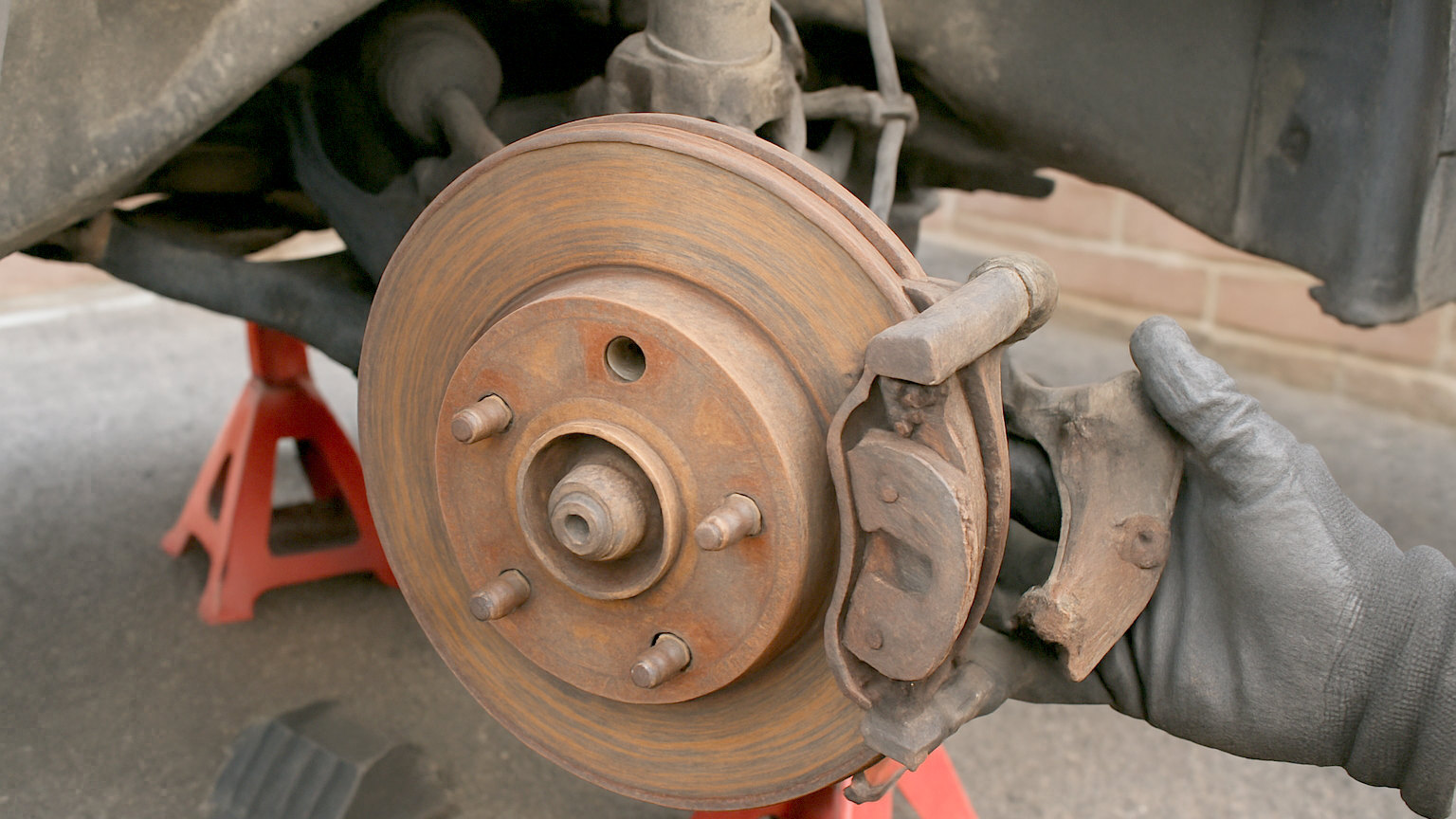
Most brake noises are a prompt to arrange an inspection rather than a reason to abandon the journey. A small number indicate that braking performance is already compromised, or that continuing will cause damage measured in miles rather than months. Knowing which is which is worth having in mind before you are standing at the roadside deciding.
Which noise is the clearest stop signal?
Metal on metal grinding under braking. It means the friction material has gone and the backing plate is contacting the disc, so braking performance is substantially reduced and the disc is being destroyed with every application. It is also frequently accompanied by uneven braking, since both sides will not have worn identically. Continuing turns a pad replacement into pads, discs and possibly a caliper.
What if the noise comes with a soft pedal?
Then stop. A pedal that feels spongy, travels further than usual or sinks under steady pressure indicates a hydraulic fault, and combined with any noise it suggests something more than worn friction material. Braking is the one system you cannot manage without, and a hydraulic fault can progress from inconvenient to serious without much warning.
Does a burning smell change things?
Considerably. A hot acrid smell after a drive, particularly with a noise from one corner, suggests a brake dragging continuously. That generates enough heat to boil the fluid at that caliper, which produces a sudden loss of braking, and it can also damage the wheel bearing and the disc. It justifies stopping to check whether one wheel is far hotter than the others.
What about a noise with a warning light?
Any brake noise accompanied by a red brake warning lamp should be treated as a stop. That light indicates either low fluid, which means a leak or severely worn pads, or a detected system fault. An ABS light alongside a noise is less immediately urgent, since ordinary braking is unaffected, though it does mean the anti lock function has disabled itself.
Which noises can reasonably wait?
A squeal that appears under light braking and stops under firm pressure, which is usually a wear indicator asking for attention within a week or two. A rattle over bumps that stops when you touch the pedal. Morning roughness that clears within a few hundred yards. A groan at walking pace. None of these will fail suddenly, though all deserve a proper look.
Does sudden onset matter?
Considerably. A noise that has been present for weeks and is unchanged is reporting gradual wear. One that has appeared abruptly, particularly with a change in pedal feel or a pull to one side, means something has just happened. That deserves stopping to look rather than continuing, since sudden changes in a braking system are rarely benign.
What should you check at the roadside?
Look through the wheel spokes at the pads and discs for anything obviously worn away or deeply scored. Check the fluid reservoir level. Carefully assess whether one wheel is much hotter than the others, taking care since they can be extremely hot. And test the pedal firmly while stationary to see whether it feels normal or sinks.
Is recovery worth it?
When brakes are involved, almost always. A recovery call is a small figure against the cost of destroyed discs and calipers, and a very small one against the consequences of reduced braking in traffic. If you are genuinely unsure which category a noise falls into, treating it as the more serious one costs an inconvenient afternoon and being wrong the other way costs a great deal more.
What should you tell the recovery service?
That the fault is with the brakes specifically, and whether the pedal feels normal. That determines whether the vehicle can safely be driven onto a transporter or needs winching, and it prompts them to bring the right equipment. Mentioning a burning smell or a wheel that is too hot to approach is also worth doing.


