
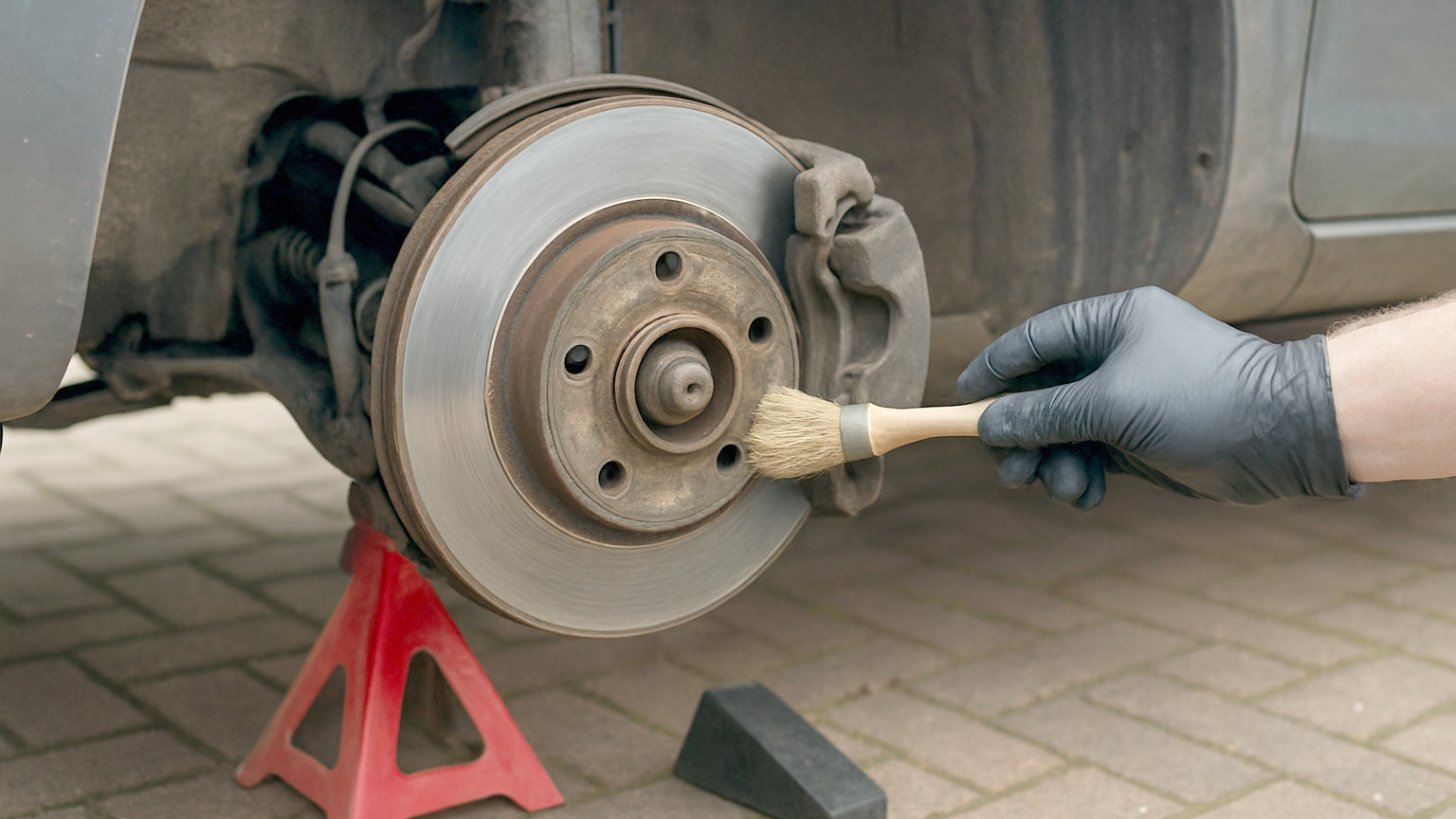
Brake dust is the dark powder that coats front wheels, and it is a mixture of friction material worn from the pads and fine iron particles worn from the discs. It is entirely normal and every car with disc brakes produces it. While it rarely causes noise directly, the amount and colour tell you something useful about the pads fitted and how they are working.
Why is it always worse on the front?
Because the front brakes do around seventy percent of the work, so they wear far more material away. Rear wheels on most cars stay comparatively clean, which is why the contrast between front and rear is so obvious. A car producing heavy dust on one front wheel and little on the other is worth investigating, since that asymmetry suggests a dragging caliper.
Do some pads produce far more?
Considerably more. Semi metallic pads produce heavy dark dust because of their metallic content and their aggressive wear characteristics. Ceramic pads produce noticeably less, and what they do produce is lighter in colour and less inclined to stick to the wheel. Organic pads sit between the two. Fitting ceramic pads is a legitimate way of reducing dust if that matters to you.
Does dust cause noise?
Rarely by itself, though accumulated dust and grit packed into the caliper carrier can prevent a pad moving freely, which contributes to both noise and uneven wear. Cleaning the carrier and the pad abutments during a service addresses that. What dust more usefully indicates is how hard the brakes are working and whether one corner is doing more than its share.
Is it corrosive to wheels?
It can be, particularly if left. The iron particles in it rust, and the resulting deposits bond to the wheel finish and can pit lacquer and paint over time. Alloy wheels left uncleaned for long periods, especially through a salted winter, suffer visibly. Regular washing is more effective than any single deep clean, and it is far kinder to the finish.
How should it be cleaned off?
With a dedicated wheel cleaner appropriate to the wheel finish, applied to a cool wheel rather than a hot one, and rinsed thoroughly. Strong acidic cleaners can damage lacquer and attack the adhesive on stick on balance weights, which then fall off and produce a vibration. That is a genuine and frequently overlooked consequence of aggressive wheel cleaning.
Can you reduce it?
By fitting lower dust pads, principally ceramic types, and by driving in a way that uses the brakes less, which means anticipating traffic and lifting off earlier. Wheel sealants make dust easier to wash off rather than reducing how much is produced. Aftermarket dust shields that fit behind the wheel exist but they restrict brake cooling, which is a poor trade.
Does heavy dust indicate a fault?
Sometimes. A sudden increase in dust on one wheel suggests that brake is dragging, which will also produce a hot wheel and rapid pad wear. Heavy dust on both fronts after fitting new pads simply indicates the material chosen. What matters is change, particularly change confined to one corner, since that is what points at a caliper rather than a pad choice.
Is it harmful?
Modern pads no longer contain asbestos, so the historic health concern no longer applies. It remains sensible not to breathe the dust when working on brakes, since fine particulate is not something to inhale, and washing components with a proper brake cleaner rather than blowing them out with an airline is standard practice for that reason.
What should you watch for?
A sudden change rather than the dust itself. Noticeably more on one wheel than its opposite number, dust appearing on a rear wheel that was previously clean, or a marked increase after new pads were fitted all point at something worth investigating. Dust that has always looked the same is simply the brakes doing their job.


