
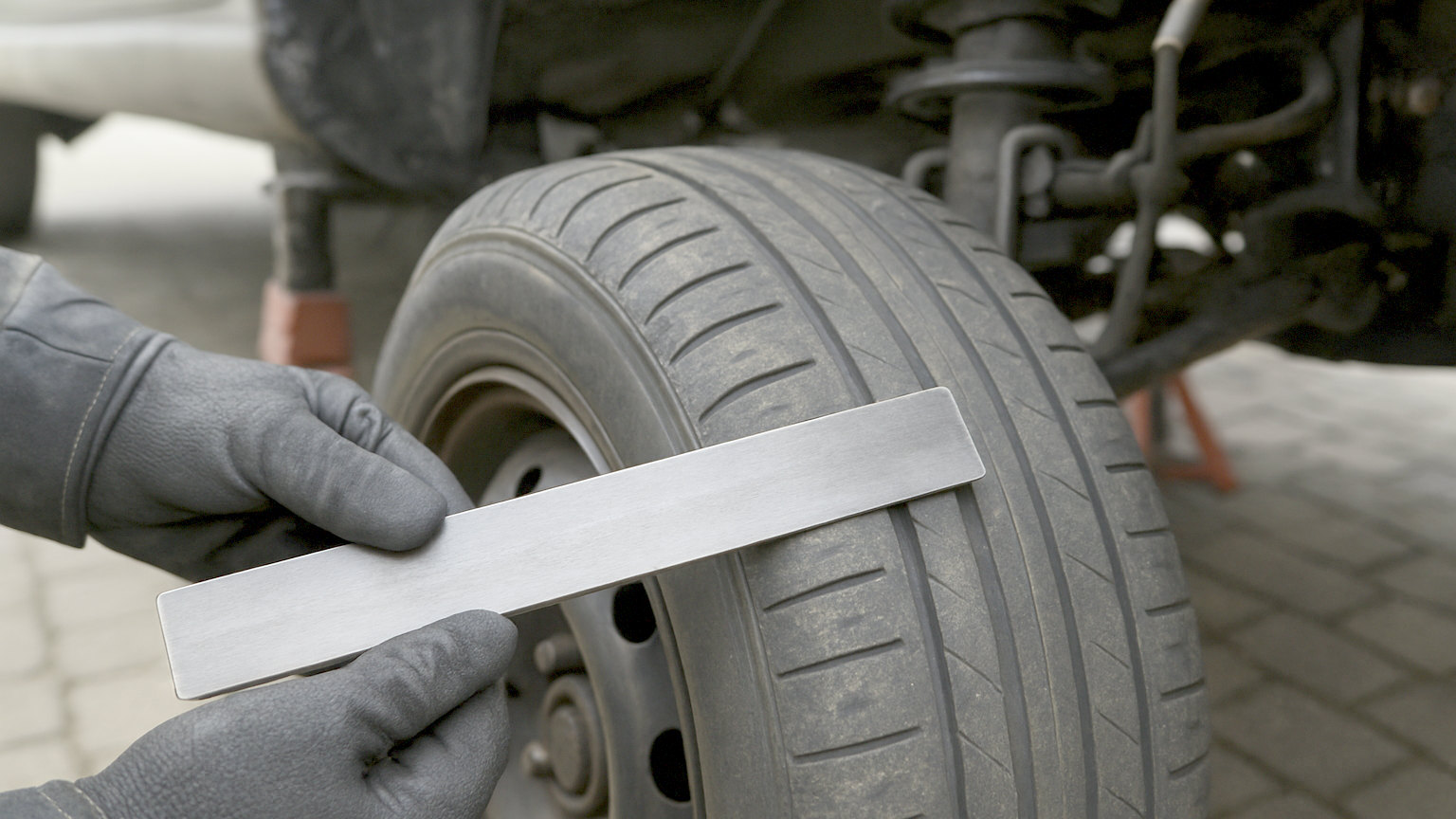
A vibration present for the first mile or two of a journey and entirely absent afterwards is following a temperature pattern, and that narrows the possibilities usefully. Two quite different mechanisms produce it: something that changes shape as it warms, which usually means tyres, or something that runs differently during warm up, which usually means the engine.
What is tyre flat spotting?
When a car stands overnight, the section of each tyre resting on the ground takes a slight set, particularly in cold weather. The tyre is therefore not perfectly round on the first few revolutions, producing a vibration or thumping. As the tyre warms and flexes it returns to shape and the vibration disappears, usually within the first mile.
Is flat spotting a fault?
Generally not. Almost every car does it to some degree in cold weather, and it is more pronounced on low profile tyres, harder compounds and cars that stand for long periods. It becomes a fault only when the vibration persists after several miles, which suggests the tyre has taken a permanent set or has another problem entirely.
How can flat spotting be reduced?
Correct tyre pressures help, since underinflation increases the deformation. For a car being stored, slightly higher pressures and moving it occasionally reduce it. Driving gently for the first mile allows the tyres to warm evenly rather than being loaded hard while still misshapen. None of this eliminates it entirely in a British winter.
What engine faults appear only when cold?
A misfire caused by worn spark plugs or a failing coil often shows only during warm up, when the mixture is richer and the cylinder conditions are less favourable. On a diesel, failed glow plugs produce rough running and shaking for the first minute, accompanied by white smoke, then clear entirely. Both produce vibration that follows the engine rather than road speed.
How do you tell engine from tyres?
By whether it happens while stationary. If the car shakes at idle before you have moved, the cause is the engine. If it is smooth at idle and vibrates only once rolling, the tyres or wheels are responsible. That takes thirty seconds on the driveway and it separates the two categories completely.
Can mounts behave differently when cold?
They can. Rubber stiffens as it cools, so a hydraulic engine mount that has lost some of its damping performs noticeably worse on a cold morning. Combined with a cold engine idling roughly on its warm up strategy, the result is a car that shakes at the lights for the first few minutes and settles once everything is at temperature.
Could it be ice or snow in the wheels?
Very commonly in winter, and it is worth checking before anything else. Packed snow or ice inside the rim adds a substantial and randomly placed mass, which produces exactly the vibration of a lost balance weight. It clears as the wheel warms or as the car is driven, which is why the fault appears in the morning and vanishes by lunchtime.
What about brakes after standing?
Surface rust forms on discs overnight, particularly after rain, and it produces a rough or grabby feel and sometimes a shudder for the first few applications. It wears away within a few hundred yards. If a shudder under braking persists once the discs are clean and warm, that is a genuine brake fault rather than a cold weather characteristic.
When should you investigate?
When the cold vibration lasts beyond the first few miles, when it has become noticeably worse than previous winters, or when it is accompanied by rough running, warning lights or a change in how the car drives once warm. A brief cold shake that has always happened is usually a characteristic rather than a developing fault.
Is there anything worth doing meanwhile?
Check tyre pressures when cold, since underinflation exaggerates flat spotting considerably, and clear any packed snow from inside the rims. Driving the first mile gently allows tyres, brakes and engine to reach normal condition without being loaded hard while they are still not quite right.


