
A vibration that appeared on the drive home from a tyre fitter is almost certainly connected to the work rather than a coincidence. That is useful, because it narrows the field to a short list of causes, most of which are straightforward to correct and none of which should involve arguing about whether the problem existed beforehand.
Were the wheels balanced correctly?
The obvious first question. Balancing requires the wheel to be mounted correctly on the machine, the machine to be calibrated, and the operator to enter the correct rim dimensions. Any of those going wrong produces a wheel that is technically balanced to the wrong specification. Asking for them to be rebalanced, and watching if possible, resolves this quickly.
Was the hub face cleaned?
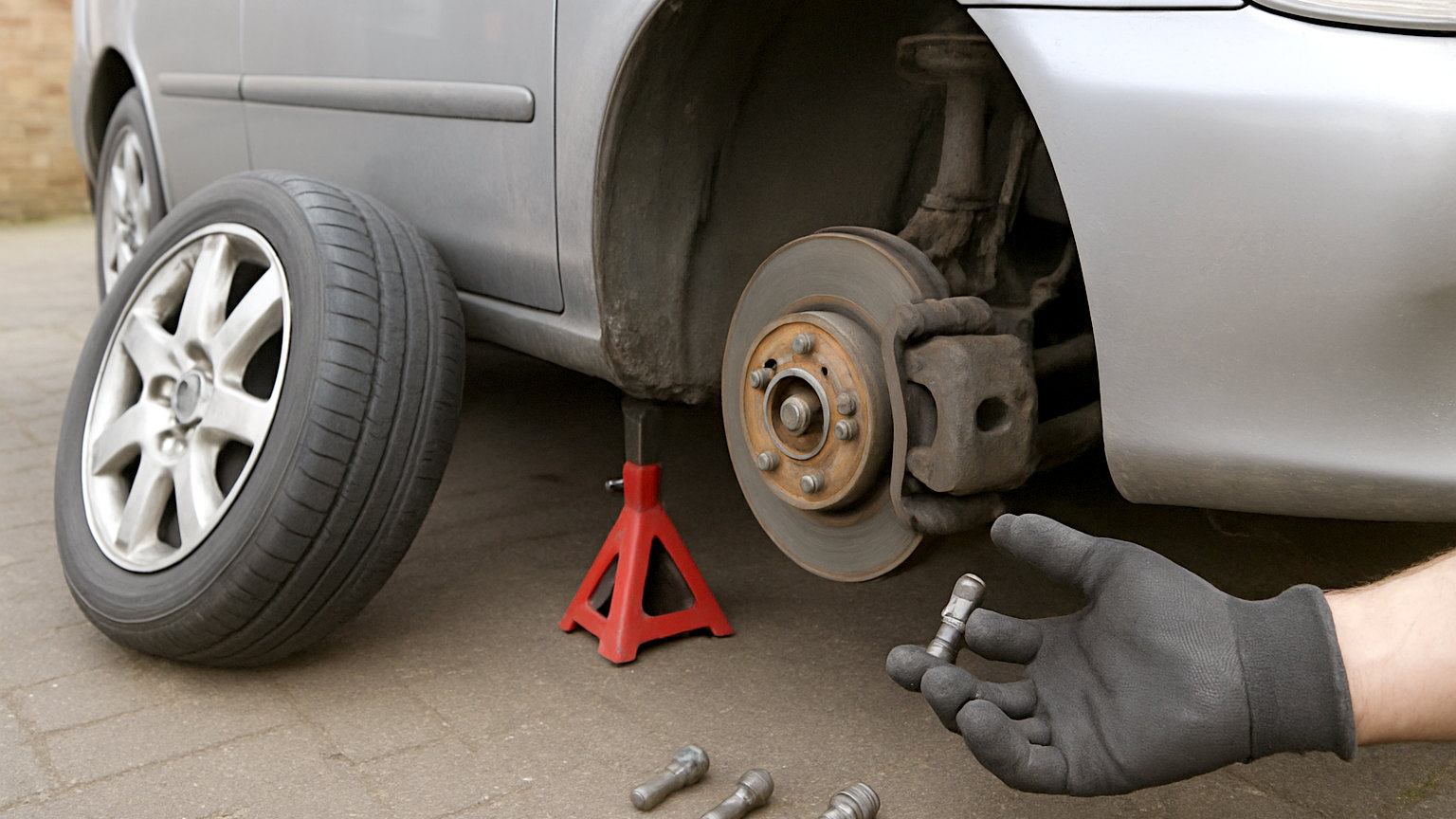
This is the most common overlooked cause. Rust and debris on the hub face where the wheel seats prevent the wheel sitting square, which produces a wobble no balancing can correct. It takes a minute with a wire brush and it is routinely skipped when a fitter is working quickly. If a vibration appeared after any wheel removal, this is worth asking about specifically.
Are the spigot rings correct?
Many aftermarket alloy wheels have a larger centre bore than the hub, and plastic or metal spigot rings fill that gap so the wheel is centred by the hub rather than by the bolts. Missing or incorrect rings mean the wheel is located only by the fixings, which is far less precise. It is a very common cause of vibration on cars with non original wheels.
Were the wheels tightened properly?
Bolts tightened with an impact gun rather than a torque wrench, or tightened in the wrong sequence, can pull a wheel out of true and in some cases distort a brake disc, which then produces judder under braking as well. Correct practice is to tighten progressively in a diagonal pattern to the specified torque, and it is worth rechecking the torque yourself if you have a wrench.
Could the new tyre be at fault?
It happens. A tyre can be out of round or have a shifted belt from new, and it will balance perfectly while still vibrating on the road. A road force balancer measures this directly. Reputable manufacturers and retailers will investigate a new tyre that cannot be made to run smoothly, so raise it promptly rather than accepting it.
Were the tyres fitted the right way round?
Directional tyres have an arrow indicating the rotation direction, and asymmetric tyres have inner and outer sidewall markings. Fitting one incorrectly does not usually cause vibration but it does affect wet grip and noise, and it suggests the fitting was rushed. It is worth checking the markings on all four while investigating anything else.
What if only some wheels were touched?
That is helpful information. If two tyres were replaced and the vibration appeared immediately, attention belongs on those two wheels. Swapping them to the other axle and seeing whether the vibration follows confirms it in one move. If it does not follow, something about the fitting process rather than the wheels themselves is responsible.
How should you raise it with the fitter?
Directly and promptly, since the timing makes the connection clear and most reputable fitters will recheck their work without argument. Ask specifically whether the hub faces were cleaned, what the balance figures were, whether spigot rings were used and what torque was applied. Those questions are reasonable and they usually identify the cause during the conversation.
What if it persists after rebalancing?
Ask for a road force measurement rather than a third conventional balance. If that also comes back acceptable, the cause lies in the hub, the mounting or elsewhere in the car, and the work may simply have coincided with a developing fault. At that point the diagnosis moves on rather than continuing to repeat the same test.
Should you go back to the same fitter?
Once, certainly, since they should be given the chance to correct their own work and most will. If a second attempt produces no improvement, a different opinion is worth having, ideally from somewhere with a road force balancer, since repeating an inadequate test a third time is unlikely to change anything.


