
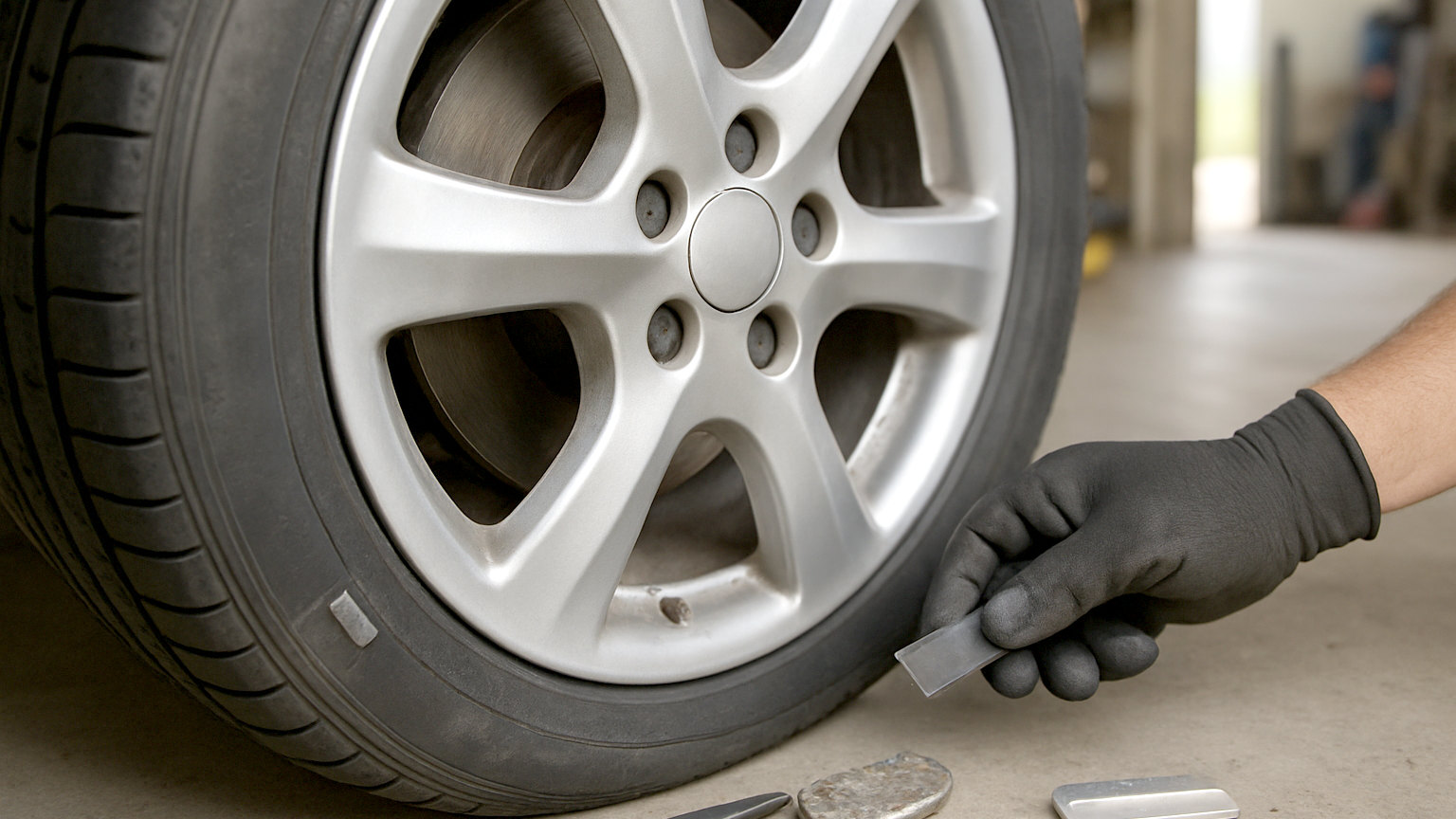
A steering wheel that shakes within a particular speed band, typically somewhere between fifty and seventy, and settles again above and below it, is displaying the classic signature of front wheel imbalance. It is by far the most common cause, it is inexpensive to correct, and it is worth confirming before anything else is investigated.
Why does imbalance produce a speed band?
Because an out of balance wheel generates a rotating force that increases with speed, and the suspension has a natural frequency at which it responds most strongly. When wheel rotation matches that frequency, the vibration peaks. Above and below it, the same imbalance produces less noticeable movement. That is why the shake appears, worsens, then eases as you accelerate through the band.
Why do wheels lose their balance?
Balance weights fall off, particularly the stick on type when the rim is dirty or has been cleaned with a strong chemical. Tyres wear unevenly, which changes the distribution of mass. Mud or snow packs inside the rim, which is common in winter and disappears once it thaws. A tyre can also shift slightly on the rim after a heavy impact.
What should you look for on the wheel?
A clean unweathered patch on the inner rim where a stick on weight used to be, which is a clear sign one has departed. Clip on weights missing from the rim edge. Mud, snow or accumulated debris inside the wheel. Any visible buckle in the rim, which is best seen by watching the wheel edge while someone rotates it slowly.
What if balancing does not cure it?
Then the wheel or tyre may be out of round rather than out of balance, which is a different problem that a standard balancer cannot detect. A tyre with a shifted belt or a wheel with a buckle rotates unevenly regardless of how well the mass is distributed. A road force balancer measures this by loading the tyre against a roller while it spins, which reveals what a static balance cannot.
Can the hub cause it?
Yes, and it is frequently missed. Rust or debris on the hub face where the wheel seats prevents the wheel sitting square, which produces a wobble no amount of balancing will fix. Cleaning the hub face and the back of the wheel with a wire brush before refitting is a step that costs nothing and cures a surprising number of persistent vibrations.
What else produces a front end shake?
A worn wheel bearing, though that usually announces itself with a hum first. Play in track rod ends or ball joints, which allows the wheel to move rather than being held precisely. A worn damper permitting the wheel to bounce. A driveshaft with a damaged joint. All of these tend to produce vibration that worsens steadily with speed rather than peaking in a band.
How do you confirm it is the front?
Swap the front wheels to the rear. If the vibration moves from the steering wheel to the seat, a wheel or tyre is responsible and it has travelled with them. If the shake stays in the steering wheel with different wheels fitted, the fault is in the hub, brakes or suspension at the front. It is a definitive test and it takes half an hour.
Does it matter beyond the annoyance?
It does. A vibrating wheel is repeatedly loading and unloading its bearing, its suspension joints and its tyre, which accelerates wear in all of them. It also produces uneven tyre wear that becomes self perpetuating. And a vibration that is actually a developing fault, such as a bearing or a joint, will not stay merely irritating indefinitely.
What should you do first?
Check the pressures, look for a missing balance weight and clear any packed mud or snow from inside the rims, then have all four wheels balanced rather than only the fronts. That covers the common causes cheaply, and if the shake survives it you have already eliminated the most likely explanation before paying for diagnosis.


