
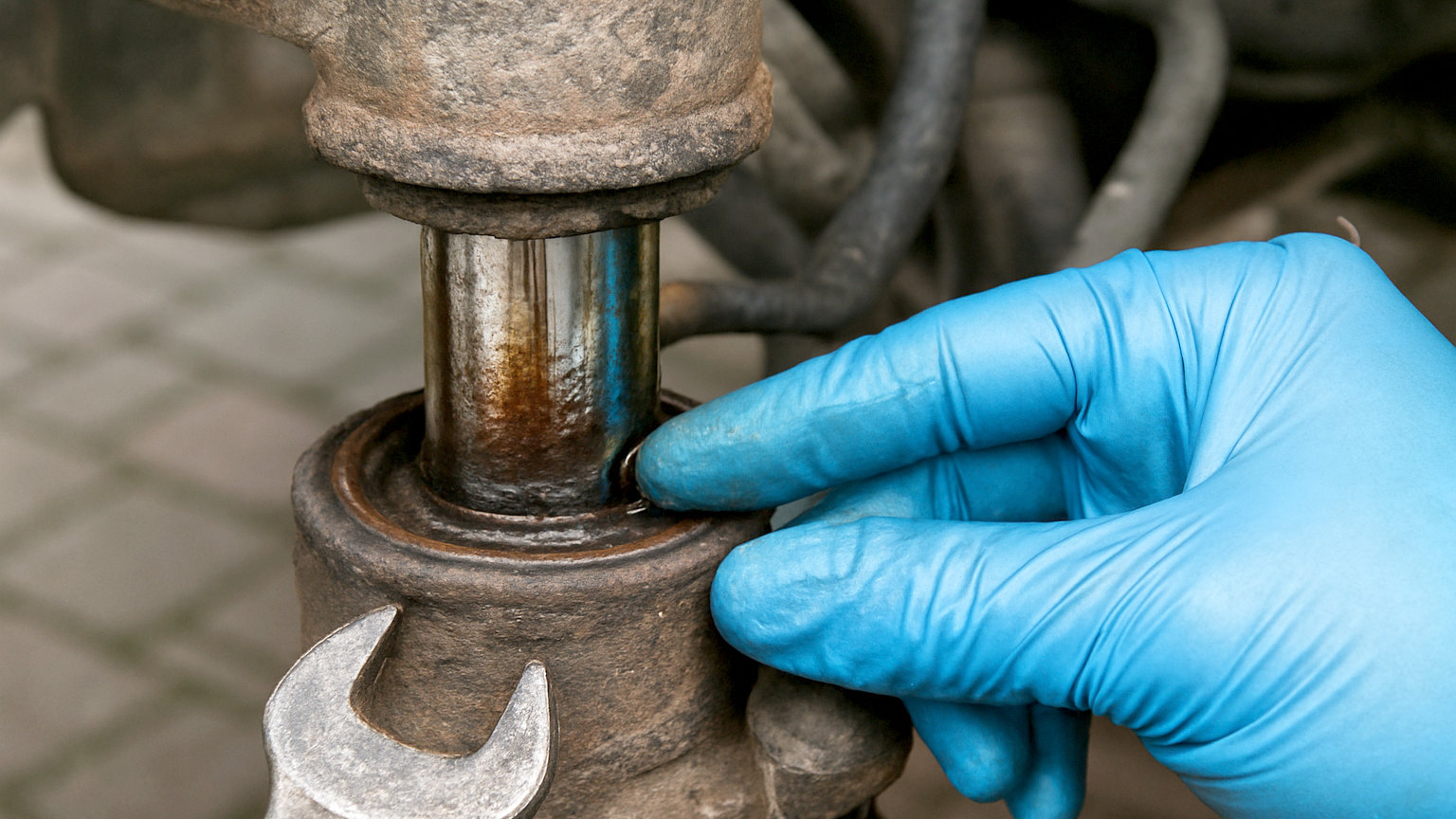
Shock absorbers, properly called dampers, are among the most neglected components on any car. They wear so gradually that the driver adapts without ever noticing, and unlike a brake pad or a tyre there is no obvious wear indicator to check. Most cars are driven for years on dampers that have lost a substantial part of their effectiveness, with consequences for braking, stability and tyre wear.
What does a damper actually do?
Not support the car, which is the springs job. A damper controls how quickly the spring compresses and rebounds, converting that movement into heat by forcing oil through small valves. Without damping, a car would continue oscillating after every bump. The critical function is keeping the tyre pressed against the road surface, because a tyre that is bouncing is not gripping or steering.
What is the bounce test?
Push down firmly on one corner of the car and release. A healthy damper allows the car to return to its resting position and stop, perhaps with a small amount of overshoot. A worn one lets it continue bouncing two or three times before settling. It is a crude test that only identifies badly worn units, and passing it does not mean the dampers are healthy.
What are the driving symptoms?
A floating sensation over undulations, particularly at motorway speed. The nose diving more than it used to under braking. Body roll that feels slower to settle in corners. The car feeling unsettled over a series of bumps rather than absorbing them. A wandering, vague feel at speed. All of these arrive so gradually that they are usually attributed to the car simply getting older.
What should you look for physically?
Oil on the damper body, running down from the seal at the top, is the clearest sign of failure and it is easy to see. A damp or oily film with dirt stuck to it counts. Also look for corrosion, a bent rod, damaged or missing bump stops and perished top mount rubber. A leaking damper has lost its oil and is no longer damping properly.
Do they affect braking distance?
Measurably. If a tyre is bouncing off the surface, it is not applying braking force during those moments, so stopping distances lengthen. The effect is worst on uneven surfaces and in emergency braking, which is precisely when it matters most. Testing organisations have repeatedly demonstrated meaningful increases in stopping distance on cars with badly worn dampers.
How do they affect tyre wear?
Poor damping allows the wheel to bounce, producing a distinctive uneven wear pattern often described as scalloping or cupping, with alternating high and low patches around the tread. Finding that pattern on a tyre is strong evidence of a worn damper on that corner, and replacing the tyre without addressing the damper simply produces the same wear again.
Can they be tested properly?
Yes. Many garages have a damper test platform that vibrates each wheel and measures how well the tyre maintains contact with the plate, producing a percentage figure for each corner. It is far more reliable than a bounce test and it identifies dampers that are substantially degraded while still appearing acceptable by hand. It is worth asking for if the car feels unsettled.
How long should they last?
There is no fixed interval, and figures around fifty to eighty thousand miles are often quoted as the point at which meaningful degradation has occurred. Poor road surfaces, heavy loads and towing shorten that considerably. Because the decline is gradual, mileage is a better prompt to have them assessed than any symptom the driver is likely to notice.
Do they fail an MOT?
A damper that is leaking, broken, insecure or has excessively worn mountings is a failure. One that is simply tired but intact will generally pass, since there is no roadside test for damping efficiency. That is why a car can pass its MOT with dampers that are well past their useful life, and why the test should not be treated as confirmation that the suspension is healthy.


